



Solid State RF Switches: The Ultimate Guide to Modern RF Signal Routing
Fast, reliable, and precise signal routing for 5G, radar, test systems, and wireless infrastructure.
What Are Solid State RF Switches?
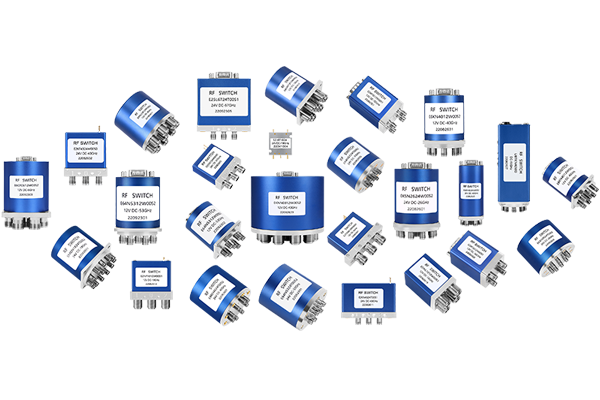
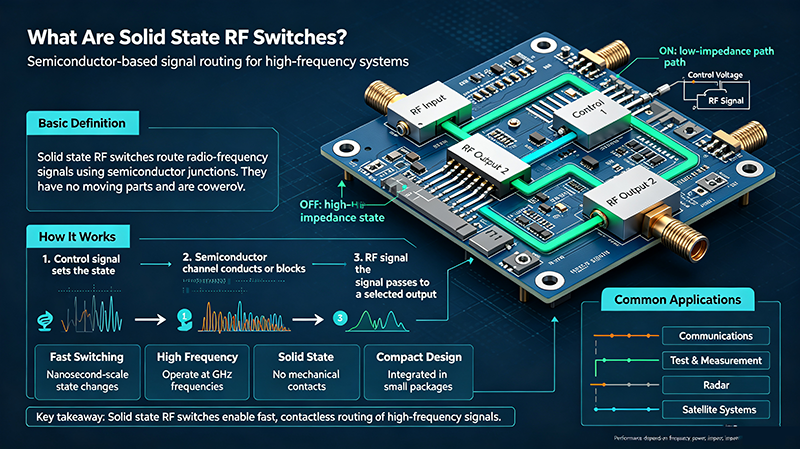
Solid state RF switches are semiconductor-based components that route high-frequency signals between one or more input and output ports without any moving mechanical parts. Built on technologies such as PIN diodes, GaAs MESFET, GaN HEMT, or SOI CMOS, they replace legacy electromechanical relays with faster, smaller, and far more durable alternatives.
In modern wireless systems, where millimeter-wave frequencies, beamforming, and massive MIMO are the norm, solid state RF switches provide the nanosecond-level switching speed and billions of cycle endurance that mechanical switches simply cannot match. They are the silent workhorses behind every smartphone base station, aerospace radar array, and automated test bench.
How Do Solid State RF Switches Work?
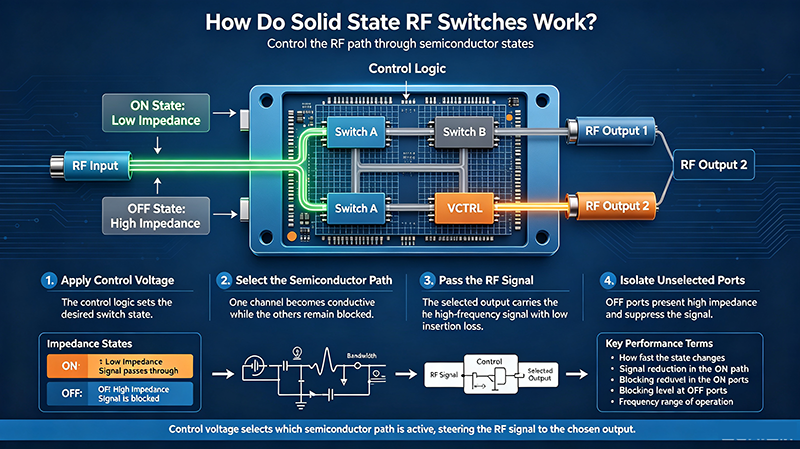
At the core, a solid state RF switch uses the nonlinear I-V characteristics of semiconductor junctions to control RF signal flow. When a DC bias voltage or current is applied, the junction transitions between a low-impedance "on" state and a high-impedance "off" state, effectively opening or closing the RF signal path.
Core Operating Principles
- PIN Diode Switches: Use an intrinsic semiconductor layer between P and N regions. Forward bias creates a low-resistance path for RF; zero or reverse bias blocks the signal. Excellent for high-power applications up to kilowatts.
- GaAs MESFET / pHEMT Switches: Apply gate bias to modulate the channel conductance. Offer very low insertion loss at microwave and mmWave frequencies, ideal for 5G and satellite communications.
- GaN HEMT Switches: Wide-bandgap devices that handle high RF power with high breakdown voltage, perfect for radar and electronic warfare.
- SOI CMOS Switches: Integrate easily with digital control logic, enabling compact, low-cost switches for consumer handsets and IoT devices.
Common Configurations
SPST (Single Pole Single Throw)
The simplest form, with one input and one output. Used for transmit/receive blanking, gain stage bypass, and basic on/off control.
SPNT (Single Pole N Throw)
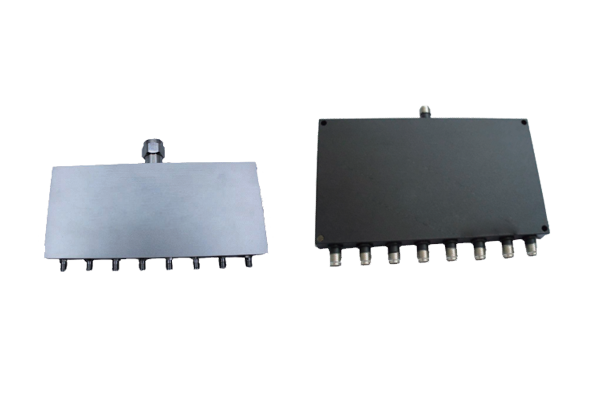
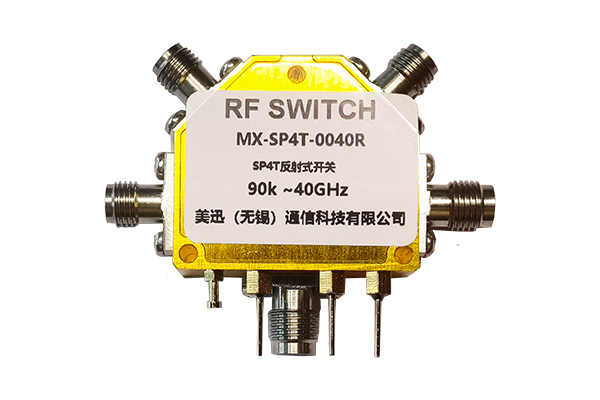
Routes one input to multiple outputs, such as SP2T, SP3T, SP4T, SP6T, or SP8T. Common in antenna switching and filter banks.
DPDT / Transfer Switch
Swaps two signal paths simultaneously, ideal for redundancy switching and fail-over in mission-critical systems.
Matrix Switches
Full N x M crossbar designs that connect any input to any output. Widely deployed in automated test equipment (ATE).
Key Specifications to Evaluate
Choosing the right solid state RF switch requires balancing several performance parameters against your system requirements.
| Parameter | Description | Why It Matters |
|---|---|---|
| Frequency Range | Operating band from DC to >100 GHz | Must cover your entire signal bandwidth |
| Insertion Loss | Signal loss in the "on" state | Lower loss preserves system efficiency and SNR |
| Isolation | Signal leakage in the "off" state | Critical for preventing crosstalk and interference |
| Switching Speed | Time to transition between states | Nanosecond speeds enable beam-steering and TDD systems |
| Power Handling | Maximum RF input power (CW and pulsed) | Determines suitability for high-power transmitters |
| P1dB / IP3 | Linearity metrics | Higher values reduce distortion in multicarrier systems |
| VSWR | Impedance match quality | Affects reflections and overall system performance |
| Control Interface | CMOS, TTL, GPIO, or serial | Simplifies integration with FPGAs and microcontrollers |
Application Areas
Solid state RF switches are essential building blocks across virtually every wireless industry segment.
- 5G & Telecom: Beamforming, antenna tuning, filter selection, and TDD transmit/receive switching in base stations and small cells.
- Aerospace & Defense: Phased-array radar, electronic countermeasures, satellite payloads, and secure communications.
- Test & Measurement: Automated test equipment, signal routing in bench instruments, and multi-port device characterization.
- Automotive: V2X communications, automotive radar (76-81 GHz), and infotainment antenna diversity.
- Medical & Industrial: MRI systems, RF ablation, industrial heating, and scientific instrumentation.
- Consumer Electronics: Smartphones, tablets, wearables, and Wi-Fi 6E/7 routers that juggle multiple bands and antennas.
Solid State vs. Electromechanical RF Switches
| Feature | Solid State RF Switch | Electromechanical Switch |
|---|---|---|
| Switching Speed | Nanoseconds | Milliseconds |
| Lifetime | > 1 billion cycles | 1-10 million cycles |
| Power Handling | Low to moderate (improving with GaN) | Very high (kilowatts) |
| Insertion Loss | 0.3 - 2 dB typical | < 0.1 dB typical |
| Size & Weight | Chip-scale, ultra-light | Bulky, heavy |
| Shock & Vibration | Excellent | Susceptible |
| Cost at Low Frequency | Higher | Lower |
For applications requiring speed, reliability, and integration density, solid state RF switches are now the clear winner. Electromechanical switches remain relevant only where extreme low loss and extreme power handling dominate the requirements.
Frequently Asked Questions
- What is the typical switching speed of a solid state RF switch?
- Most commercial solid state RF switches transition in 5 to 500 nanoseconds, with advanced GaAs designs reaching sub-10 ns.
- Can solid state RF switches handle high power?
- PIN diode and GaN-based switches can manage tens to hundreds of watts continuously, making them suitable for radar and broadcast applications.
- Are solid state RF switches better than mechanical relays?
- For most modern applications, yes. They are faster, smaller, more reliable, and integrate easily with digital control systems.
- How do I choose between PIN diode and GaAs switches?
- Choose PIN diodes for high power and lower frequencies; choose GaAs for high frequency, low loss, and integration with MMIC designs.
- Do solid state RF switches need a heatsink?
- In high-power designs, yes. Thermal management is critical to maintain reliability and prevent performance drift.
Ready to Upgrade Your RF System?
Explore our full portfolio of high-performance solid state RF switches engineered for 5G, defense, and test applications.
Request a Quote-
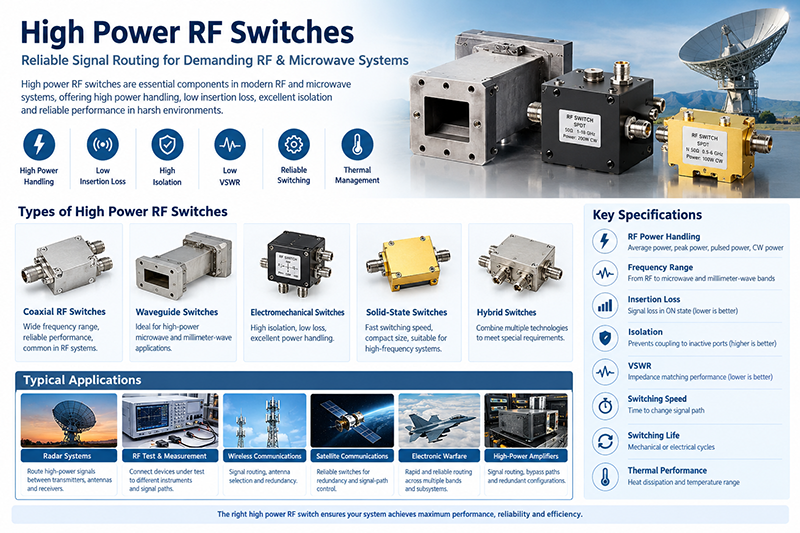
High power RF switches are essential components in modern RF and microwave systems where signal routing must be performed while handling substantial radio-frequency power.Sep 16 ,26
-
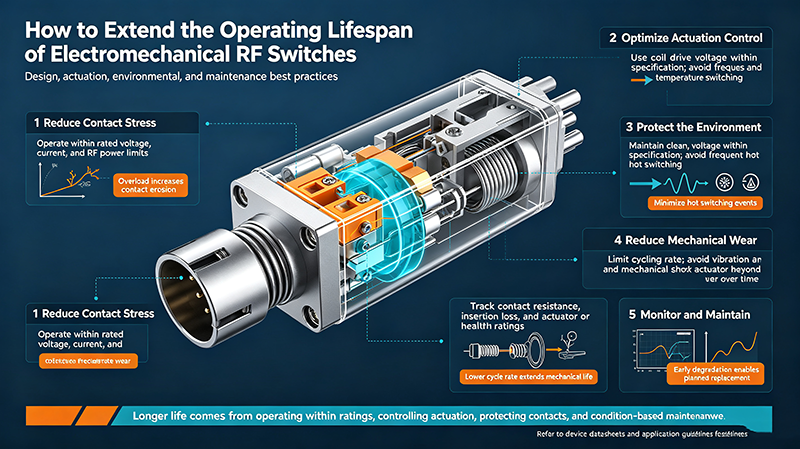
How to extend the operating lifespan of electromechanical RF switches. Practical guidance on cold switching, derating, contact wear, environment, and maintenance for coaxial and waveguide RF switches.Sep 07 ,26
-
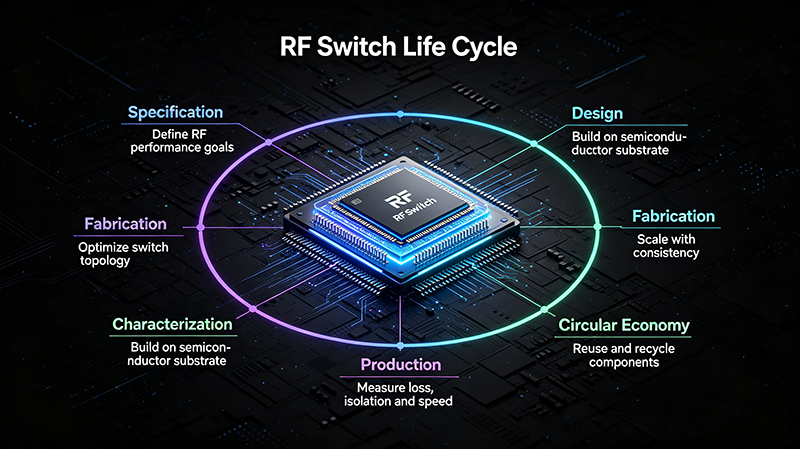
Every RF switch has a finite life cycle. Whether it is a coaxial electromechanical relay, a PIN-diode solid-state switch, or an MEMS device, un...Aug 29 ,26
-
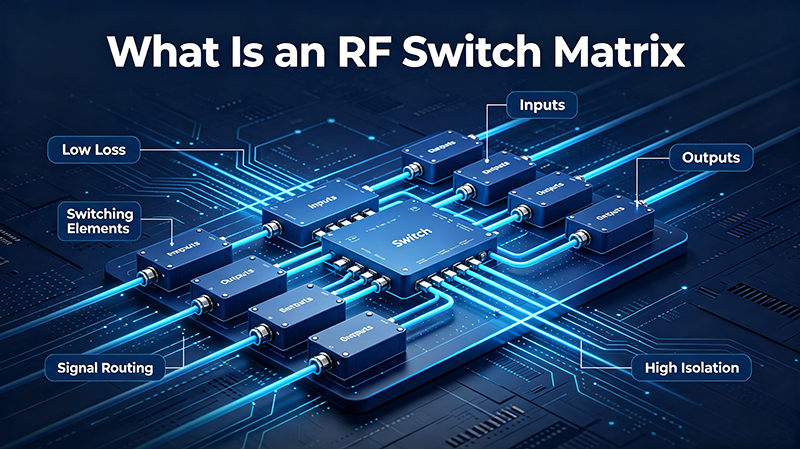
Expert guide to RF switch matrices covering architecture, types, specifications, applications, and selection criteria. Learn about blocking, non-blocking, and hybrid matrix designs.Aug 08 ,26
-
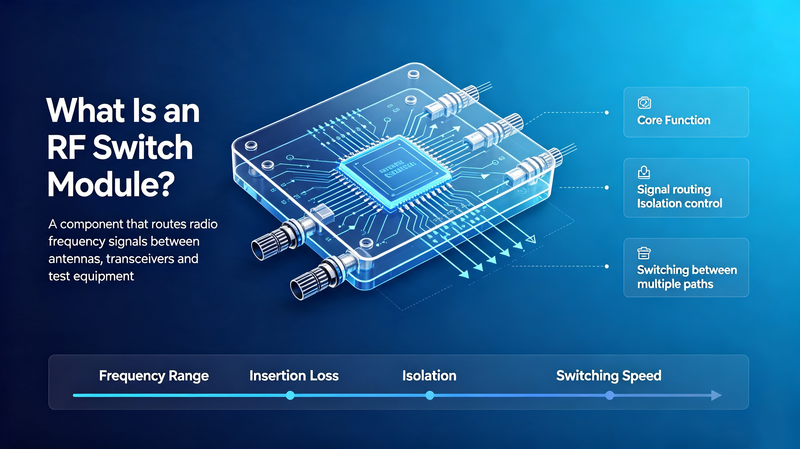
An RF Switch Module is a critical microwave component used to control the routing of radio frequency signals between multiple circuits, antennas, or test channels.Aug 07 ,26
-
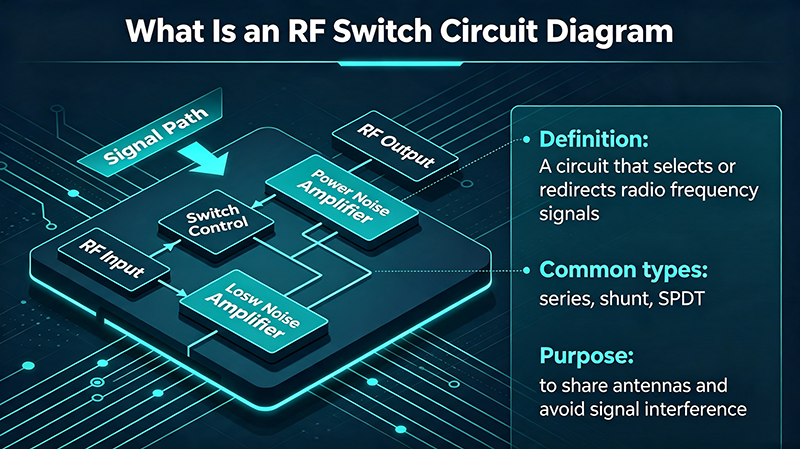
An RF switch circuit diagram provides a visual representation of how radio frequency signals are routed, controlled, and isolated within an RF system.Aug 06 ,26
-
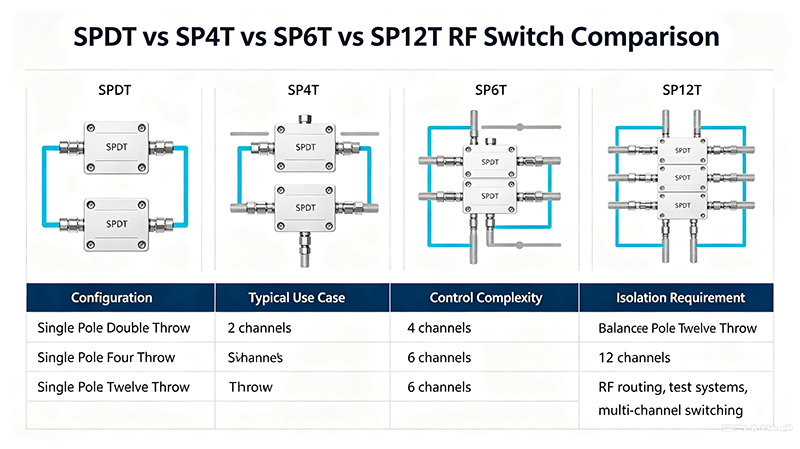
RF switches are essential components in modern wireless communication, radar systems, test equipment, and satellite applications. Among the most commonly used configurations are SPDT, SP4T, SP6T, and SP12T RF switches.Aug 05 ,26
-
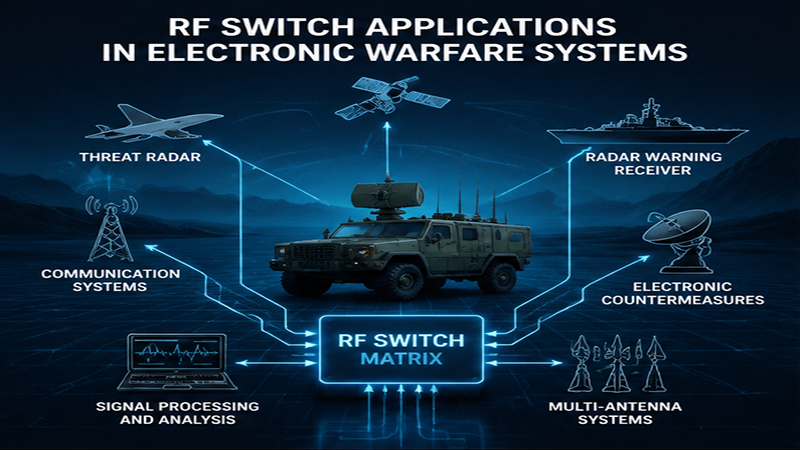
Electronic warfare (EW) systems require extremely fast, reliable, and precise control of radio frequency signals. RF switches play a critical role in modern electronic warfare architectures by enabling rapid signal routing, antenna selection, frequency management, and protection of sensitive RF components.Aug 04 ,26
-
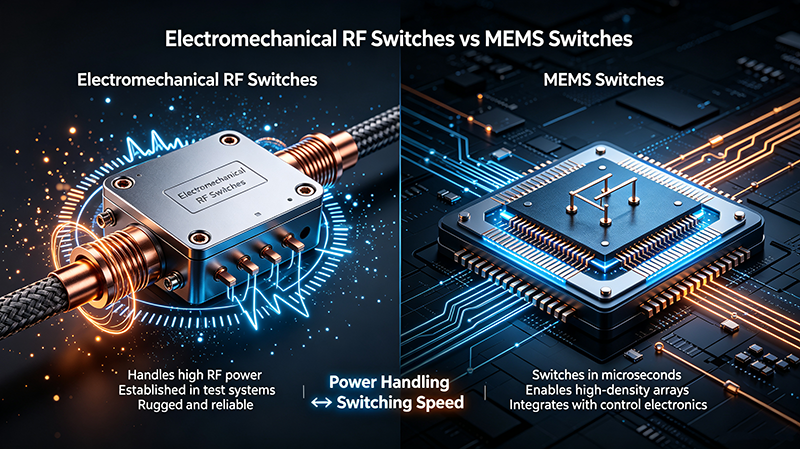
Among the available technologies, electromechanical RF switches and MEMS (Micro-Electro-Mechanical Systems) switches are two important solutions for high-performance RF signal routing.Jul 30 ,26
About the Author — MeiXun Team
Chief Engineer Wang
High-tech Enterprise, Feifeng Talent
Chief Engineer Wang graduated with a master's degree in high-power microwave from the Institute of Electronics, University of Chinese Academy of Sciences.
View Full Profile- RF Switch Circuit Diagram
- RF Switch
- Ohm's Law
- dBm to Watt
- mW to dBm
- Wavelength to Frequency
- RF Connector
- SMA Connector
- RF Switch Module
- RF Coupler
- RF PIN Switch
- Microwave Coaxial Switch
- PIN Switch
- Coaxial RF Switch
- Waveguide Switch
- Microwave Switch
- Low Noise Amplifier
- PIN Diode Switch
- Coaxial Switch
- RF Microwave Switch
- SPST Switch