






RF Switch Applications in Electronic Warfare Systems
Electronic warfare (EW) systems require extremely fast, reliable, and precise control of radio frequency signals. RF switches play a critical role in modern electronic warfare architectures by enabling rapid signal routing, antenna selection, frequency management, and protection of sensitive RF components. From radar warning receivers to electronic countermeasure platforms, high-performance RF switches are essential components for achieving superior battlefield awareness and signal control.
What Are RF Switches in Electronic Warfare Systems?
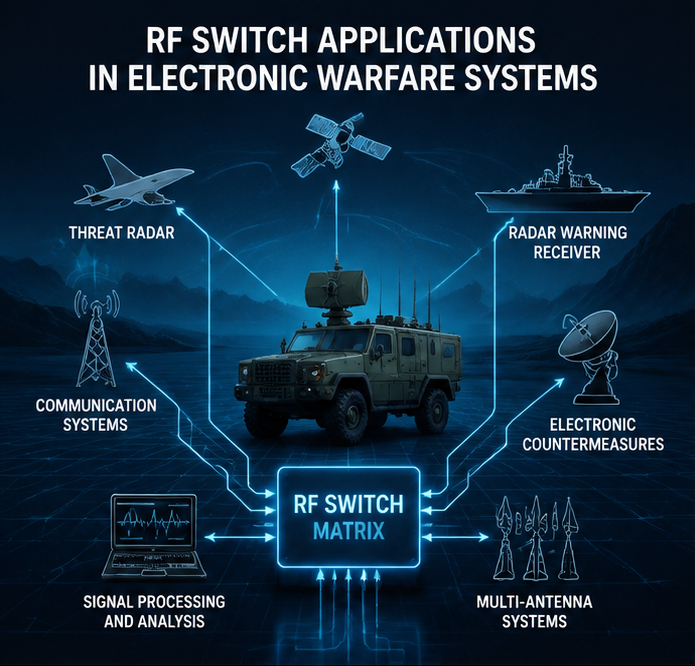
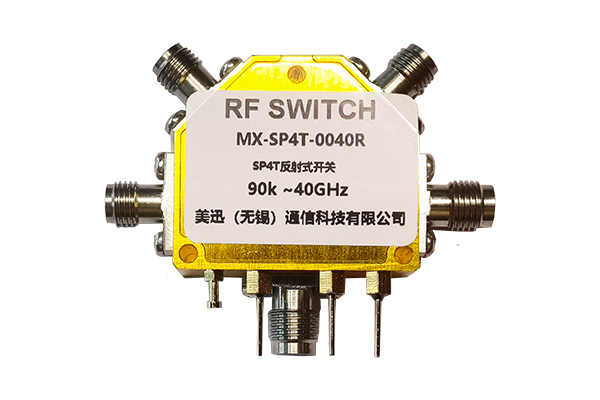
An RF switch is an electronic component designed to control the connection between multiple RF signal paths. It allows engineers to selectively connect or disconnect transmission lines, antennas, receivers, and signal processing modules while maintaining high-frequency performance.
In electronic warfare applications, RF switches must operate under demanding conditions, including wide frequency ranges, high power levels, fast switching speeds, and harsh electromagnetic environments. They are commonly used in systems that detect, analyze, disrupt, or protect against enemy RF signals.
Why RF Switches Are Important for Electronic Warfare
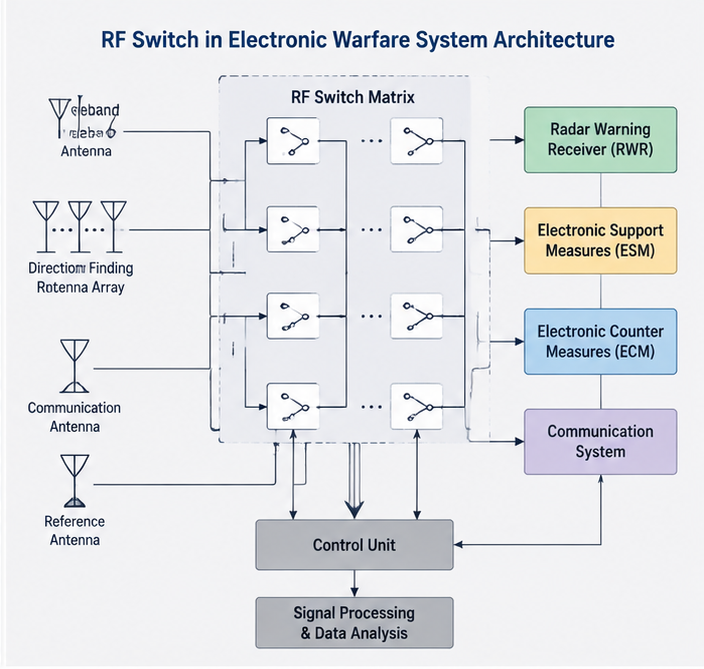
Modern electronic warfare systems rely on rapid signal processing and adaptive RF architectures. RF switches provide the flexibility required to dynamically change signal paths and optimize system performance.
- Fast Signal Routing: Enables quick switching between antennas, receivers, and transmitters.
- Frequency Agility: Supports rapid changes across multiple frequency bands.
- High Isolation: Prevents unwanted signal leakage between RF channels.
- Low Insertion Loss: Maintains signal strength and system sensitivity.
- High Power Handling: Supports demanding transmit and countermeasure operations.
Major Applications of RF Switches in Electronic Warfare Systems
1. Radar Warning Receivers (RWR)
Radar warning receivers detect and identify incoming radar emissions. RF switches are used to route signals from multiple antennas into receiver channels, allowing the system to monitor a broad frequency spectrum.
High-isolation RF switches help prevent interference between channels, improving threat detection accuracy and reducing false alarms.
2. Electronic Countermeasure (ECM) Systems
Electronic countermeasure systems generate interference signals to disrupt hostile radar and communication systems. RF switches control connections between signal generators, amplifiers, and antennas.
Fast switching capability allows ECM systems to respond quickly to changing threats and support multiple jamming techniques.
3. Electronic Support Measures (ESM)
ESM systems collect and analyze electromagnetic signals for intelligence and situational awareness. RF switches enable flexible antenna selection and signal distribution, improving coverage and detection capability.
4. Phased Array Antenna Systems
Advanced electronic warfare platforms often use phased array antennas requiring precise RF signal control. RF switches help manage multiple antenna elements and RF channels while maintaining signal integrity.
5. RF Test and Calibration Systems
Military RF equipment requires extensive testing and calibration. Automated RF switch matrices allow engineers to connect multiple test instruments and devices under test without manual cable replacement.
Types of RF Switches Used in Electronic Warfare
| RF Switch Type | Features | Applications |
|---|---|---|
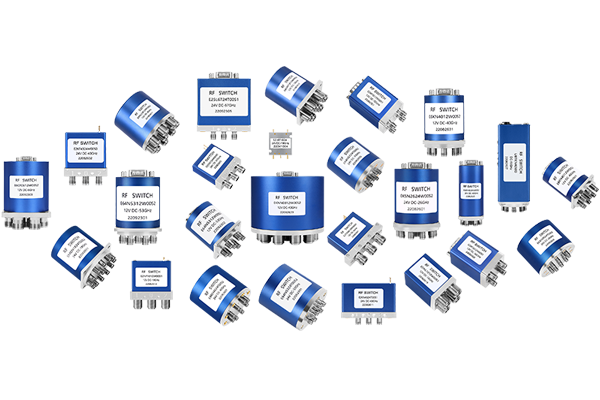
| Electromechanical RF Switch | High isolation, high power handling, excellent RF performance | Radar systems, military communication, test equipment |
| PIN Diode Switch | Fast switching speed, high reliability, solid-state design | Electronic warfare receivers and transmitters |
| MEMS RF Switch | Low power consumption, low insertion loss | Advanced RF systems and compact platforms |
| Solid-State RF Switch | High switching speed and long operational lifetime | Modern digital EW architectures |
Key Performance Requirements for EW RF Switches
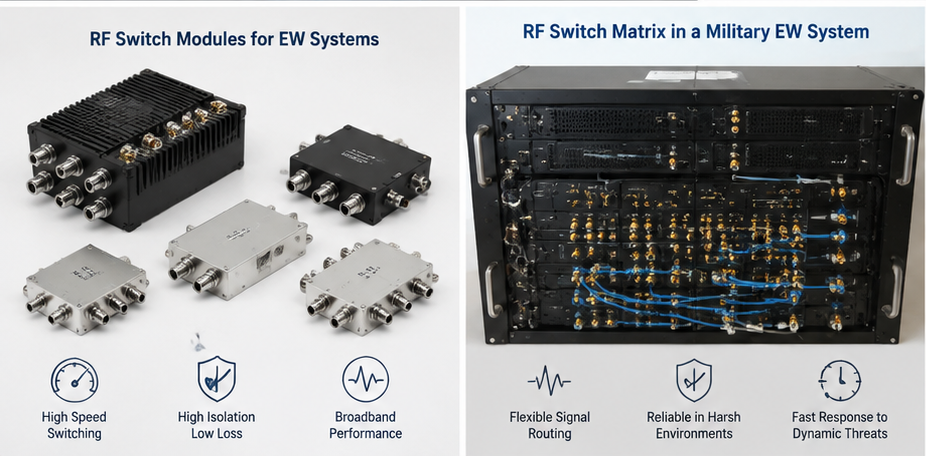
Selecting RF switches for electronic warfare requires careful evaluation of several critical specifications:
- Frequency Range: The switch must support the required RF and microwave frequency bands.
- Insertion Loss: Lower loss improves overall system sensitivity and efficiency.
- Isolation: High isolation prevents interference between signal paths.
- Switching Speed: Fast switching enables rapid response to changing threats.
- Power Handling: The switch must withstand high RF power levels during transmission.
- VSWR Performance: Low VSWR ensures better impedance matching and signal integrity.
RF Switch Technology Trends in Electronic Warfare
The evolution of electronic warfare systems is driving demand for advanced RF switching technologies. Future RF switches are expected to provide higher frequency operation, improved power handling, smaller form factors, and faster switching speeds.
Technologies such as GaN-based RF components, advanced MEMS switches, and digitally controlled RF switching networks are enabling next-generation EW platforms with greater flexibility and performance.
How to Choose the Right RF Switch for Electronic Warfare Applications
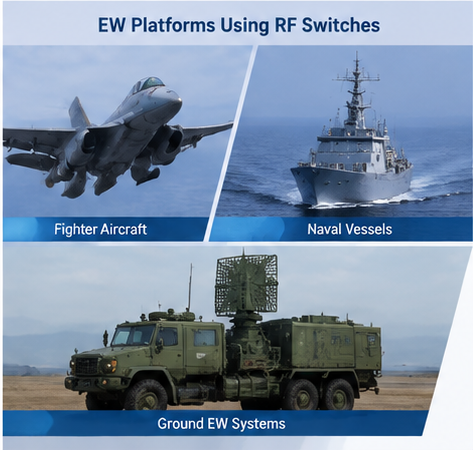
Engineers should consider system requirements before selecting an RF switch. Important factors include:
- Operating frequency and bandwidth requirements
- Required switching speed and control method
- Maximum RF power level
- Environmental and military qualification requirements
- Size, weight, and power limitations
- Reliability and operational lifetime
Conclusion
RF switches are fundamental components in modern electronic warfare systems, providing precise control of high-frequency signals across radar warning receivers, electronic countermeasures, communication systems, and phased array platforms. With increasing demand for faster response times and wider frequency coverage, advanced RF switch technologies will continue to play a vital role in next-generation defense electronics.
Choosing the right RF switch with optimized insertion loss, isolation, switching speed, and power handling capability is essential for building reliable and high-performance electronic warfare solutions.
About the Author — MeiXun Team
Chief Engineer Wang
High-tech Enterprise, Feifeng Talent
Chief Engineer Wang graduated with a master's degree in high-power microwave from the Institute of Electronics, University of Chinese Academy of Sciences.
View Full Profile- RF Switch Circuit Diagram
- RF Switch
- Ohm's Law
- dBm to Watt
- mW to dBm
- Wavelength to Frequency
- RF Connector
- SMA Connector
- RF Switch Module
- RF Coupler
- RF PIN Switch
- Microwave Coaxial Switch
- PIN Switch
- Coaxial RF Switch
- Waveguide Switch
- Microwave Switch
- Low Noise Amplifier
- PIN Diode Switch
- Coaxial Switch
- RF Microwave Switch
- SPST Switch