




Discover how solid state RF switches deliver fast, reliable, and precise signal routing for 5G, radar, test systems, and wireless infrastructure.
Sep 18 ,26


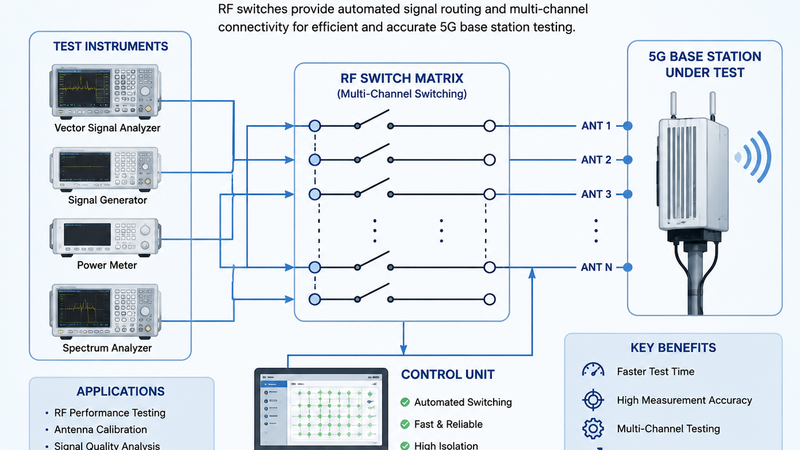
5G communication testing, wireless terminal automated testing
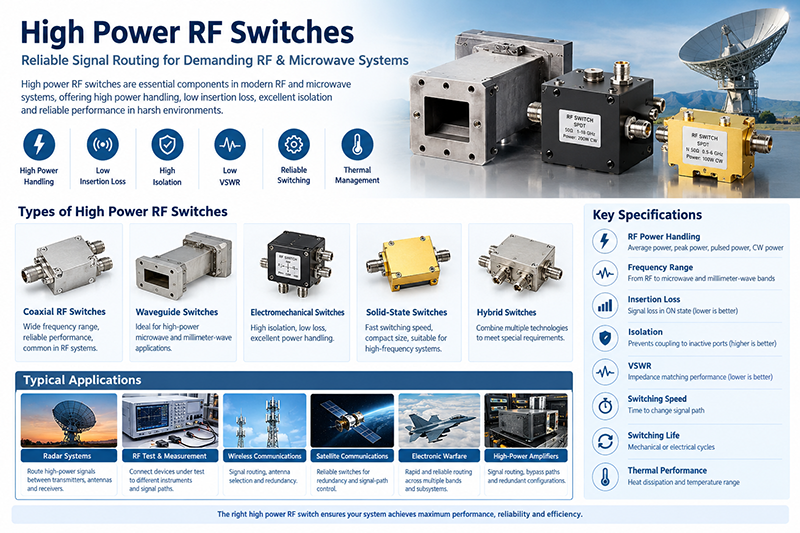
Aerospace communication systems
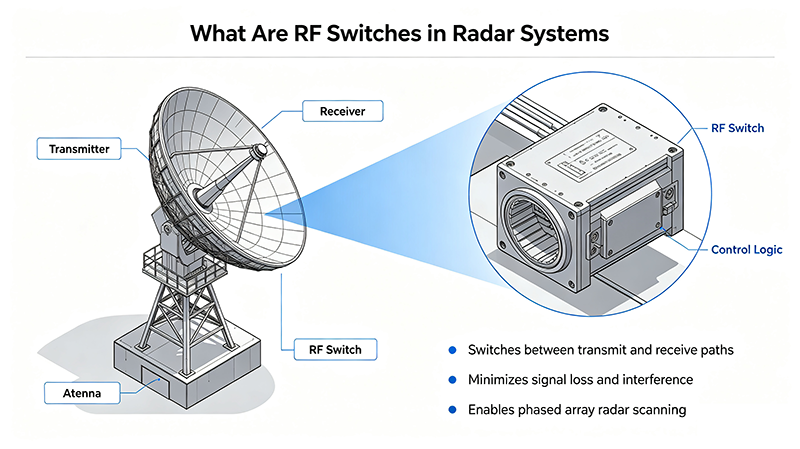
Precision measurement equipment, radio frequency signal control of radar transmitters
Communication and navigation systems
Optical communication module-related testing
Interconnection of wireless communication base stations
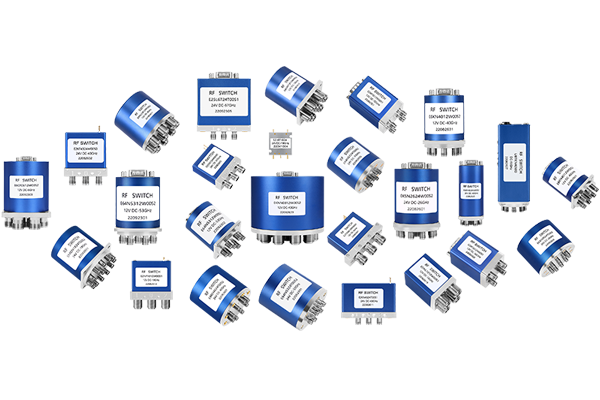
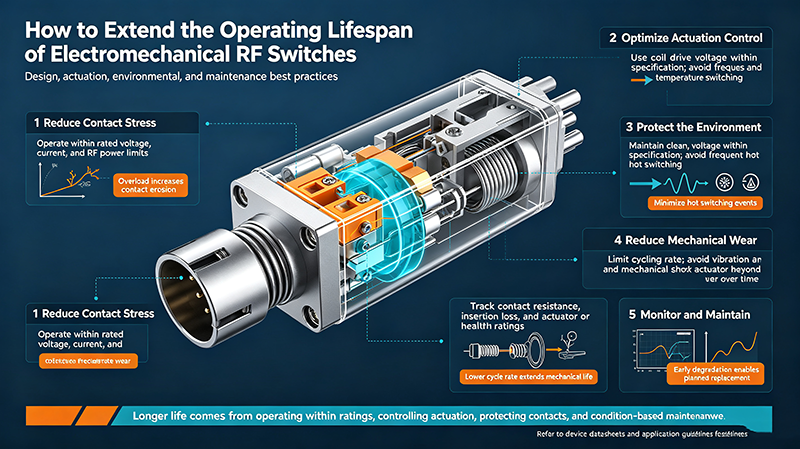
Electromechanical RF switches are widely used in advanced communication systems, aerospace electronics, automated test equipment, radar systems, and wireless infrastructure due to their excellent RF performance, high isolation, and low insertion loss. However, achieving an extended operating lifespan remains a critical challenge, especially in applications requiring millions of switching operations.
Modern high-performance electromechanical RF switches are designed to deliver up to 2 million switching cycles or more. Reaching this level of durability requires careful consideration of mechanical design, switching conditions, control methods, environmental factors, and proper maintenance strategies.
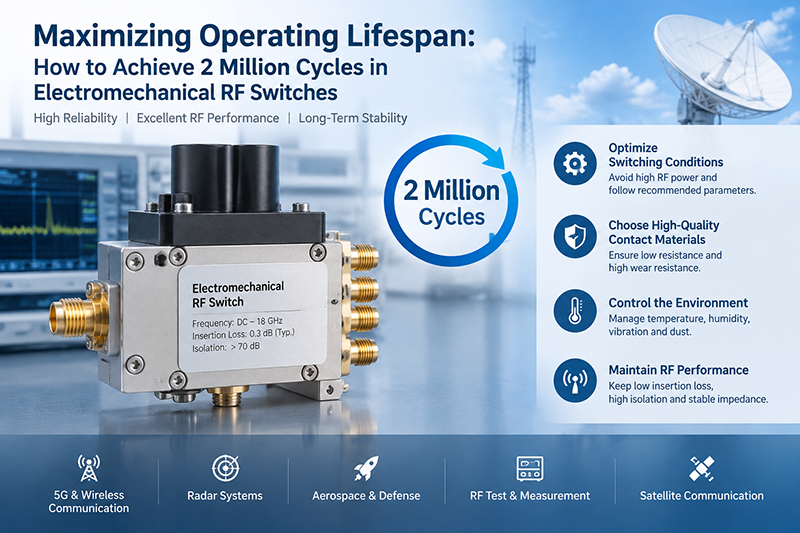
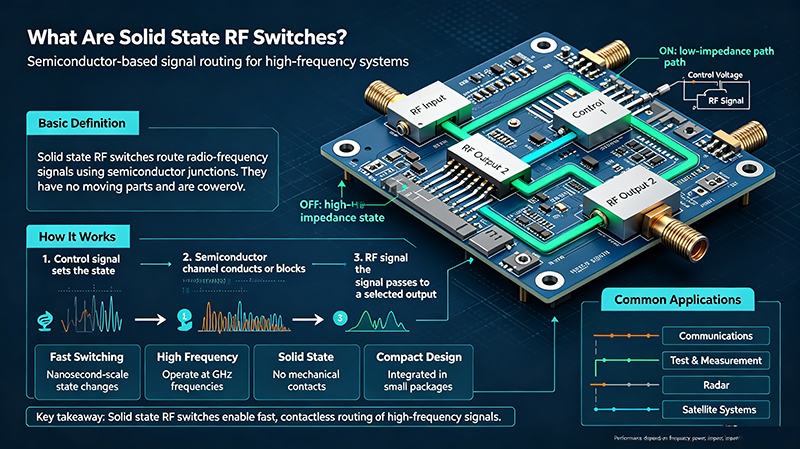
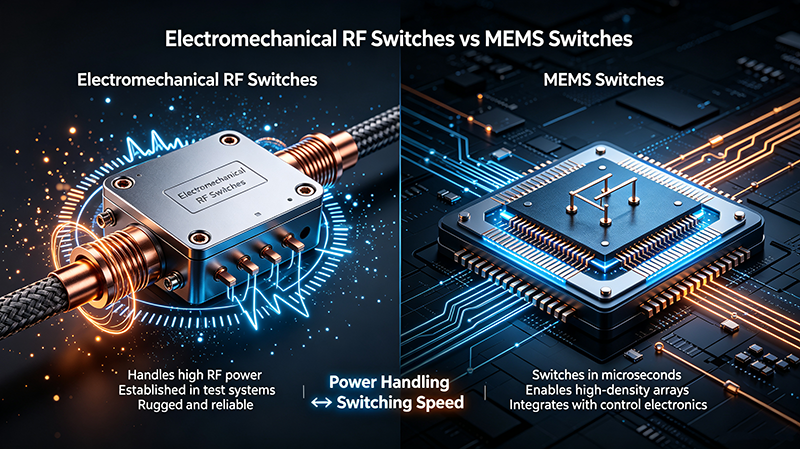
Unlike solid-state RF switches, electromechanical RF switches use physical moving components to establish or interrupt electrical connections. The mechanical movement provides excellent RF characteristics but introduces wear mechanisms that directly affect operational lifetime.
The internal relay mechanism is the primary factor influencing cycle life. Each switching action causes mechanical movement between contacts, which can gradually lead to:
High-quality RF switches use precision-machined components, optimized contact materials, and advanced actuator designs to minimize mechanical stress and achieve millions of cycles.
Operating an RF switch beyond its power rating can significantly reduce its lifespan. Excessive RF power may create arcing between contacts, causing permanent damage and increasing insertion loss.
Engineers should consider:
Proper operating procedures are essential for maximizing the lifetime of electromechanical RF switches. The following practices can significantly improve cycle performance:
Contact material selection directly influences durability and RF performance. Common materials used in premium RF switches include gold-plated contacts and specialized alloys designed for low resistance and high wear resistance.
| Design Factor | Impact on Switch Lifetime |
|---|---|
| Contact Material | Improves resistance stability and reduces mechanical wear |
| Actuator Design | Controls mechanical stress during switching |
| Switching Speed | Reduces contact damage caused by unstable transitions |
| Environmental Sealing | Protects internal components from contamination |
A reliable electromechanical RF switch requires more than durable mechanical components. The complete RF structure must maintain consistent electrical performance throughout millions of switching cycles.
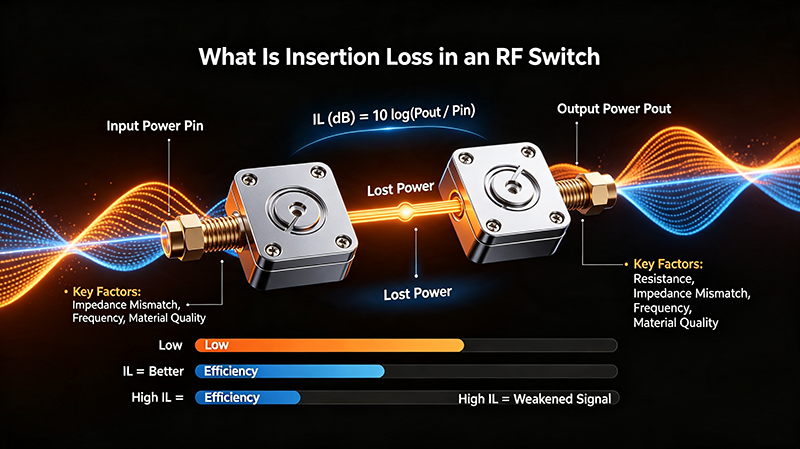
Over time, mechanical degradation can increase insertion loss. High-quality RF switches maintain stable RF paths through precision manufacturing and optimized transmission structures.
Isolation between channels is essential in RF test systems and communication equipment. Poor mechanical contact conditions can reduce isolation and introduce unwanted signal leakage.
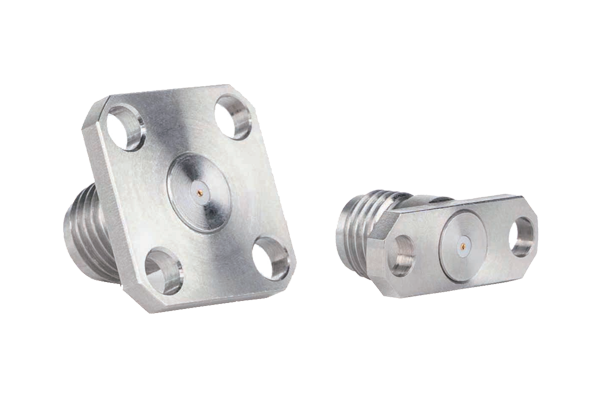
RF connectors such as SMA, 2.92 mm, 2.4 mm, and SMP interfaces must maintain excellent electrical contact during repeated system operations. Proper connector selection and installation help preserve long-term performance.
Environmental conditions can significantly influence the actual operating lifespan of electromechanical RF switches.
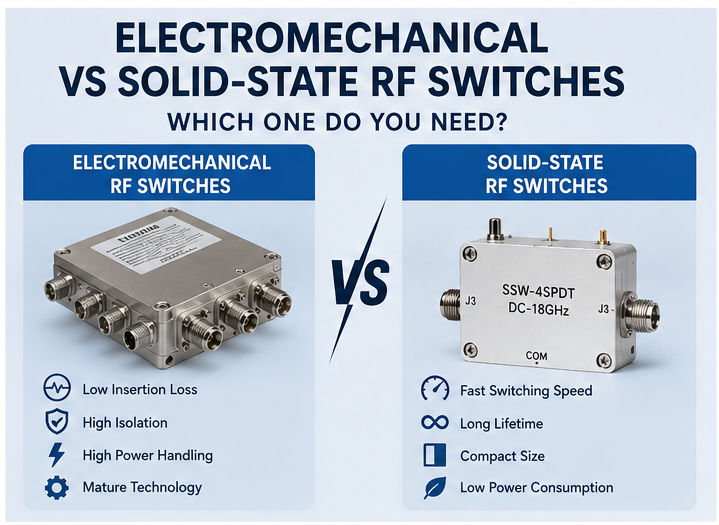
| Feature | Electromechanical RF Switch | Solid-State RF Switch |
|---|---|---|
| Insertion Loss | Very low | Moderate |
| Isolation | Excellent | Good |
| Switching Speed | Milliseconds | Nanoseconds to microseconds |
| Cycle Life | Up to millions of cycles | Extremely high |
| Power Handling | High | Application dependent |
Long-life electromechanical RF switches are essential in applications where downtime is costly and switching reliability directly affects system performance.
Achieving a 2 million cycle lifespan in electromechanical RF switches requires a combination of advanced mechanical engineering, high-quality materials, proper RF system design, and optimized operating conditions. By selecting reliable RF switch solutions and following recommended operating practices, engineers can ensure stable performance over years of demanding applications.
For RF test systems, aerospace electronics, communication networks, and high-frequency applications, high-cycle-life electromechanical RF switches provide the ideal balance between exceptional RF performance and long-term reliability.
High-tech Enterprise, Feifeng Talent
Chief Engineer Wang graduated with a master's degree in high-power microwave from the Institute of Electronics, University of Chinese Academy of Sciences.
View Full Profile