

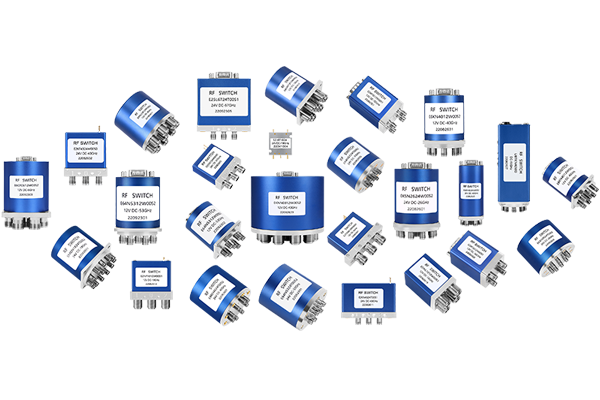
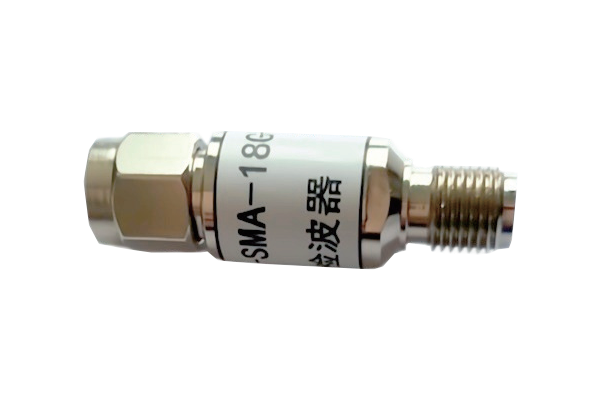
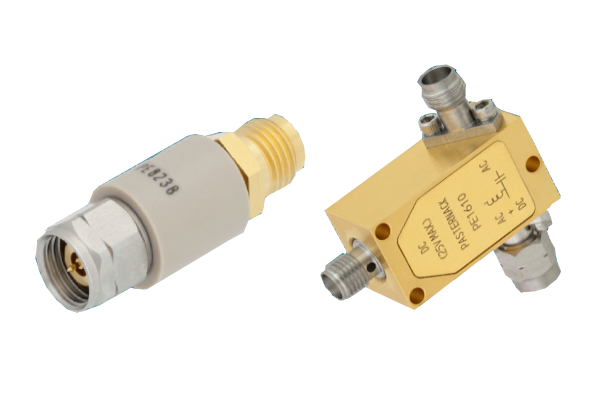
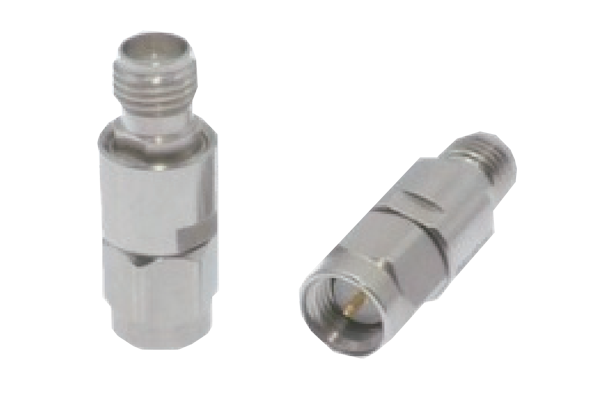
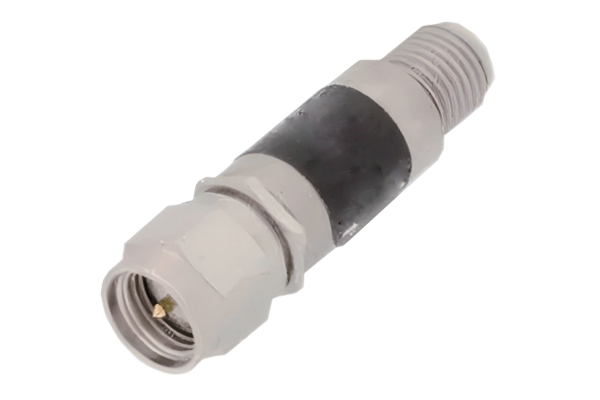
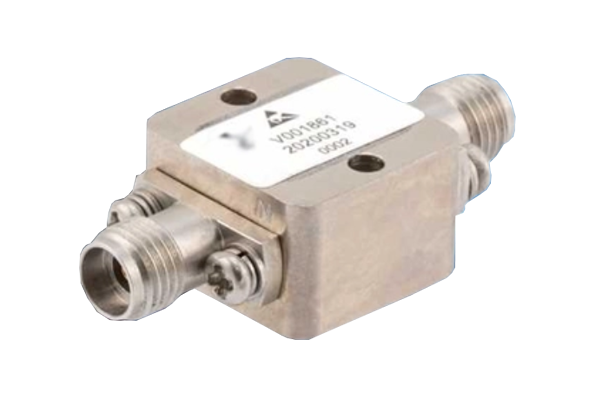
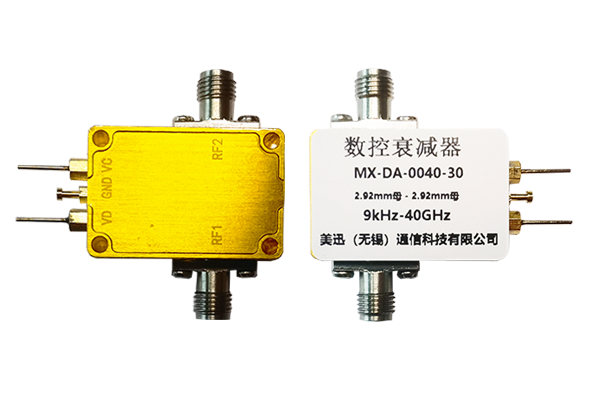
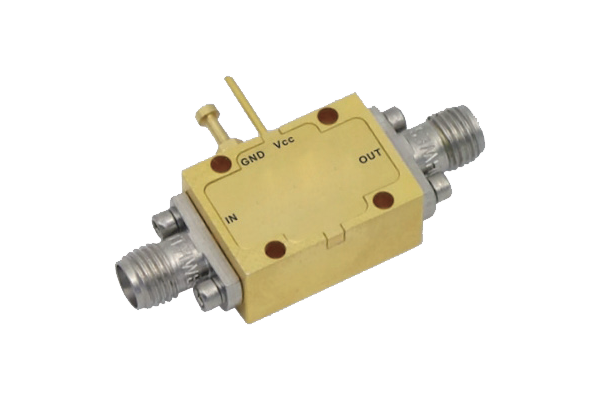
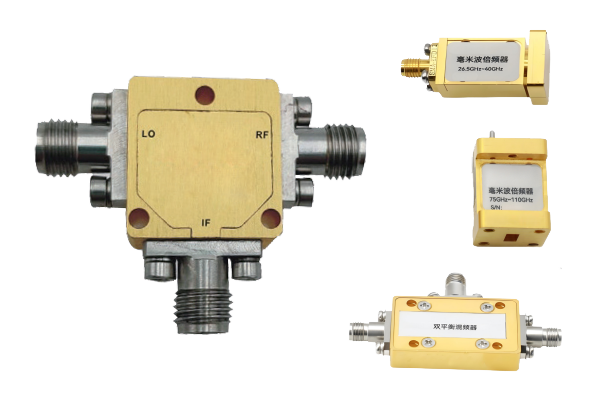
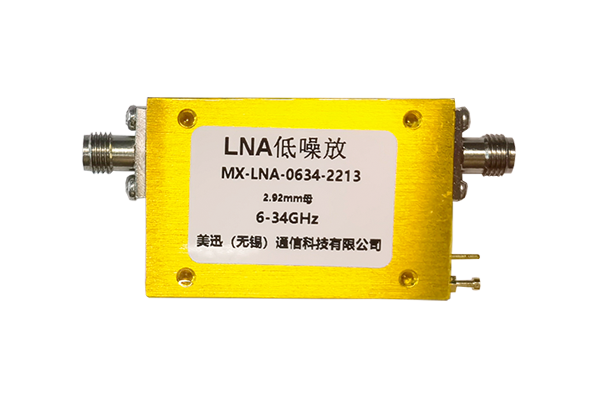
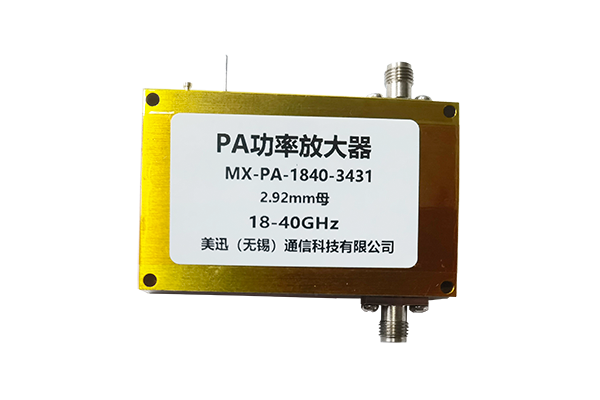
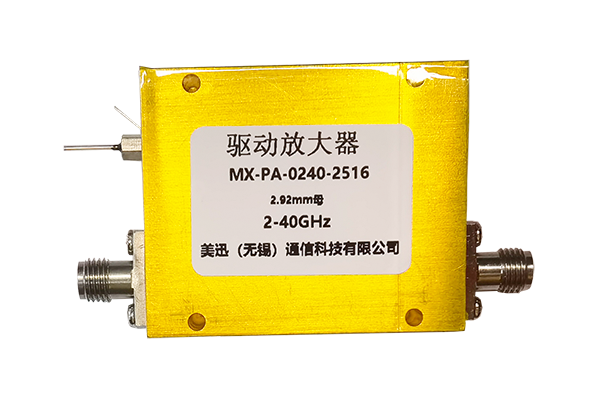




An RF Switch Module is a critical microwave component used to control the routing of radio frequency signals between multiple circuits, antennas, or test channels. RF switch modules are widely used in wireless communication systems, radar equipment, satellite communication, 5G infrastructure, automated test systems, and electronic warfare applications.
With increasing demands for higher frequency operation, lower insertion loss, and improved signal integrity, selecting the right RF switch module has become essential for modern RF system designers.
What Is an RF Switch Module?
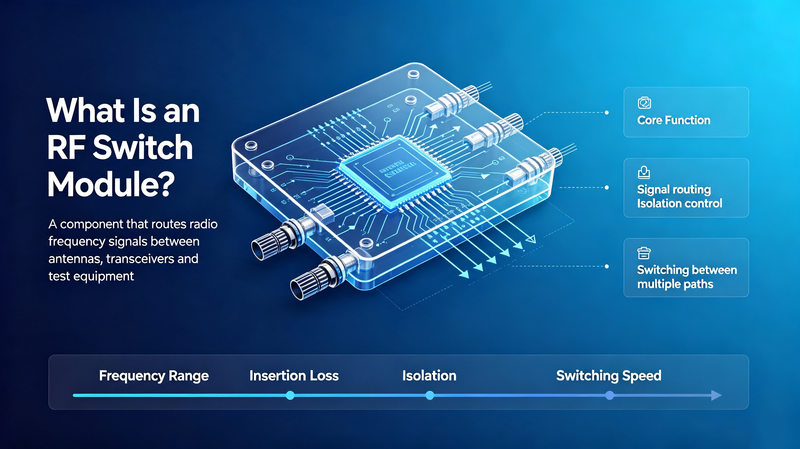
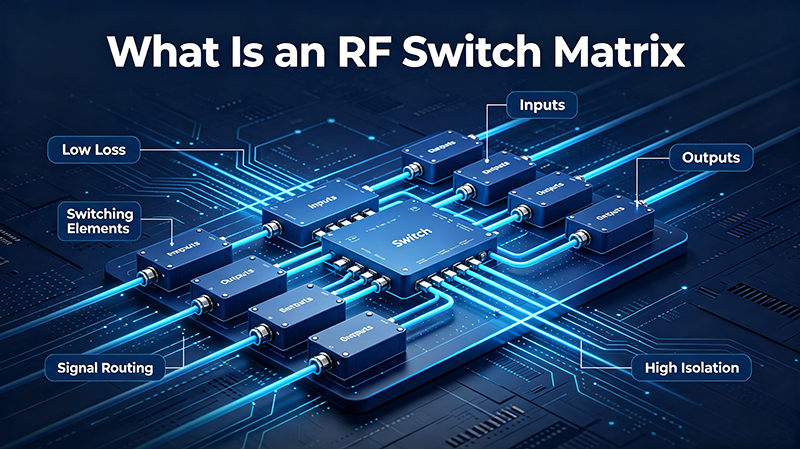
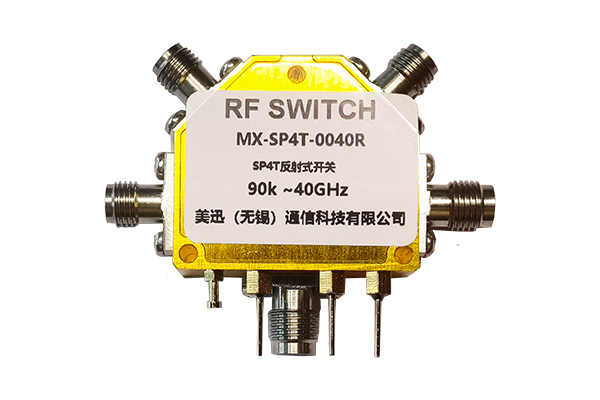
An RF Switch Module is an integrated RF switching solution that combines one or more radio frequency switches with control circuits, connectors, and mechanical or semiconductor components. It allows engineers to electronically control the signal path without manually reconnecting cables.
Unlike conventional electrical switches, RF switch modules are specifically designed to handle high-frequency signals while maintaining excellent performance characteristics, including low insertion loss, high isolation, low VSWR, and fast switching speed.
Main functions of RF switch modules include:
- Routing RF signals between multiple channels
- Selecting different antennas or transmission paths
- Switching between transmit and receive modes
- Supporting automated RF measurement systems
- Improving system flexibility and reliability
How Does an RF Switch Module Work?
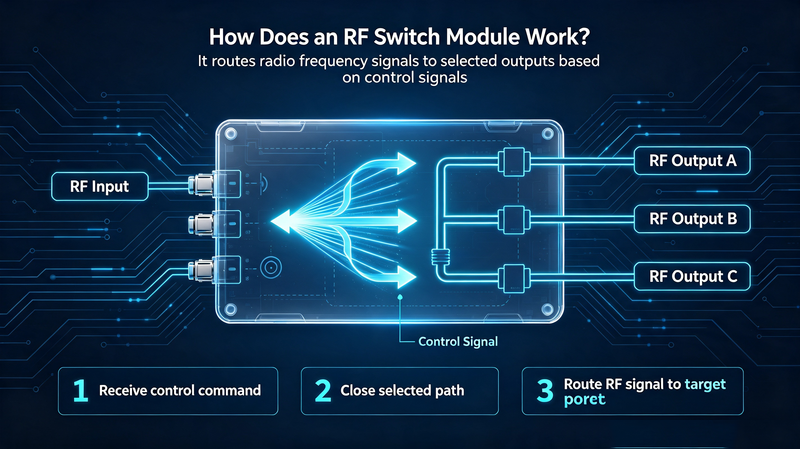
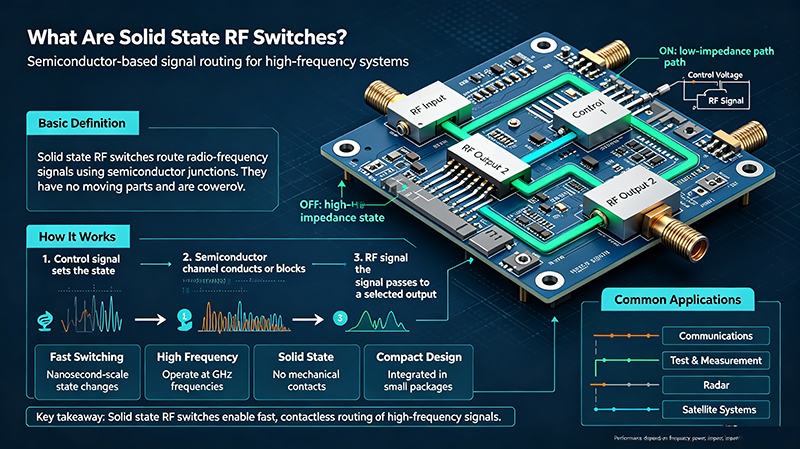
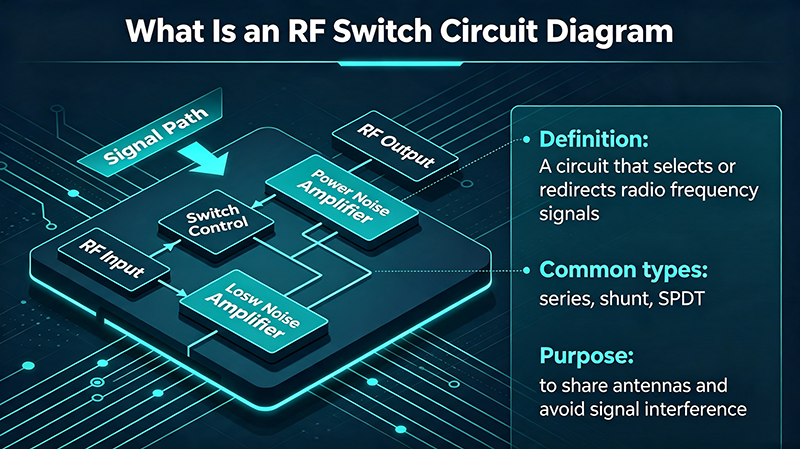
An RF switch module operates by controlling the connection between input and output ports through an electrical control signal. Depending on the switch technology, the signal path can be changed using mechanical contacts, PIN diodes, MEMS technology, or solid-state semiconductor devices.
Basic Working Process
- The control system sends an electrical command to the RF switch module.
- The internal switching element changes its state.
- The RF signal is directed to the selected output port.
- Unused channels are isolated to prevent signal interference.
High-performance RF switch modules are designed to maintain consistent RF characteristics across all switching states, ensuring stable system operation.
Types of RF Switch Modules
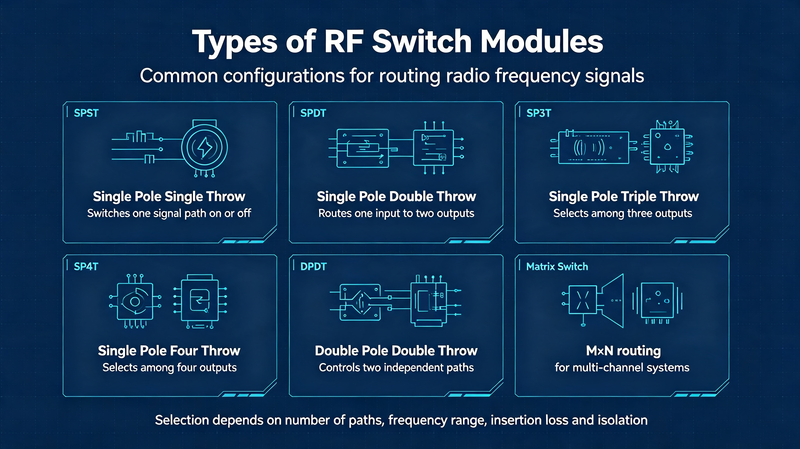
1. Electromechanical RF Switch Modules
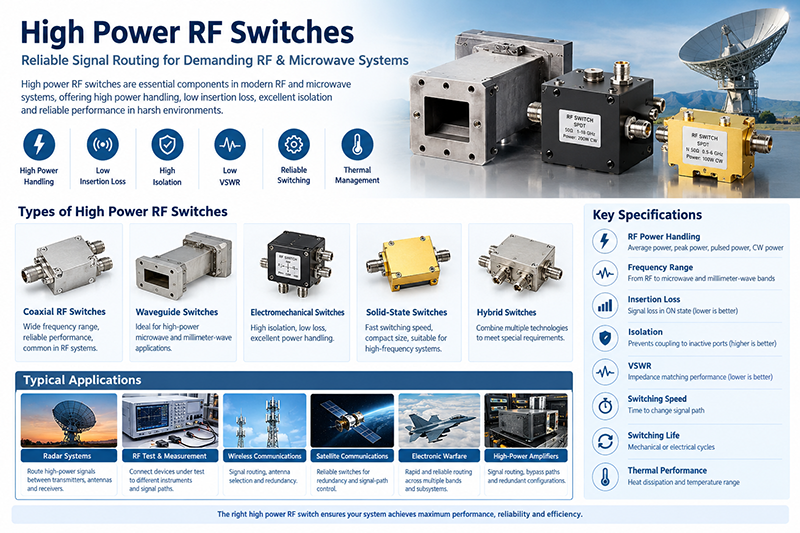
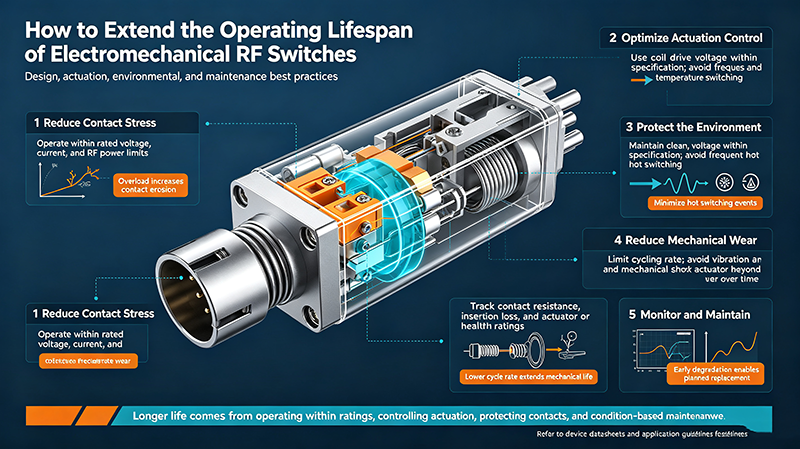
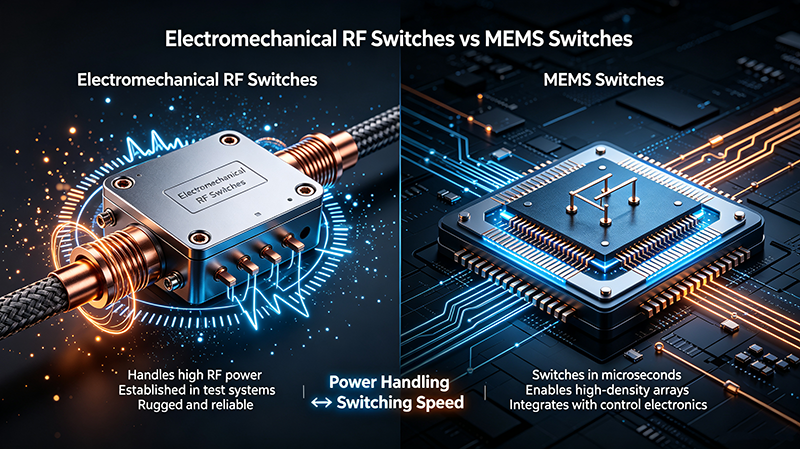
Electromechanical RF switch modules use physical contacts to control RF signal paths. They provide excellent isolation, high power handling capability, and wide frequency coverage.
These modules are commonly used in RF test equipment, communication systems, and aerospace applications where reliability is critical.
2. Solid-State RF Switch Modules
Solid-state RF switch modules use semiconductor devices such as PIN diodes or FETs to perform switching operations. They offer extremely fast switching speeds and high reliability because they have no moving mechanical parts.
3. MEMS RF Switch Modules
MEMS RF switch modules use micro-electromechanical structures to achieve low power consumption and excellent RF performance. They provide a balance between mechanical switch performance and semiconductor switching speed.
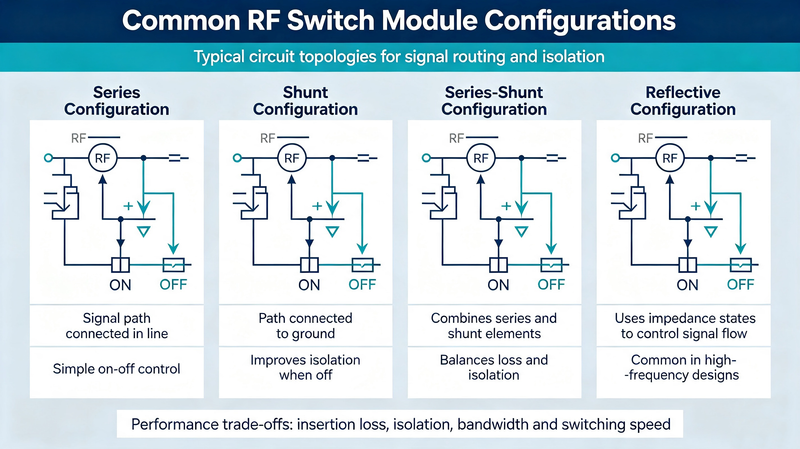
Common RF Switch Module Configurations
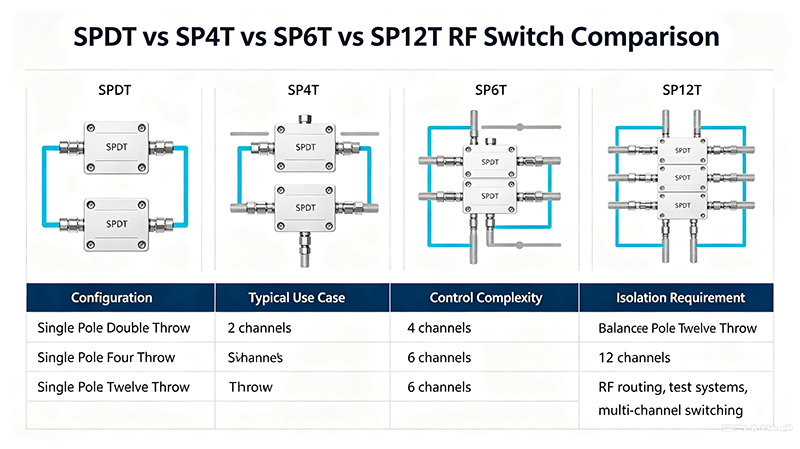
| Configuration | Description | Applications |
|---|---|---|
| SPST | Single Pole Single Throw switch with one input and one output path | Signal on/off control |
| SPDT | Single Pole Double Throw switch for selecting two signal paths | Antenna switching, RF testing |
| SP4T / SP6T | Multiple output channel switching | Wireless communication systems |
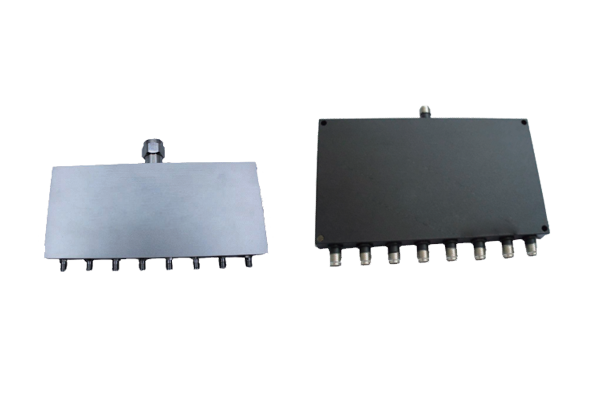
| SP12T | High-density multi-channel RF switching | Automated test equipment |
Key Specifications of RF Switch Modules
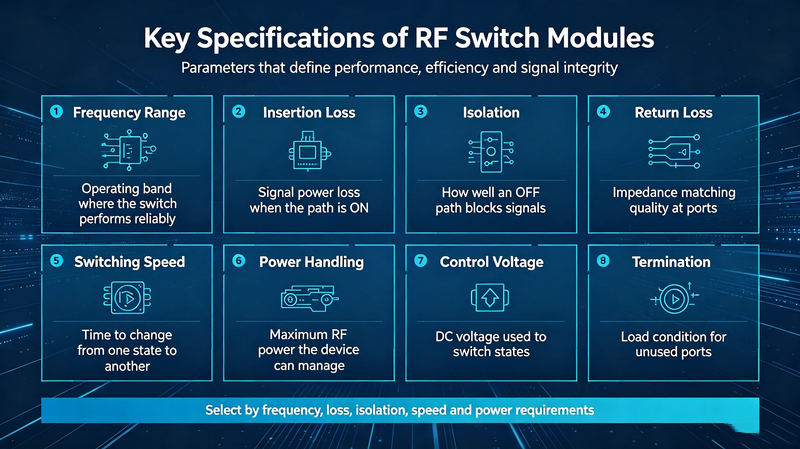
When selecting an RF switch module, engineers should evaluate several important RF parameters.
1. Frequency Range
Frequency capability determines whether the RF switch module can support the target application. Common frequency ranges include VHF, UHF, microwave, and millimeter-wave bands.
2. Insertion Loss
Insertion loss represents the signal power reduction when the switch is turned on. Lower insertion loss improves overall system efficiency and signal quality.
3. Isolation
Isolation measures how effectively the switch prevents unwanted signal leakage between disconnected ports. High isolation is especially important in radar, communication, and measurement systems.
4. VSWR
Voltage Standing Wave Ratio (VSWR) indicates impedance matching performance. A lower VSWR reduces signal reflection and improves RF system performance.
5. Switching Speed
Switching speed defines how quickly the module changes between signal paths. Fast switching is essential for phased array radar, communication networks, and real-time testing.
6. Power Handling Capability
RF switch modules must support the required input power level without signal distortion or component damage.
Applications of RF Switch Modules
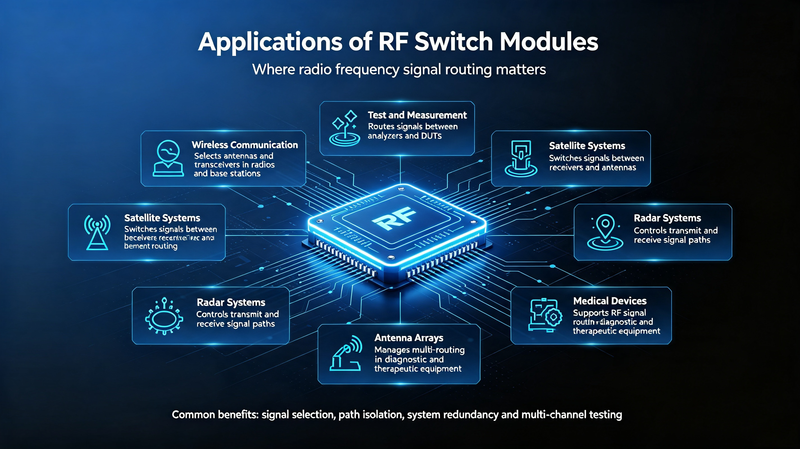
Wireless Communication Systems
RF switch modules are widely used in cellular networks, base stations, and wireless devices to manage antenna paths and frequency bands.
Radar Systems
Radar applications require high isolation, fast switching speed, and excellent reliability. RF switch modules enable signal routing between transmit and receive channels.
Satellite Communication
Satellite systems use RF switch modules for antenna selection, redundancy switching, and signal distribution.
RF Test and Measurement Equipment
Automated test systems rely on RF switch modules to connect multiple devices under test with measurement instruments.
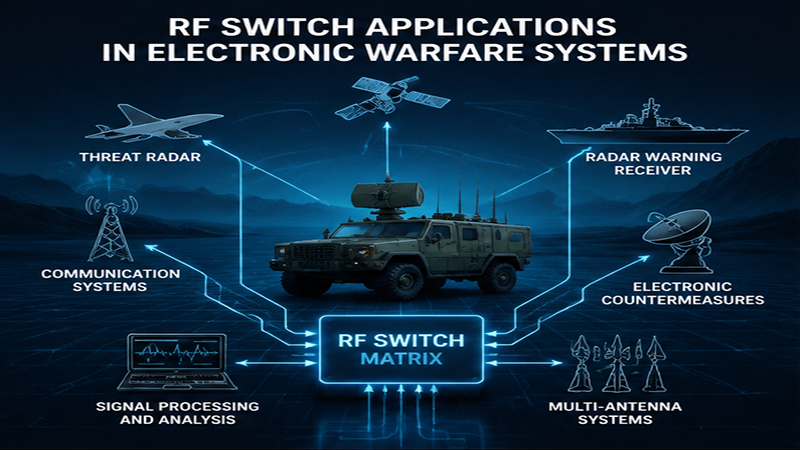
Electronic Warfare Systems
RF switch modules provide rapid signal routing and frequency management capabilities for advanced electronic warfare platforms.
How to Choose the Right RF Switch Module?
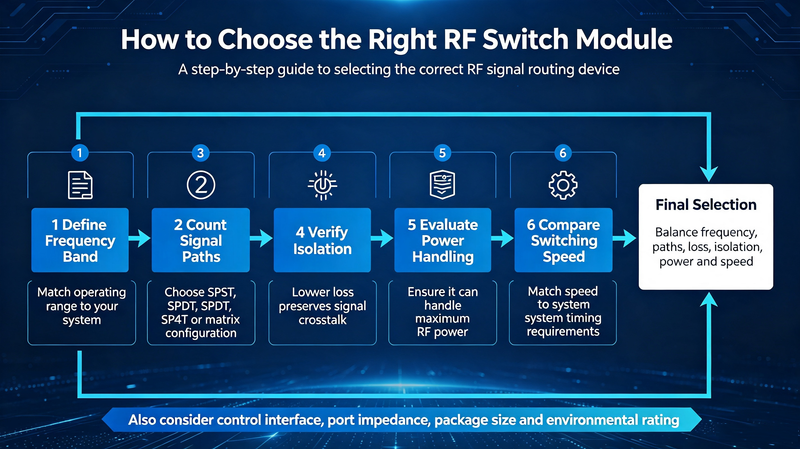
- Define frequency requirements: Select a module that covers the operating frequency range.
- Evaluate RF performance: Compare insertion loss, isolation, and VSWR specifications.
- Consider switching speed: Choose mechanical or solid-state solutions according to system requirements.
- Check power capacity: Ensure the switch supports required RF power levels.
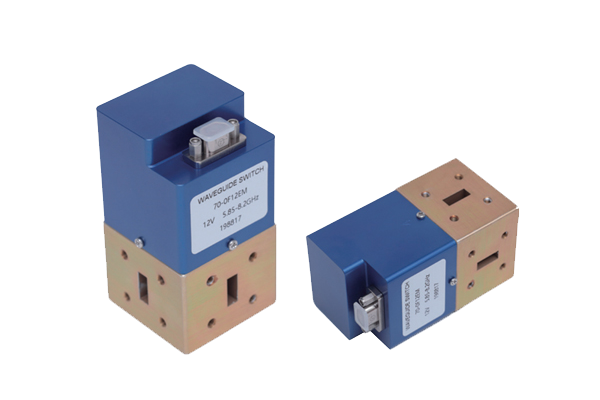
- Review connector options: Select suitable interfaces such as SMA, N-type, 2.92mm, or waveguide connectors.
Advantages of Using RF Switch Modules
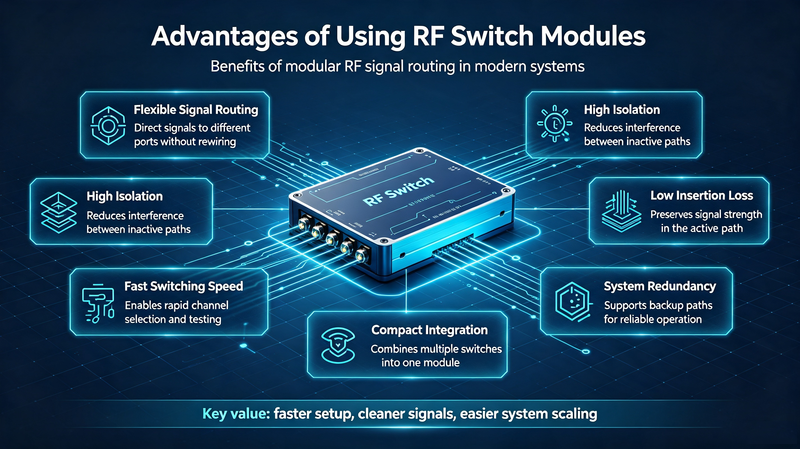
- Compact and integrated design
- Improved RF system flexibility
- Reduced manual cable switching
- Reliable signal routing
- Support for complex multi-channel RF systems
Conclusion
RF Switch Modules are essential components for modern RF and microwave systems. They provide reliable signal routing, excellent RF performance, and flexible configuration options for applications ranging from 5G communication and radar to satellite systems and automated testing.
When selecting an RF switch module, engineers should carefully evaluate frequency range, insertion loss, isolation, VSWR, switching speed, and power handling capability to achieve the best system performance.