Radar systems rely on high-performance RF components to transmit, receive, and process
microwave signals with extreme accuracy. Among these components, RF switches play a
critical role in controlling signal paths, managing antenna channels, and improving
system flexibility.
Modern radar applications such as military surveillance, automotive radar, weather
monitoring, and aerospace systems require RF switches with excellent isolation, low
insertion loss, high switching speed, and reliable operation under demanding conditions.
What Are RF Switches in Radar Systems?
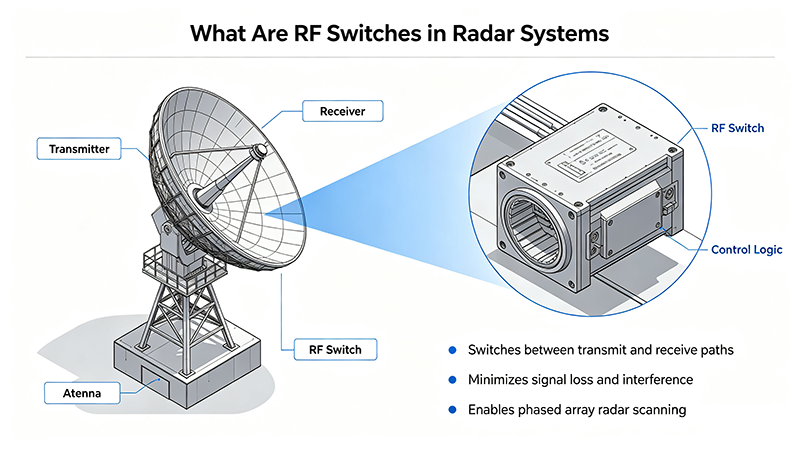
An RF switch is a microwave device that controls the connection between multiple RF signal
paths. In radar systems, RF switches are used to route signals between transmitters,
receivers, antennas, and signal processing modules.
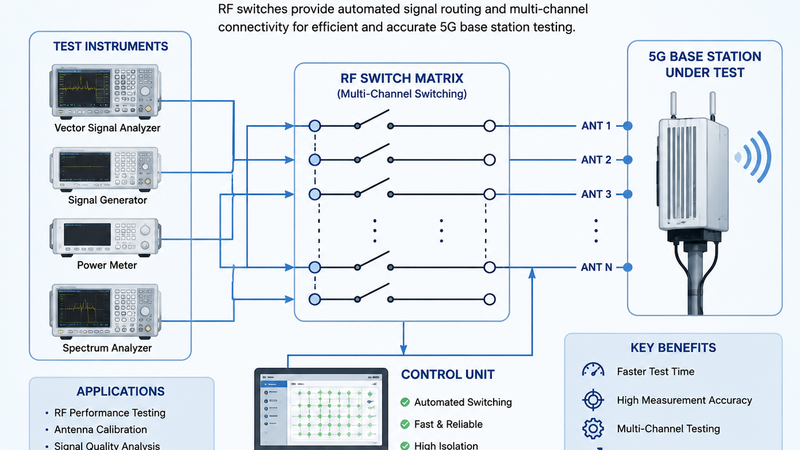
By electronically controlling signal paths, RF switches allow radar systems to perform
functions such as antenna selection, transmit-receive switching, beamforming control, and
multi-channel signal processing.
RF switches are essential for improving radar system efficiency by enabling fast,
accurate, and automated control of microwave signals.
Why RF Switches Are Important in Radar Applications
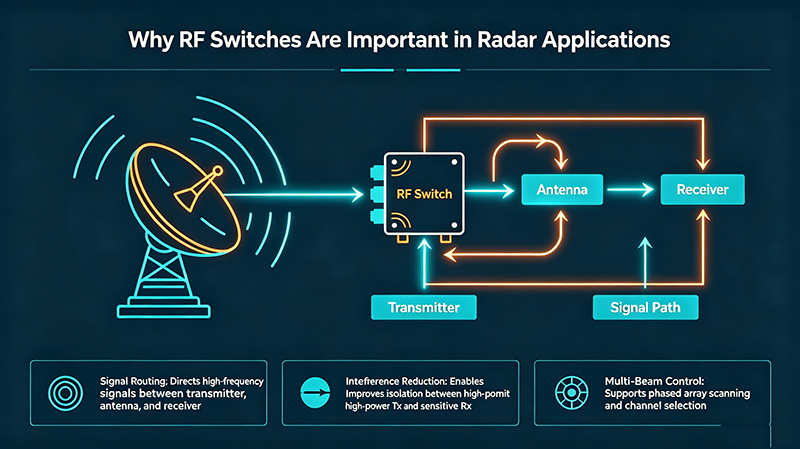
1. Transmit and Receive Signal Switching
Radar systems typically share antennas between transmitting and receiving operations.
RF switches provide fast switching between high-power transmit signals and sensitive
receiver circuits, protecting components while maintaining signal integrity.
2. Antenna Array Control
Advanced radar systems use phased arrays containing multiple antenna elements. RF switches
enable precise control of antenna channels, supporting beam steering and directional signal
transmission.
3. Multi-Channel Signal Routing
Modern radar architectures require simultaneous processing of multiple RF channels.
RF switches provide flexible routing solutions that allow a single system to manage
multiple frequency bands and signal paths.
4. Improving System Reliability
High-quality RF switches reduce signal losses and minimize interference between channels.
This improves radar detection accuracy and overall system reliability.
Key Requirements for RF Switches Used in Radar Systems
|
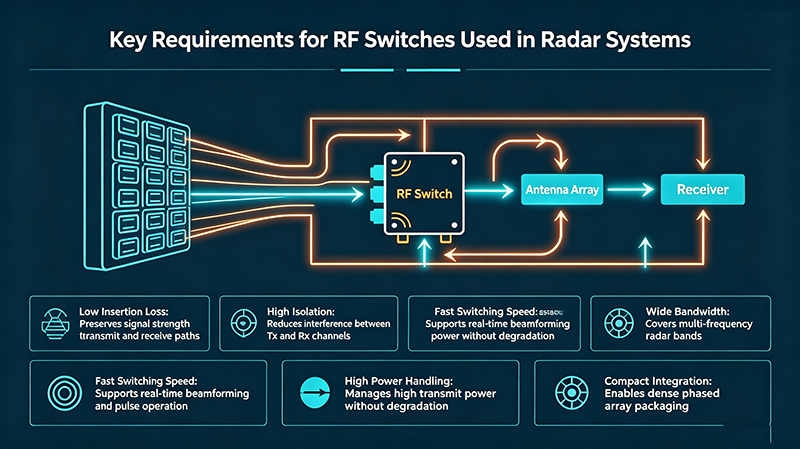
Specification
|
Importance in Radar Applications
|
|
Low Insertion Loss
|
Maintains signal strength and improves radar sensitivity.
|
|
High Isolation
|
Prevents unwanted signal leakage between transmit and receive paths.
|
|
Fast Switching Speed
|
Enables rapid mode switching and real-time radar operation.
|
|
High Power Handling
|
Supports high-power radar transmit signals without damage.
|
|
Wide Frequency Range
|
Allows operation across different radar frequency bands.
|
|
High Reliability
|
Ensures stable operation in harsh environments.
|
Important Performance Parameters of Radar RF Switches
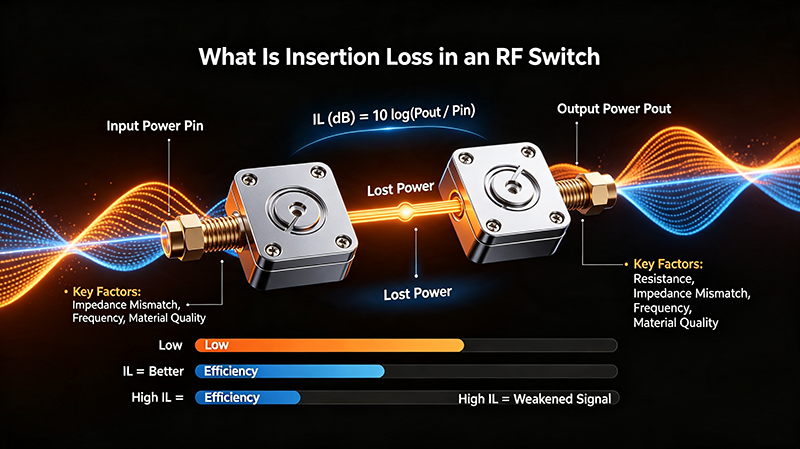
Insertion loss represents the amount of signal power lost when passing through an RF switch.
Lower insertion loss improves radar sensitivity and ensures stronger received signals.
Isolation
Isolation measures how effectively an RF switch prevents unwanted signals from coupling
between ports. High isolation is especially important in radar systems where transmitter
leakage can affect receiver performance.
Switching Speed
Fast switching speed allows radar systems to quickly change operating modes, control
multiple channels, and support advanced tracking functions.
Power Handling Capability
Radar transmitters often generate high RF power levels. RF switches must withstand these
power levels while maintaining electrical performance and long-term reliability.
Types of RF Switches Used in Radar Systems
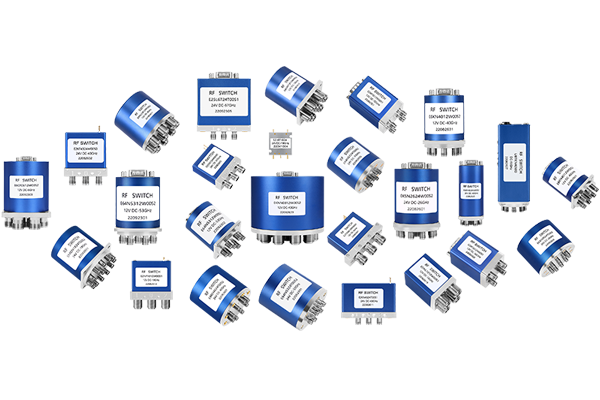
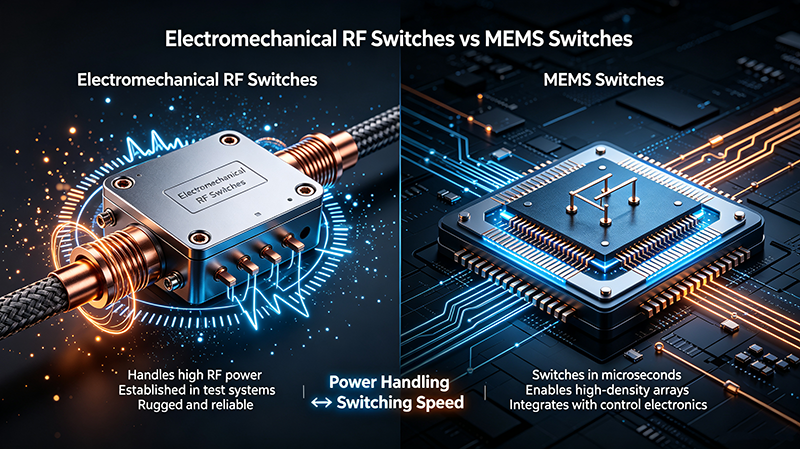
Electromechanical RF Switches
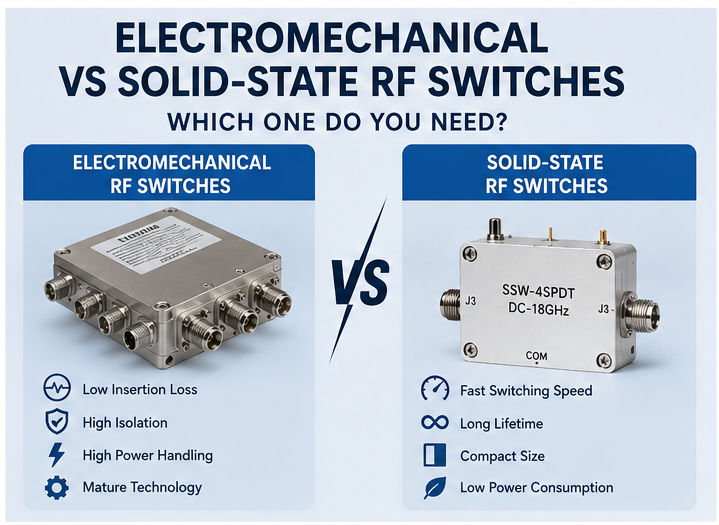
Electromechanical switches provide excellent isolation, low insertion loss, and high power
handling. They are commonly used in test systems, defense radar, and applications requiring
maximum RF performance.
PIN Diode RF Switches
PIN diode switches offer fast switching speeds and reliable operation at microwave
frequencies. They are widely used in phased array radar and electronic warfare systems.
Solid-state RF switches provide extremely fast switching performance and long operating
life. They are suitable for modern radar systems requiring high switching cycles.
Applications of RF Switches in Radar Systems
-
Military surveillance radar
-
Air traffic control radar
-
Automotive collision avoidance radar
-
Weather monitoring radar
-
Satellite and aerospace radar systems
-
Electronic warfare and signal intelligence systems
-
Radar research and development testing
How to Select the Right RF Switch for Radar Applications
Selecting an RF switch for radar systems requires careful evaluation of frequency range,
power requirements, switching speed, and environmental conditions.
Engineers should consider whether the application requires maximum isolation, ultra-fast
switching, high power capability, or long-term reliability. The correct RF switch design
can significantly improve radar performance and reduce system complexity.
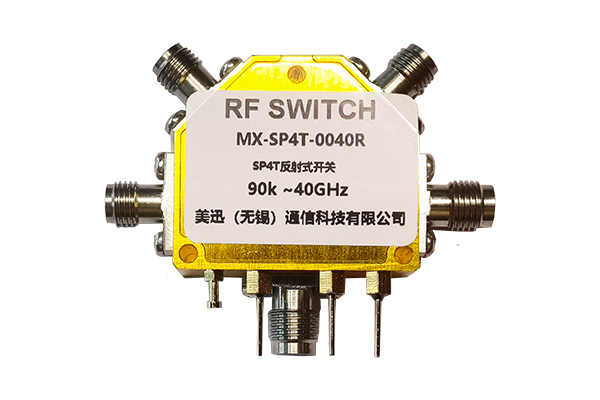
For high-frequency radar applications, coaxial RF switches and PIN diode switches are
commonly selected due to their excellent microwave performance and reliability.
Future Trends of RF Switches in Radar Technology
Future radar systems are moving toward higher frequencies, wider bandwidths, and more
intelligent signal processing. RF switches will continue evolving to support millimeter-wave
radar, advanced phased arrays, and next-generation sensing technologies.
Improved semiconductor technologies and advanced RF designs will enable switches with lower
losses, higher integration levels, and faster response times.
Conclusion
RF switches are critical components in modern radar systems, providing accurate signal
routing, antenna control, and reliable transmit-receive switching. Their performance
directly impacts radar sensitivity, detection range, and operational reliability.
As radar technology continues advancing in defense, automotive, aerospace, and industrial
applications, high-performance RF switches will remain essential for achieving faster,
more accurate, and more efficient radar solutions.