



What Is RF and What Can It Do?

RF (Radio Frequency) is the range of electromagnetic waves used for wireless communication, sensing, and power transfer — from about 3 kHz to 300 GHz. RF waves can carry information across continents, detect distant objects, heat materials, image the human body, and connect billions of devices.

What Is RF and What Can It Do?

Quick Answer

RF (radio frequency) refers to alternating current and electromagnetic waves that oscillate between roughly 3 kHz and 300 GHz. In this range, electromagnetic energy can radiate efficiently from an antenna and travel through space, atmosphere, or guided media. RF powers virtually every modern wireless technology: radio, TV, Wi-Fi, Bluetooth, cellular (2G / 3G / 4G / 5G), GPS, radar, satellite, RFID, microwave ovens, medical imaging, and industrial heating.

Defining RF

The electromagnetic spectrum spans from extremely low frequency (ELF) to gamma rays. Within this, RF occupies the range from about 3 kHz to 300 GHz — the portion that can be generated electronically as a continuous wave and radiated as a wireless signal.

The official ITU (International Telecommunication Union) classification breaks RF into bands based on wavelength and propagation characteristics:

RF Spectrum — ITU Bands

VLF 3 – 30 kHz LF 30 – 300 kHz MF 0.3 – 3 MHz HF 3 – 30 MHz VHF 30 – 300 MHz UHF 0.3 – 3 GHz SHF 3 – 30 GHz EHF 30 – 300 GHz IR 300 GHz+ VIS RF Bands Span 3 kHz – 300 GHz Above 300 GHz: infrared, visible light, ultraviolet, X-ray, gamma

RF covers VLF through EHF. Above 300 GHz, electromagnetic waves are typically called infrared or light.

Properties of RF Waves

RF is electromagnetic radiation with several distinctive properties:

  • Speed: RF travels at the speed of light (c ≈ 3 × 10⁸ m/s) in vacuum.
  • Wavelength: λ = c / f. At 1 MHz, λ = 300 m; at 1 GHz, λ = 30 cm; at 30 GHz, λ = 1 cm.
  • Reflection, refraction, diffraction: RF behaves like light at lower frequencies, but diffraction and ground-wave propagation matter more at low frequencies.
  • Attenuation by atmosphere: rain and water vapor absorb RF strongly above 10 GHz, especially at 22 GHz and 60 GHz.
  • Line-of-sight propagation: above ~ 30 MHz, RF generally travels in straight lines.
  • Ionospheric propagation: HF (3 – 30 MHz) bounces off the ionosphere for long-distance communication.

What Can RF Do?

RF is used in an extraordinary range of applications. Here are the major categories:

1. Wireless Communication

  • Radio and TV broadcasting (AM, FM, DAB, DVB).
  • Cellular networks (2G, 3G, 4G LTE, 5G NR).
  • Wi-Fi (2.4 / 5 / 6 GHz).
  • Bluetooth, Zigbee, LoRa, NB-IoT.
  • Satellite communication (C, X, Ku, Ka bands).
  • Two-way radios, walkie-talkies, public safety.
  • Amateur (ham) radio.

2. Radar and Sensing

  • Air traffic control radar.
  • Military and defense radar.
  • Weather radar and precipitation monitoring.
  • Automotive radar (24 GHz and 77 GHz).
  • Ground-penetrating radar (GPR).
  • Marine and aviation navigation.
  • Speed detection (police radar).

3. Industrial and Scientific

  • RF heating (plastic welding, food drying).
  • Induction heating and melting.
  • Plasma generation for semiconductor manufacturing.
  • Particle accelerator RF drives.
  • RF identification (RFID).
  • Wireless power transfer and charging.

4. Medical

  • MRI imaging.
  • RF ablation (cancer treatment, cardiac).
  • Diathermy and physiotherapy.
  • Wireless medical telemetry.
  • Hyperthermia therapy.

5. Navigation and Timing

  • GPS, GLONASS, Galileo, BeiDou.
  • Instrument landing systems (ILS).
  • VOR, DME, TACAN.
  • Atomic clock distribution.

6. Consumer and IoT

  • Smartphone connectivity (cellular, Wi-Fi, BT, NFC).
  • Smart home devices (Zigbee, Z-Wave, Thread, Matter).
  • Remote controls (garage doors, toys).
  • Wireless audio (Bluetooth speakers, headphones).
  • Keyless entry and tire-pressure monitoring.
Did you know? Your microwave oven, your Wi-Fi router, your smartphone's GPS, and the radar at the airport all use the same fundamental physics — electromagnetic waves — but at very different frequencies and powers.

How RF Systems Work

A typical RF system has three main parts:

  • Transmitter: generates the RF signal, modulates information onto it, and amplifies it for transmission.
  • Channel: the path between transmit and receive antennas (air, vacuum, cable, fiber with RF-over-fiber, or waveguide).
  • Receiver: amplifies the weak received signal, demodulates the information, and presents it to the user.

For two-way communication (cellular, Wi-Fi), the same hardware typically serves both transmitter and receiver in a transceiver.

Key Components of an RF System

Component Function
Antenna Converts RF current into electromagnetic waves (and vice versa)
Power Amplifier Boosts transmit signal to required power level
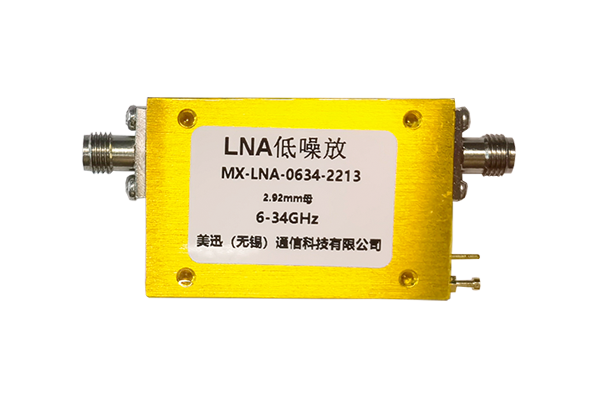
Low-Noise Amplifier Amplifies weak received signals while adding minimal noise
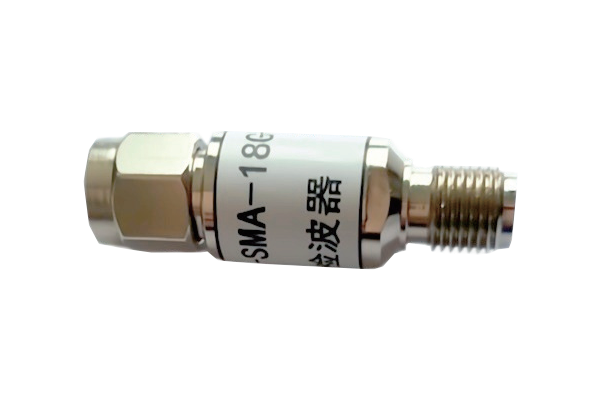
Filter Selects desired band and rejects interference
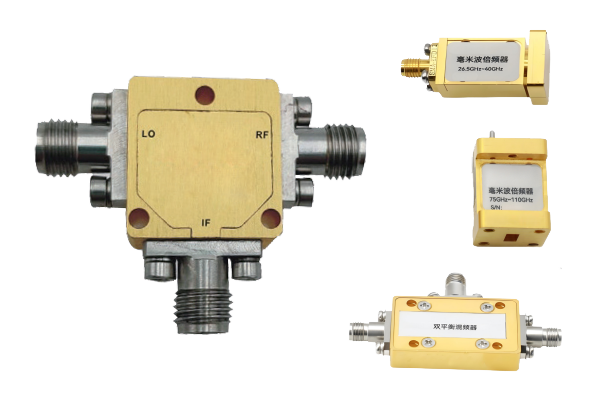
Mixer Shifts signal frequency up or down for processing
Local Oscillator Provides reference frequency for mixing
Modulator / Demodulator Encodes / decodes information onto the RF carrier
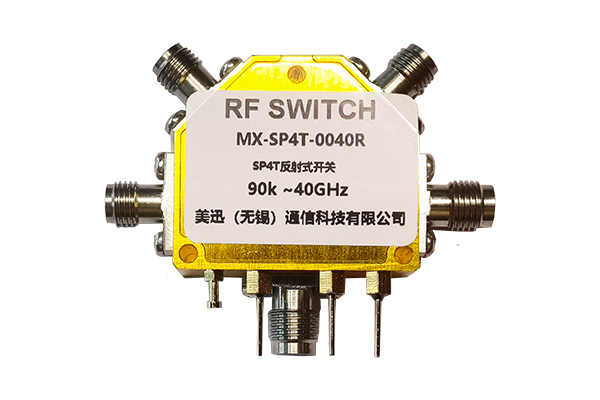
Switch Routes signals between transmit / receive paths
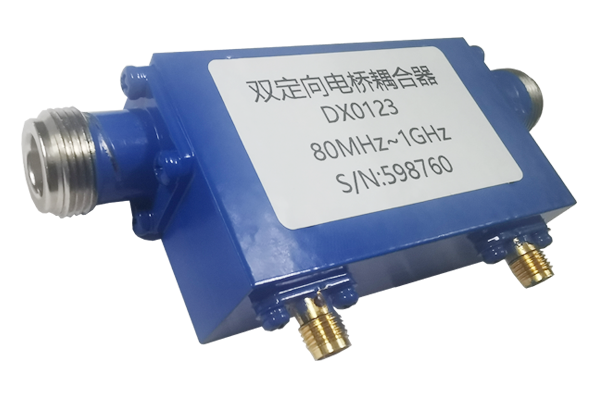
Coupler / Combiner / Divider Splits or combines RF signals

RF vs. Other Frequencies

Frequency Range Behavior
DC / Low Frequency Wires behave as ideal short circuits; no radiation
Audio (20 Hz – 20 kHz) Long wavelengths; no useful radiation; used for signals
RF (3 kHz – 300 GHz) Efficient radiation from practical antennas; carries information
Microwave (1 – 300 GHz) Short wavelengths; highly directional beams; penetrating
Infrared (300 GHz – 400 THz) Heat radiation; line-of-sight only
Visible Light (400 – 750 THz) Optical frequencies; fiber optics and imaging
X-ray and beyond Ionizing radiation; medical imaging and security

Why RF Matters

Without RF, modern life would be unrecognizable:

  • No cell phones, Wi-Fi, Bluetooth, or GPS.
  • No radio or TV broadcasting.
  • No aviation, weather, or maritime radar.
  • No MRI medical scans.
  • No satellite TV, internet, or navigation.
  • No RFID logistics, contactless payment, or remote controls.

RF Safety

High-power RF can pose health risks. Most countries regulate RF exposure based on SAR (Specific Absorption Rate) and field-strength limits. The FCC, ICNIRP, and IEEE publish safe exposure guidelines.

  • Mobile phones: SAR limits typically 1.6 W/kg (US) or 2.0 W/kg (EU).
  • Occupational exposure: higher limits apply for trained workers.
  • Public exposure: lower limits apply to general population.

When designing RF systems, ensure antennas are positioned so that human exposure stays below the limits.

Common Mistakes

  • Treating RF as DC: wires and traces must be treated as transmission lines.
  • Ignoring impedance matching: causes reflections, loss, and EMI.
  • Underestimating path loss: high-frequency signals attenuate fast in air.
  • Wrong antenna choice: mismatched antennas radiate poorly.
  • Ignoring regulatory limits: every country has rules on frequency, power, and emissions.

Future of RF

RF continues to evolve rapidly:

  • 5G and 6G: mmWave, massive MIMO, and sub-THz frequencies.
  • Satellite mega-constellations: thousands of satellites forming global broadband networks.
  • RF energy harvesting: capturing ambient RF to power IoT devices.
  • Quantum RF: ultra-precise frequency references and sensors.
  • Software-defined radio: flexible, programmable RF systems.

Key Takeaways

  • RF is electromagnetic energy between 3 kHz and 300 GHz.
  • RF enables communication, sensing, heating, imaging, and navigation.
  • The spectrum is divided into ITU bands (VLF, LF, MF, HF, VHF, UHF, SHF, EHF).
  • RF powers every modern wireless technology from AM radio to 5G mmWave.
  • Proper design requires understanding of antennas, transmission lines, and propagation.

Frequently Asked Questions

What does RF stand for?

RF stands for Radio Frequency. It refers to electromagnetic waves between roughly 3 kHz and 300 GHz that can be efficiently radiated by an antenna.

What is the difference between RF and microwave?

Microwave is a subset of RF, generally referring to frequencies above 1 GHz. RF also includes lower frequencies like AM radio (1 MHz) and shortwave (HF).

How fast does RF travel?

RF travels at the speed of light — about 3 × 10⁸ meters per second (300,000 km/s) in vacuum, slightly slower in air or cables.

Is RF safe?

Low-power RF (Wi-Fi, Bluetooth, cellular) is generally safe within regulatory limits. High-power RF (broadcast transmitters, radar, industrial heating) requires careful exposure controls.

What is the difference between RF and Wi-Fi?

Wi-Fi is one application that uses specific RF frequencies (2.4 GHz, 5 GHz, 6 GHz). RF is the broader category; Wi-Fi is a standardized wireless protocol that runs on RF.


About the Author — MeiXun Team

Wang

Chief Engineer Wang

High-tech Enterprise, Feifeng Talent

Chief Engineer Wang graduated with a master's degree in high-power microwave from the Institute of Electronics, University of Chinese Academy of Sciences.

View Full Profile
Wang

Chief Engineer Wang

High-tech Enterprise, Feifeng Talent

Chief Engineer Wang graduated with a master's degree in high-power microwave from the Institute of Electronics, University of Chinese Academy of Sciences.

In the same year, he joined CETC 40/41 for work and study. He has been committed to the design and development of microwave switches for a long time.

He has applied for 27 patents as the first inventor in the microwave switch field, with 6 authorized invention patents and 14 utility model patents.

The products he developed cover various application platforms such as civilian testing, vehicle-mounted, shipborne, airborne, and missile-borne.

RF Microwave Switch RF Switch Coaxial Switch PIN Diode Switch Low Noise Amplifier Waveguide Switch PIN Switch Microwave Switch