





What is microwave? Microwave refers to electromagnetic waves with frequencies higher than radio waves traditionally used for lower-frequency communication and lower than infrared radiation. In engineering, microwaves are commonly associated with frequencies from approximately 300 MHz to 300 GHz, corresponding to wavelengths from about 1 meter down to 1 millimeter.
Microwave technology plays a critical role in modern telecommunications, radar, satellite communication, wireless networks, navigation, remote sensing, scientific research, industrial heating, and many other applications. Microwave systems rely on specialized components such as antennas, waveguides, coaxial cables, RF switches, filters, amplifiers, power dividers, couplers, and other microwave components.
What Is Microwave?

A microwave is a type of electromagnetic wave characterized by relatively short wavelength and high frequency. Like other electromagnetic radiation, microwaves travel through free space at approximately the speed of light.
The relationship between frequency and wavelength is expressed by:
Therefore, wavelength can be calculated as:
As microwave frequency increases, wavelength decreases. This relatively short wavelength makes it possible to build compact antennas and highly directional systems, which is one of the major advantages of microwave technology.
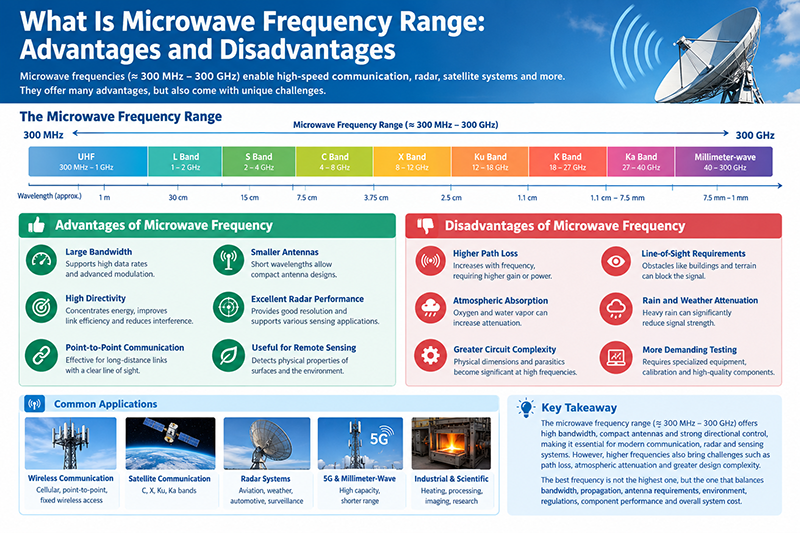
Microwave Frequency Range
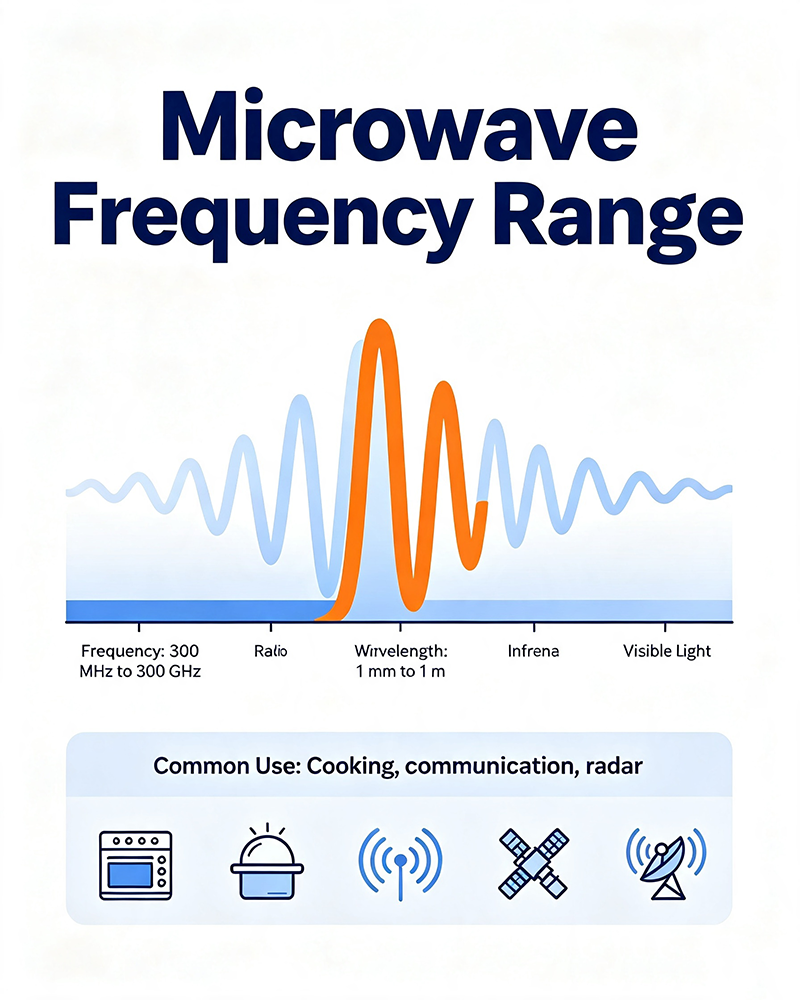
There is no single universally accepted boundary for the microwave frequency range. In many engineering applications, microwave frequencies are considered to extend from approximately 300 MHz to 300 GHz. Frequencies above this range increasingly overlap with the millimeter-wave and terahertz regions.
| Frequency | Approximate Wavelength | Common Applications |
|---|---|---|
| 300 MHz | 1 m | Lower microwave and RF applications |
| 1 GHz | 30 cm | Wireless communication, radar, navigation |
| 2.4 GHz | 12.5 cm | Wi-Fi, Bluetooth, industrial and scientific systems |
| 5 GHz | 6 cm | Wi-Fi, radar, wireless communication |
| 10 GHz | 3 cm | Radar, satellite communication, microwave links |
| 30 GHz | 10 mm | Millimeter-wave communication and sensing |
| 100 GHz | 3 mm | Advanced radar, imaging, sensing, research |
| 300 GHz | 1 mm | Upper millimeter-wave and emerging applications |
How Do Microwaves Work?
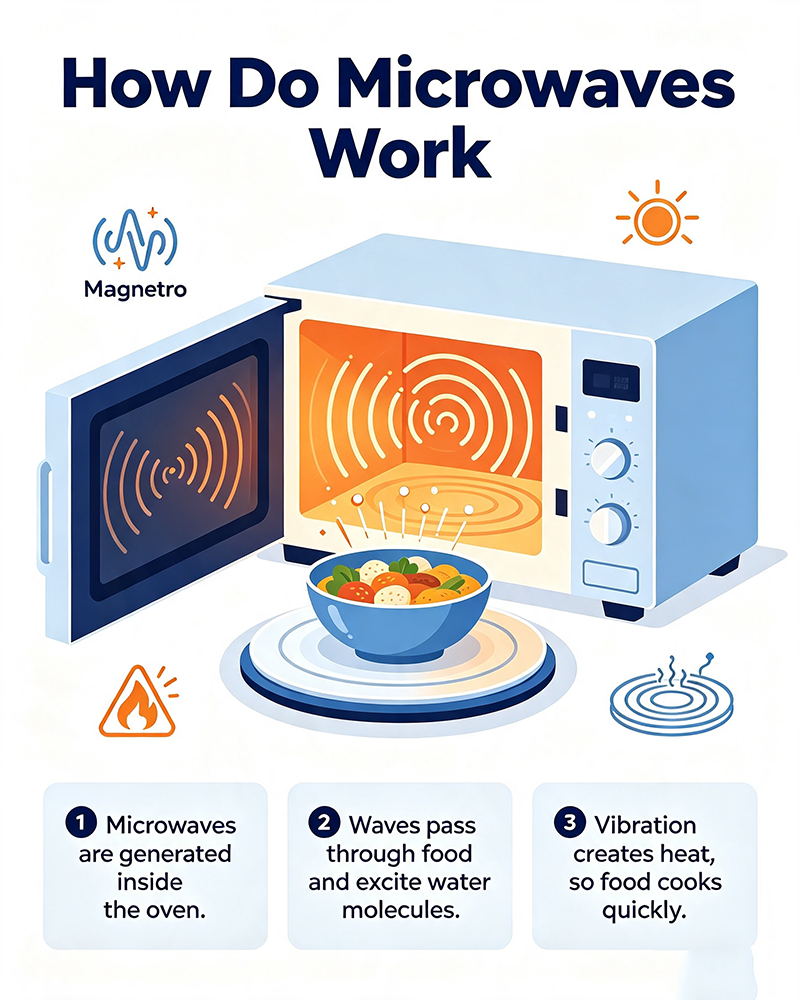
Microwaves are generated when an electrical system produces rapidly changing electromagnetic fields. These fields can propagate through free space or be guided through structures such as transmission lines and waveguides.
A typical microwave communication or radar system contains several functional stages. A signal source generates the microwave signal, amplifiers increase signal power when necessary, filters remove unwanted frequencies, switches and other components control signal paths, and an antenna converts electrical energy into electromagnetic radiation.
At the receiving end, the antenna captures electromagnetic energy and converts it back into an electrical signal. Low-noise amplifiers can increase weak signals while adding minimal noise, and additional filters, mixers, switches, and signal-processing circuits prepare the signal for further processing.
Microwave vs Radio Waves
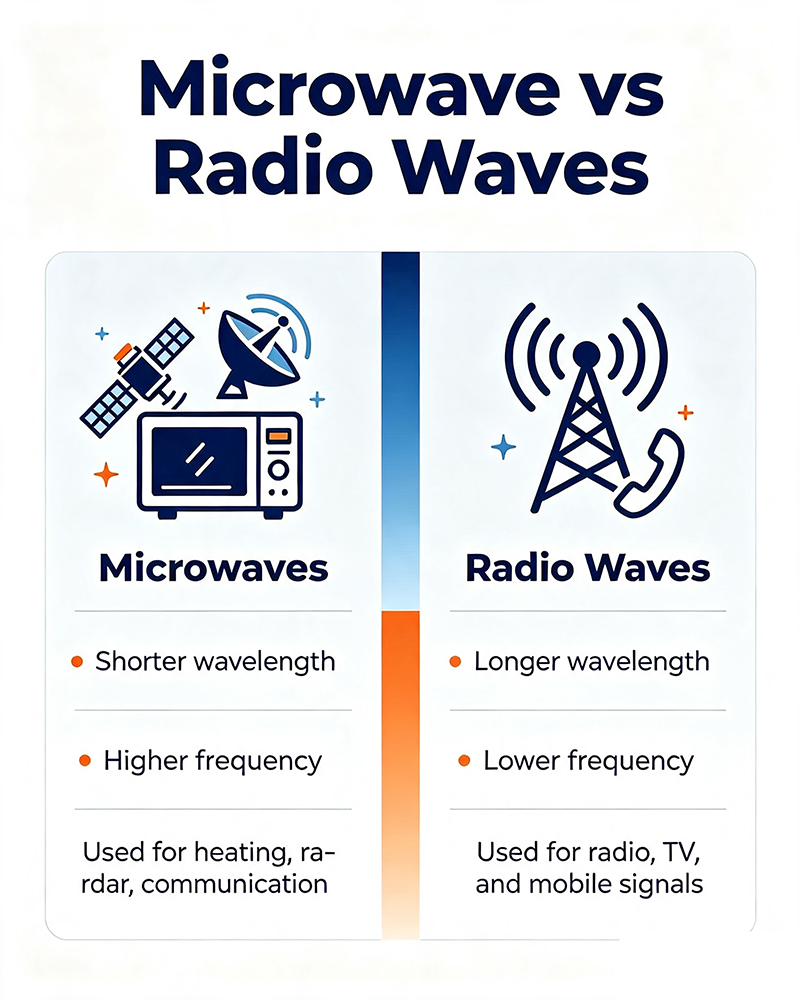
Microwaves are part of the broader electromagnetic spectrum and can be considered a higher-frequency subset of radio-frequency radiation in many engineering contexts. The distinction between RF and microwave is therefore largely based on frequency and engineering convention rather than a completely different physical phenomenon.
| Characteristic | Lower-Frequency RF | Microwave |
|---|---|---|
| Frequency | Generally lower frequencies | Commonly hundreds of MHz to hundreds of GHz |
| Wavelength | Longer | Shorter |
| Antenna size | Can be relatively large | Often more compact for a given operating frequency |
| Propagation | Can support different propagation mechanisms depending on frequency | Often highly directional at higher frequencies |
| Common applications | Broadcasting, communication, navigation | Radar, satellite links, cellular networks, sensing |
Microwave Bands
Microwave engineers often use standardized letter designations to describe frequency bands. These designations are especially common in radar, satellite communication, military electronics, RF testing, and microwave component specifications.
| Band | Approximate Frequency Range | Typical Applications |
|---|---|---|
| L Band | 1–2 GHz | Radar, navigation, satellite communication |
| S Band | 2–4 GHz | Radar, weather radar, wireless systems |
| C Band | 4–8 GHz | Satellite communication, radar, telecommunications |
| X Band | 8–12 GHz | Radar, satellite communication, remote sensing |
| Ku Band | 12–18 GHz | Satellite communication, radar, broadcasting |
| K Band | 18–27 GHz | Radar, sensing and measurement |
| Ka Band | 27–40 GHz | High-capacity satellite communication, radar |
| V Band | 40–75 GHz | Millimeter-wave communication and sensing |
| W Band | 75–110 GHz | Advanced radar, imaging and scientific applications |
Band boundaries can vary slightly depending on the standard or industry convention being used. Engineers should always verify the frequency definition relevant to a specific application.
Important Properties of Microwaves
High Frequency
Microwave systems operate at frequencies significantly higher than traditional low-frequency electrical systems. Higher frequency enables larger available bandwidths and supports high-speed data transmission.
Short Wavelength
Short wavelengths allow antennas and other microwave structures to be relatively compact. They also enable highly directional beams, which are valuable for radar and point-to-point communication.
Directional Propagation
At many microwave frequencies, antennas can concentrate electromagnetic energy into narrow beams. This improves spatial selectivity and can increase communication range and radar resolution.
Atmospheric Effects
Microwave propagation can be affected by atmospheric gases, rain, snow, humidity, and other environmental factors. Some frequency bands experience particularly strong absorption caused by oxygen or water vapor.
Transmission Line Effects
At microwave frequencies, the physical dimensions of circuits can become comparable to the signal wavelength. As a result, PCB traces, connectors, cables, and other structures can no longer always be treated as simple ideal wires.
Microwave Components
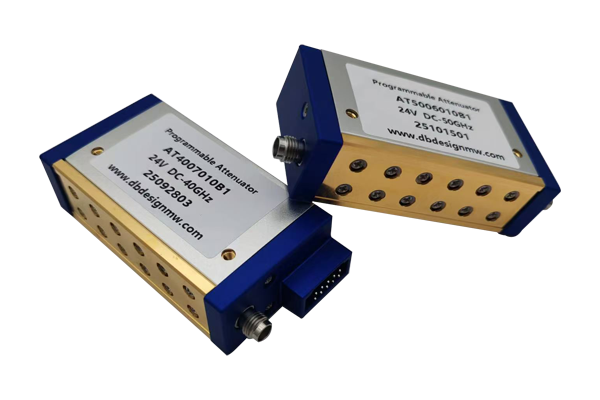
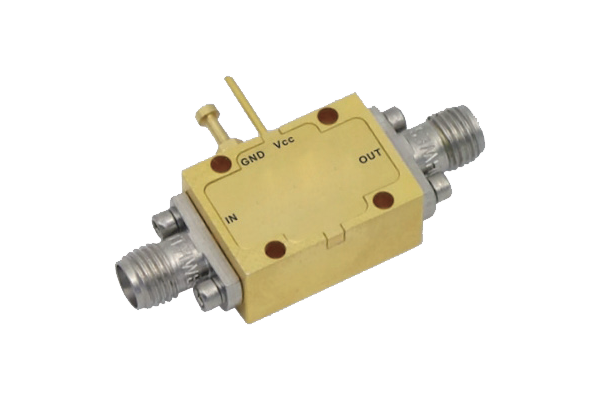
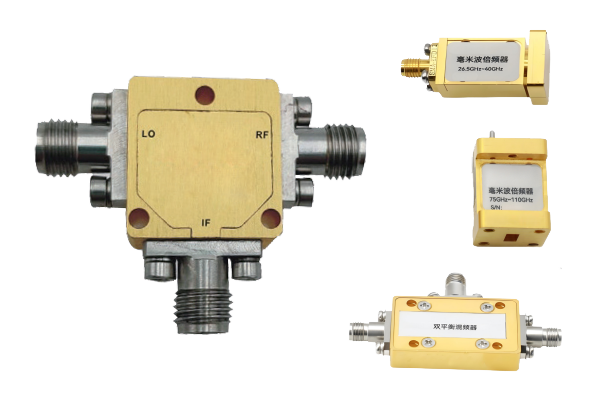
Modern microwave systems depend on a wide range of specialized components. These components control signal frequency, amplitude, phase, direction, and power.
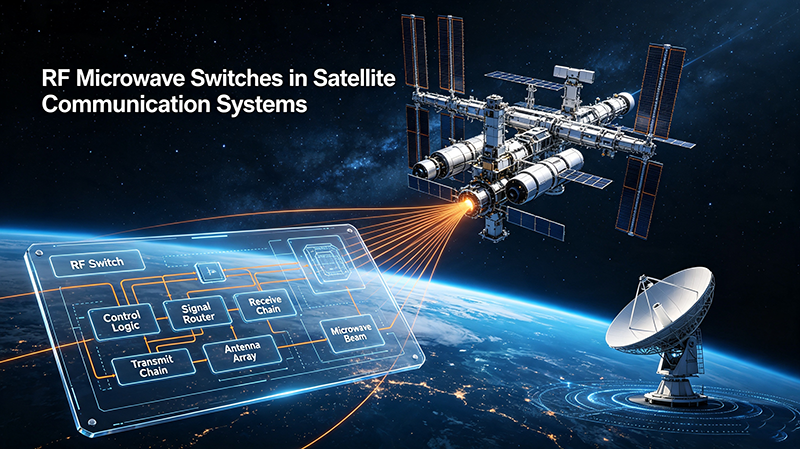
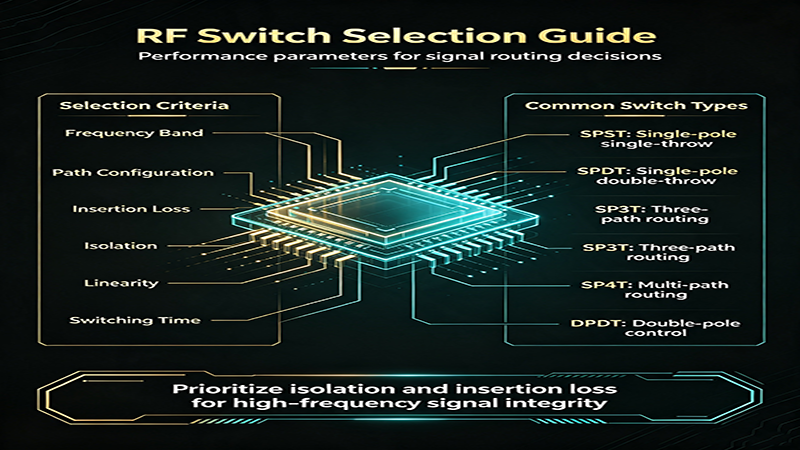
Microwave Switches
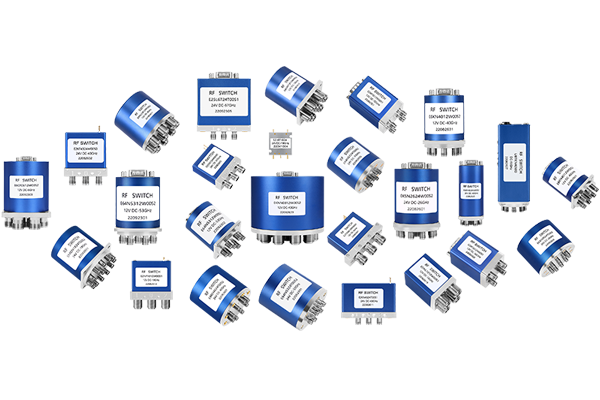
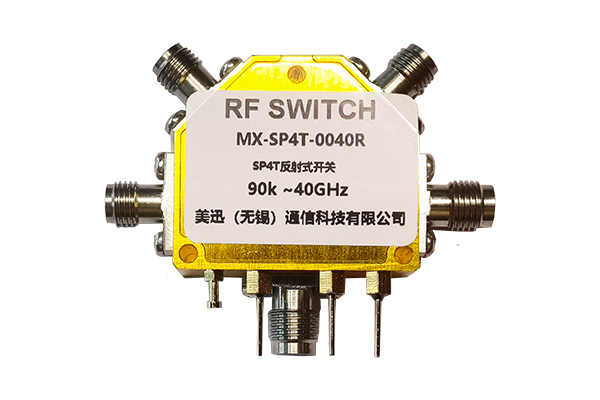
RF and microwave switches control the signal path between multiple ports. Common configurations include SPST, SPDT, SP4T, SP6T, and SP12T. Microwave switches can be implemented using electromechanical, solid-state, PIN diode, MEMS, or other technologies.
Low Noise Amplifiers
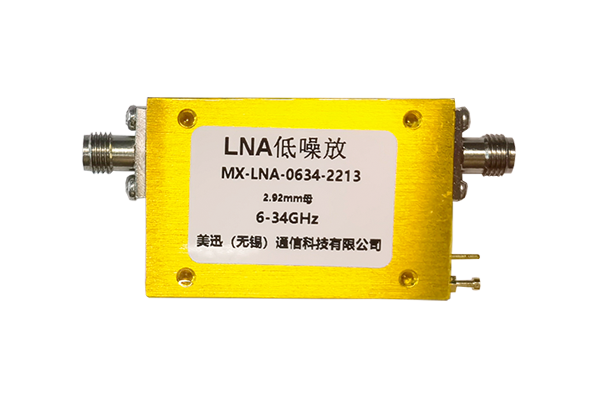
A low noise amplifier (LNA) amplifies weak signals while minimizing additional noise. LNAs are particularly important in receiver front ends, radar systems, satellite communication equipment, and wireless infrastructure.
Power Amplifiers
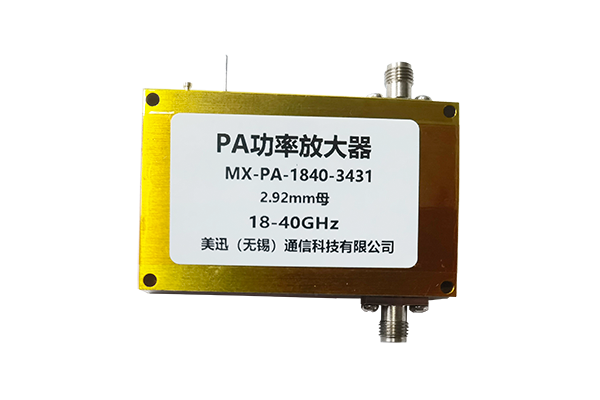
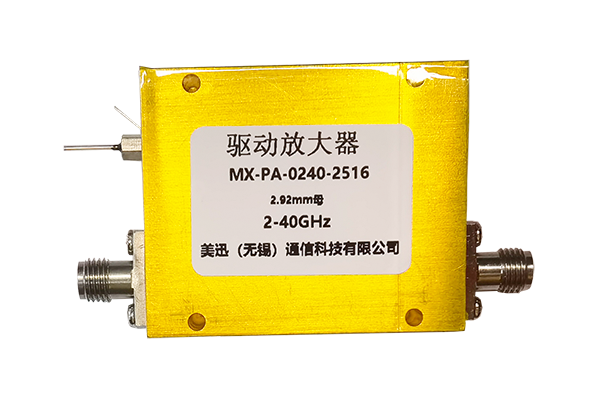
Microwave power amplifiers increase the power level of RF signals before transmission. Important specifications include output power, gain, efficiency, linearity, P1dB, and third-order intercept point.
Filters
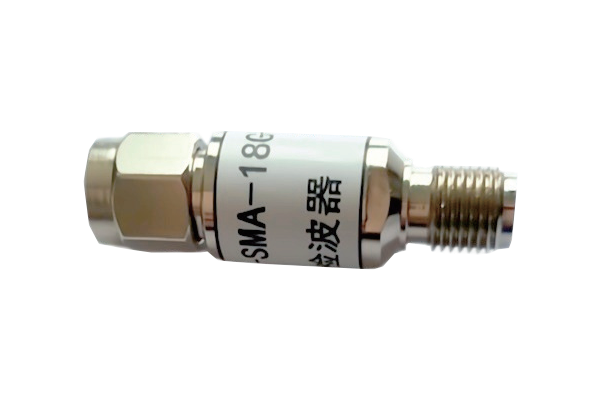
Microwave filters select desired frequency ranges and reject unwanted signals. Common filter types include low-pass, high-pass, band-pass, and band-stop filters.
Power Dividers and Combiners
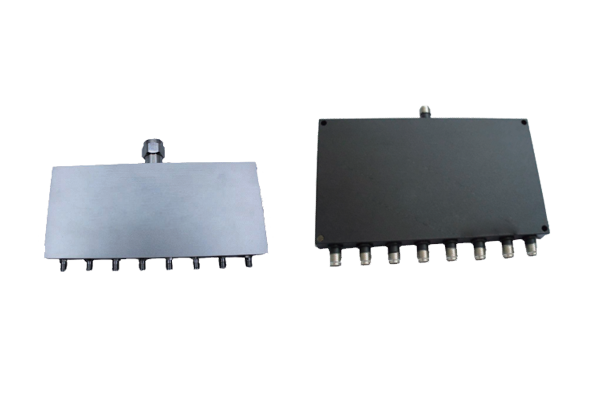
Microwave power dividers distribute one input signal across multiple output ports, while combiners perform the reverse operation. They are widely used in antenna arrays, test systems, amplifiers, and communication equipment.
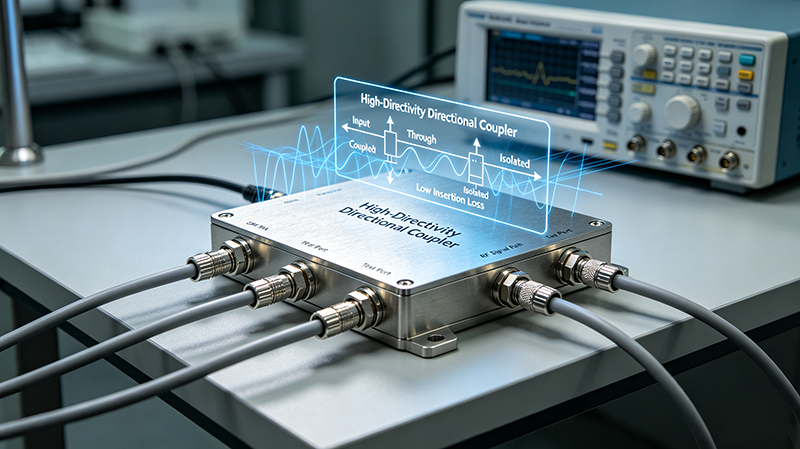
Directional Couplers
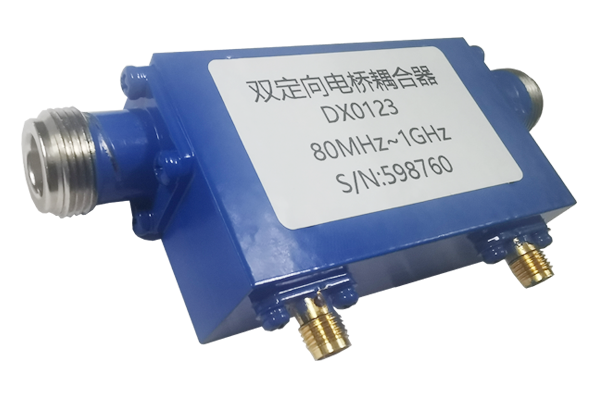
Directional couplers sample a defined portion of RF power while maintaining the main transmission path. They are used for power monitoring, measurement, signal distribution, and feedback systems.
Waveguides
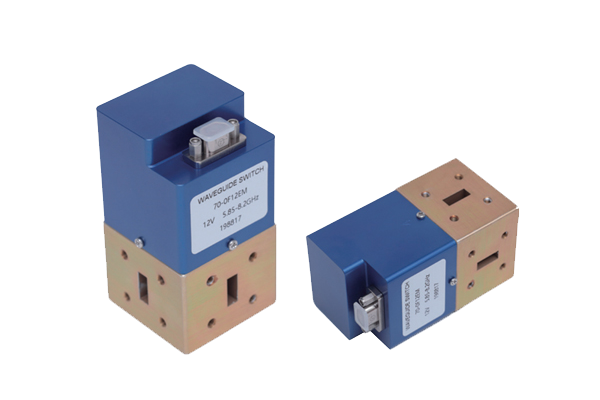
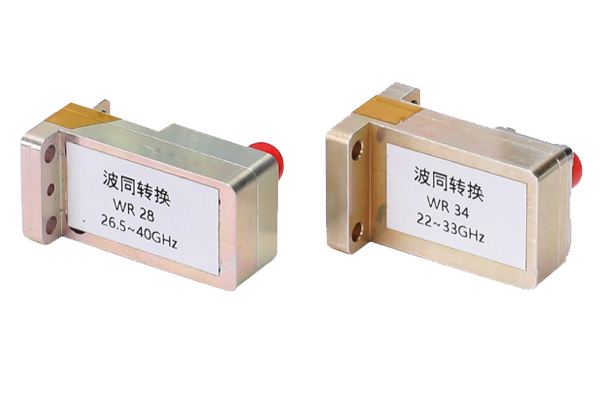
Waveguides are structures that guide electromagnetic waves, especially at high microwave and millimeter-wave frequencies. Rectangular and circular waveguides are common examples.
Microwave Transmission Lines
Microwave signals can be transported through several types of transmission structures. The choice depends on frequency, power, insertion loss, mechanical requirements, and application.
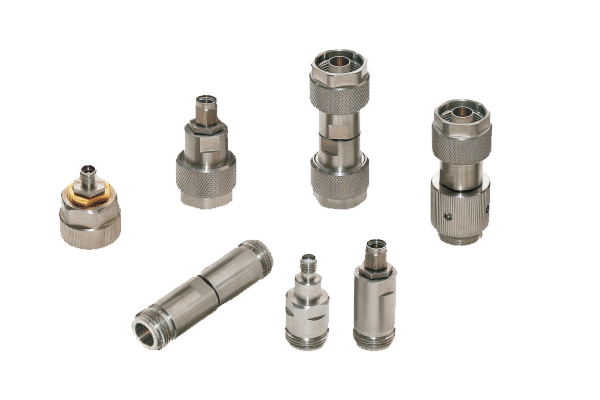
- Coaxial cable: Widely used for RF and microwave connections and laboratory testing.
- Microstrip: Commonly implemented directly on printed circuit boards.
- Stripline: Provides controlled impedance transmission within multilayer structures.
- Waveguide: Often used at high microwave frequencies and high power levels.
Applications of Microwave Technology
Radar Systems
Radar systems transmit microwave signals and analyze reflected energy to determine the location, distance, speed, or characteristics of objects. Microwave frequencies provide a useful combination of antenna size, propagation characteristics, and spatial resolution.
Satellite Communication
Microwaves are extensively used for communication between ground stations and satellites. Ku-band and Ka-band systems, for example, support high-capacity satellite links and broadband communication.
5G and Wireless Communication
Modern wireless systems use a broad range of RF and microwave frequencies. Higher-frequency bands can provide greater bandwidth and support high data rates, although propagation and coverage characteristics become more challenging.
Wi-Fi and Short-Range Wireless Systems
Popular wireless technologies operate in microwave frequency bands, including the 2.4 GHz and 5 GHz ranges. These frequencies provide practical antenna sizes and sufficient bandwidth for high-speed wireless communication.
Navigation and Positioning
Microwave-frequency signals are used in satellite navigation and other positioning systems. Accurate timing and signal processing enable receivers to determine position and movement.
Remote Sensing
Microwave remote sensing can provide information about terrain, weather, ocean conditions, vegetation, and other environmental characteristics. Radar-based sensing can also operate in conditions where optical systems may be limited.
Industrial Heating
Microwave energy can heat materials by interacting with molecules and dielectric properties. Industrial microwave heating is used in food processing, drying, material treatment, and specialized manufacturing processes.
Medical Applications
Microwave energy is also used in selected medical technologies, including certain therapeutic and diagnostic applications. The specific operating frequency and power level depend on the medical procedure.
Why Are Microwaves Important in RF Engineering?
Microwave technology enables engineers to build high-bandwidth, high-speed, and highly directional systems. As wireless communication, radar, satellite systems, and sensing technologies continue to evolve, microwave components must operate at increasingly higher frequencies while maintaining low loss, high isolation, stable impedance, and reliable power handling.
At these frequencies, seemingly small mechanical and electrical details can have significant effects on system performance. Connector geometry, PCB layout, grounding, material selection, cable quality, and component tolerances can all influence microwave behavior.
Microwave Design Considerations
Designing a reliable microwave system requires consideration of both electrical and mechanical parameters. The most important factors include:
- Operating frequency and bandwidth
- Characteristic impedance
- Insertion loss
- Return loss
- Voltage standing wave ratio (VSWR)
- Isolation between ports
- Noise figure
- Gain and output power
- Power handling capability
- Phase stability
- Temperature stability
- Connector and transmission-line performance
- PCB material and dielectric properties
- Electromagnetic compatibility and shielding
What Is Microwave S-Parameter Testing?
Microwave components are commonly characterized using S-parameters, which describe how signals are transmitted and reflected at the ports of a network.
| Parameter | Meaning | Typical Importance |
|---|---|---|
| S11 | Input reflection coefficient | Input matching and return loss |
| S21 | Forward transmission | Gain or insertion loss |
| S12 | Reverse transmission | Reverse isolation |
| S22 | Output reflection coefficient | Output matching and return loss |
A vector network analyzer (VNA) is commonly used to measure S-parameters of microwave components such as filters, amplifiers, switches, couplers, antennas, cables, and power dividers.
Microwave and Millimeter-Wave Technology
As operating frequencies increase toward and beyond 30 GHz, engineers increasingly use the term millimeter wave because wavelengths become shorter than approximately 10 mm.
Millimeter-wave technology is important for high-capacity wireless communication, automotive radar, satellite communication, security imaging, high-resolution sensing, and advanced research systems.
The transition toward millimeter-wave frequencies also increases the importance of electromagnetic simulation, precision manufacturing, connector design, packaging, thermal management, and accurate measurement techniques.
Advantages of Microwave Technology
- Supports high data rates and large bandwidths
- Enables compact antennas at higher frequencies
- Supports highly directional beams
- Provides excellent capabilities for radar and sensing
- Enables high-capacity satellite and terrestrial links
- Supports sophisticated wireless communication systems
- Can be integrated into compact RF and microwave modules
- Provides frequency ranges suitable for advanced sensing and imaging
Challenges of Microwave Technology
Despite its advantages, microwave engineering introduces several technical challenges.
- Higher-frequency systems are more sensitive to parasitic effects.
- Transmission-line losses can become significant.
- Manufacturing tolerances can strongly affect performance.
- Impedance matching becomes increasingly important.
- Atmospheric attenuation can affect long-distance links.
- High-frequency measurement requires specialized equipment.
- Component packaging and connector design become critical.
- PCB material properties can significantly influence signal behavior.
Microwave vs RF: What Is the Difference?
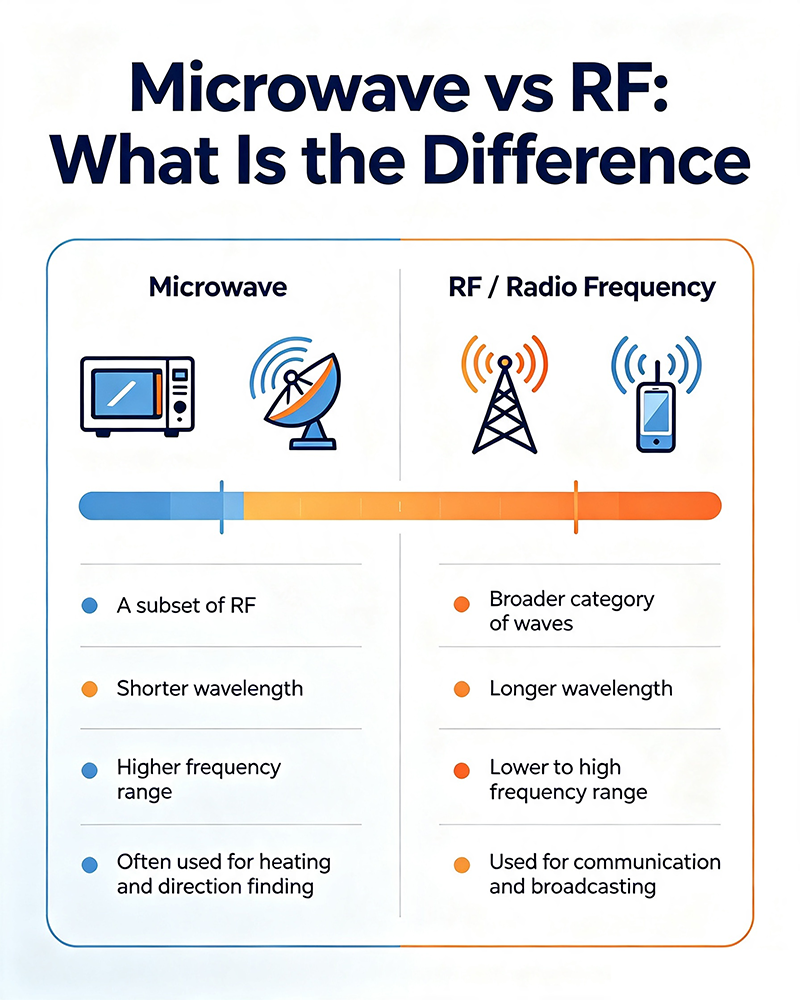
RF, or radio frequency, is a broad term covering electromagnetic frequencies used for radio-frequency systems. Microwave generally refers to the higher-frequency portion of the RF spectrum, although the exact boundary varies by industry and application.
In practical engineering, the distinction becomes especially important because circuit behavior changes as wavelength decreases. At microwave frequencies, transmission lines and physical structures must be analyzed using electromagnetic and distributed-circuit principles rather than relying solely on low-frequency lumped-circuit assumptions.
Frequently Asked Questions About Microwaves
Microwave refers to electromagnetic radiation in a high-frequency range, commonly around 300 MHz to 300 GHz in engineering applications. Microwaves have relatively short wavelengths and are widely used in communication, radar, navigation, sensing, and industrial systems.
A commonly used engineering definition places microwaves approximately between 300 MHz and 300 GHz. However, frequency boundaries vary between standards and industries, and the upper microwave range overlaps with millimeter-wave technology.
Wavelength depends on frequency. It can be calculated using λ = c/f. For example, a 1 GHz signal has a wavelength of approximately 30 cm in free space.
Microwaves are used in radar, satellite communication, cellular networks, Wi-Fi, navigation, remote sensing, industrial heating, scientific research, medical technologies, and many other applications.
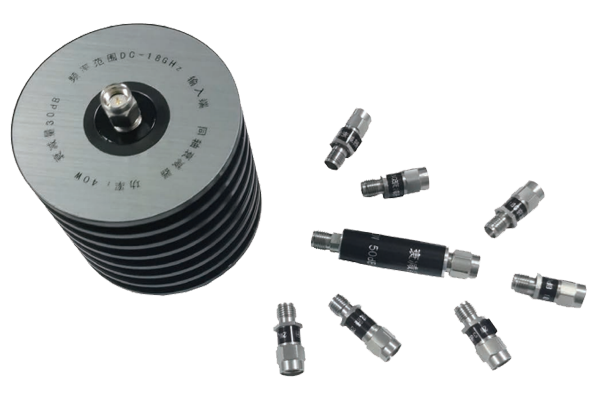
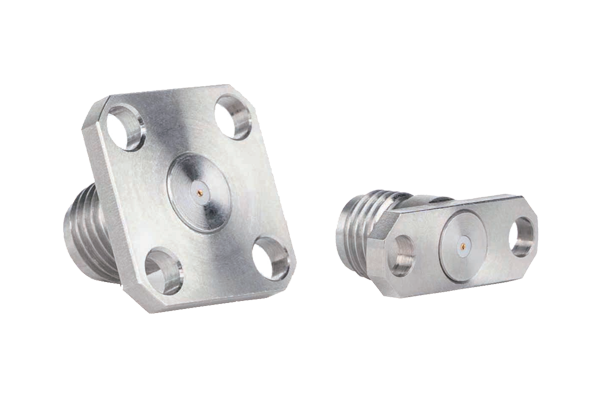
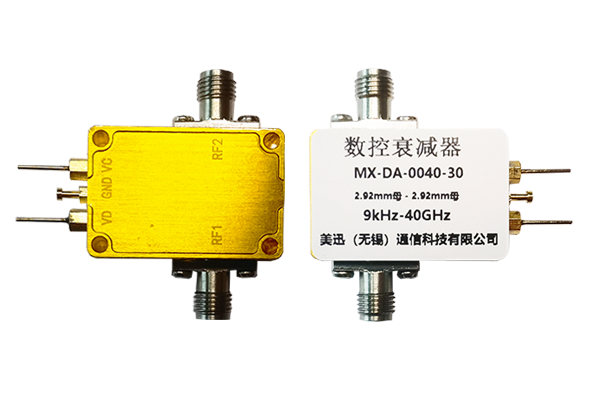
Microwave components include RF switches, waveguide switches, coaxial switches, filters, low noise amplifiers, power amplifiers, power dividers, directional couplers, attenuators, antennas, waveguides, connectors, and other RF signal-processing devices.
Microwave frequencies can provide substantial bandwidth, compact antennas, and directional propagation. These characteristics make them useful for high-speed wireless communication, satellite links, and point-to-point microwave networks.
Millimeter-wave systems generally refer to frequencies where the wavelength is approximately 1 to 10 mm, corresponding to roughly 30 to 300 GHz. This range is commonly considered part of the upper microwave spectrum.
Conclusion
Microwave technology is a fundamental part of modern RF and wireless engineering. Microwaves are high-frequency electromagnetic waves with relatively short wavelengths, commonly covering approximately 300 MHz to 300 GHz in engineering applications.
Their combination of high frequency, short wavelength, available bandwidth, and directional propagation makes microwaves essential for radar, satellite communication, wireless networks, navigation, remote sensing, telecommunications, and advanced electronic systems.
Understanding microwave fundamentals is also essential when working with specialized components such as RF microwave switches, coaxial switches, waveguide switches, low noise amplifiers, RF filters, power dividers, directional couplers, and microwave amplifiers. As communication and sensing systems move toward higher frequencies, precise component design, impedance control, low insertion loss, high isolation, and accurate S-parameter measurement will become increasingly important.