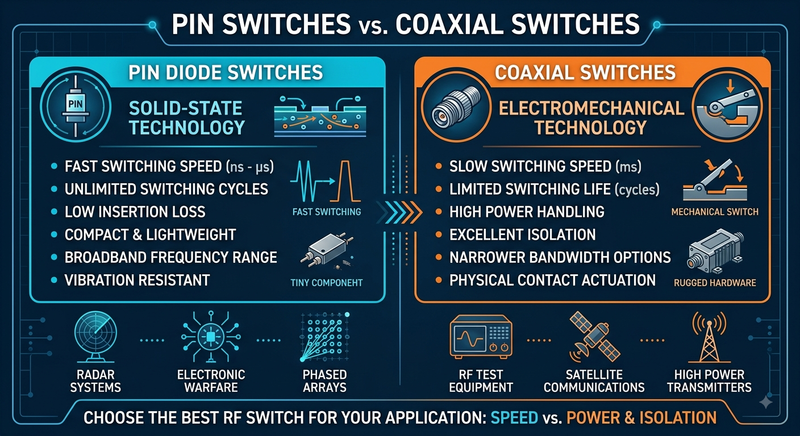


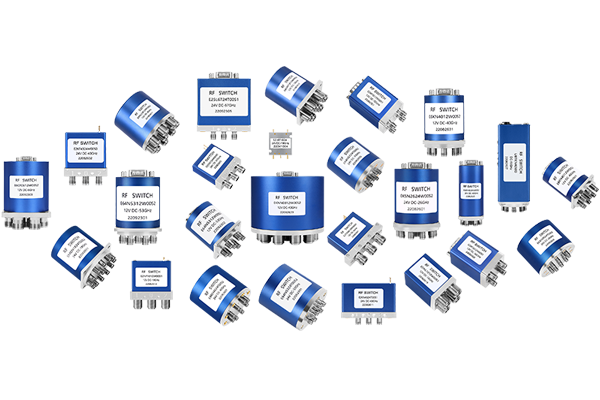
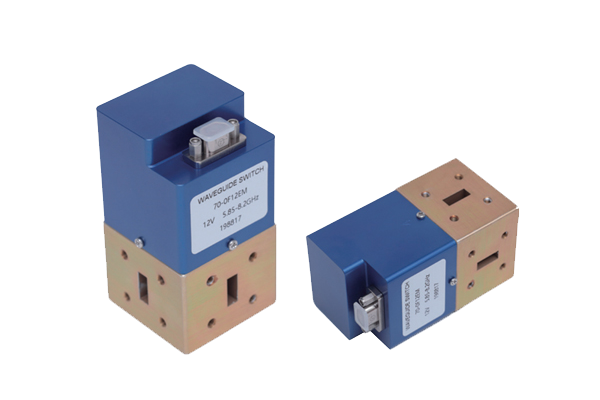
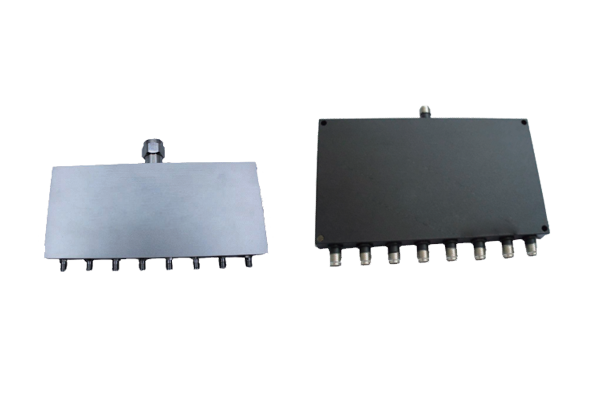
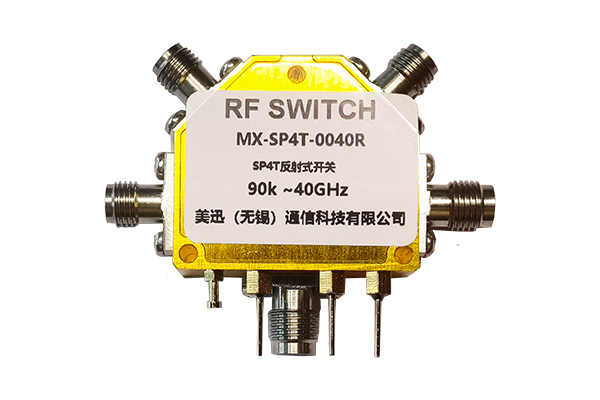
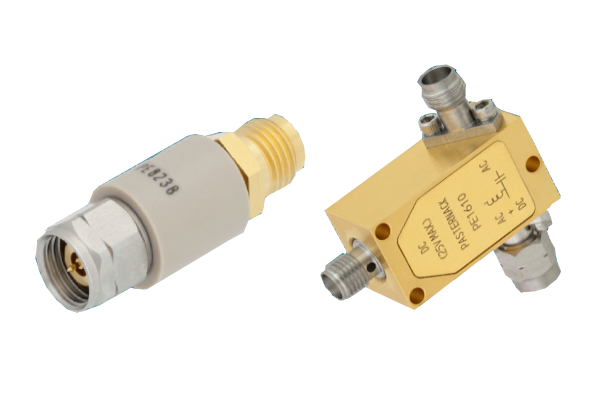
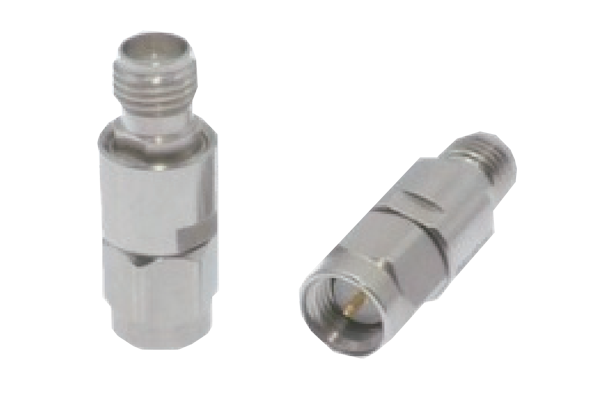
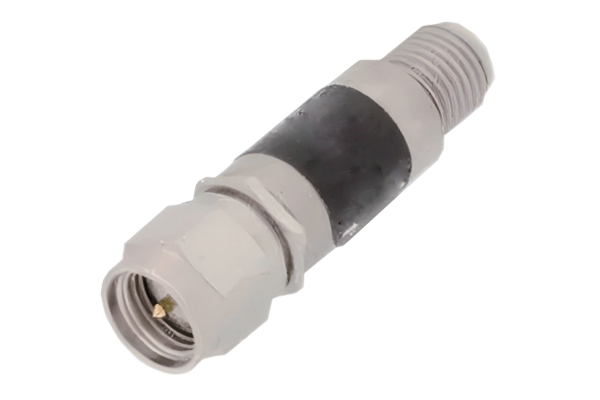
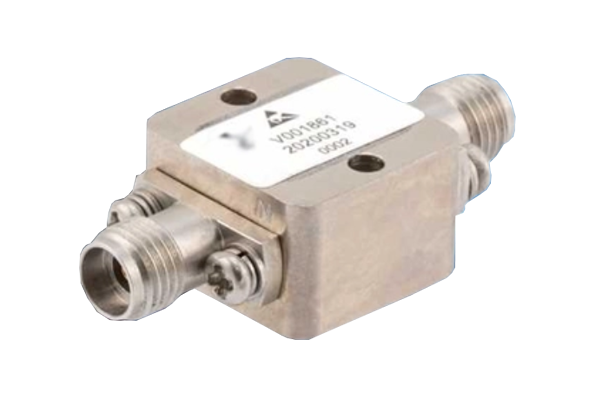




Coaxial switches are essential RF and microwave components used for signal routing, testing systems, communication equipment, radar applications, and measurement instruments. Different coaxial switch configurations, including SPST, SPDT, SP6T, and SP12T, provide different switching capabilities depending on the number of input and output paths required. Understanding these configurations helps engineers select the right RF switch for their application.
What Is a Coaxial Switch?
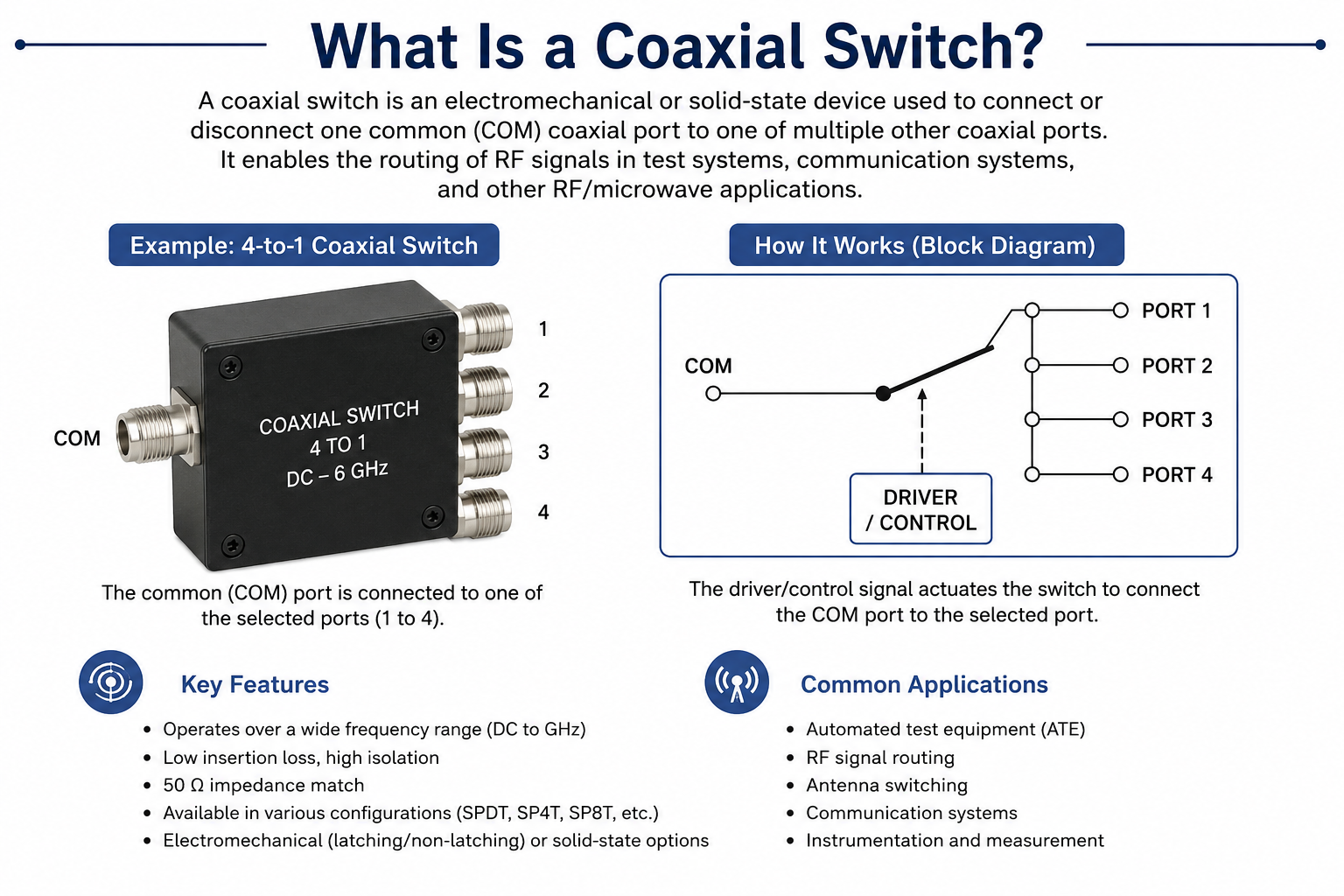
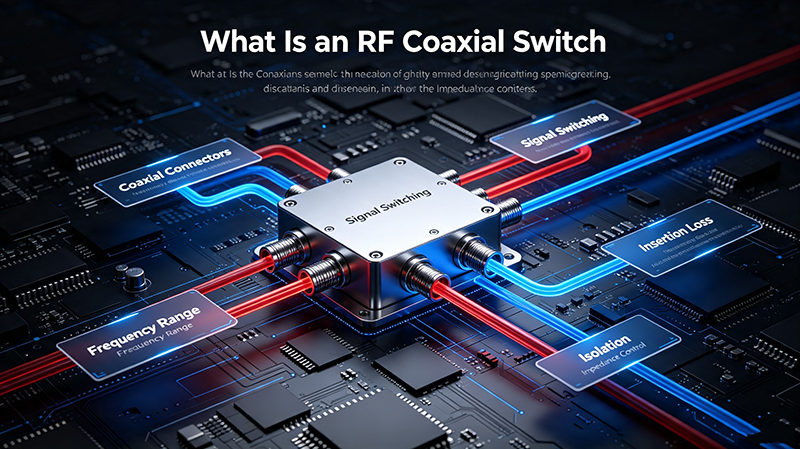
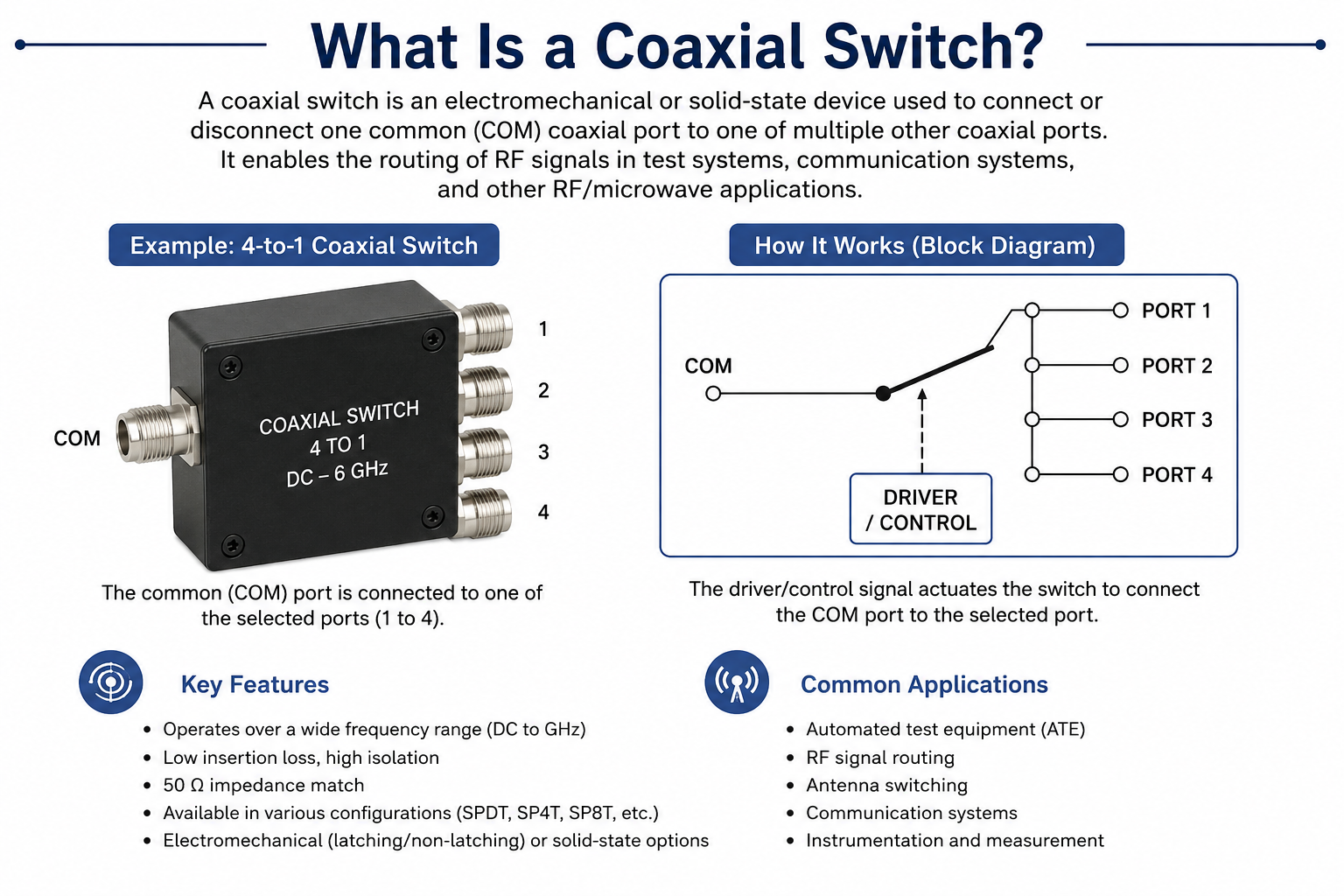
A coaxial switch is an RF component that controls the connection between multiple transmission paths. It allows high-frequency signals to be routed from one port to another while maintaining excellent electrical performance, low insertion loss, and high isolation.
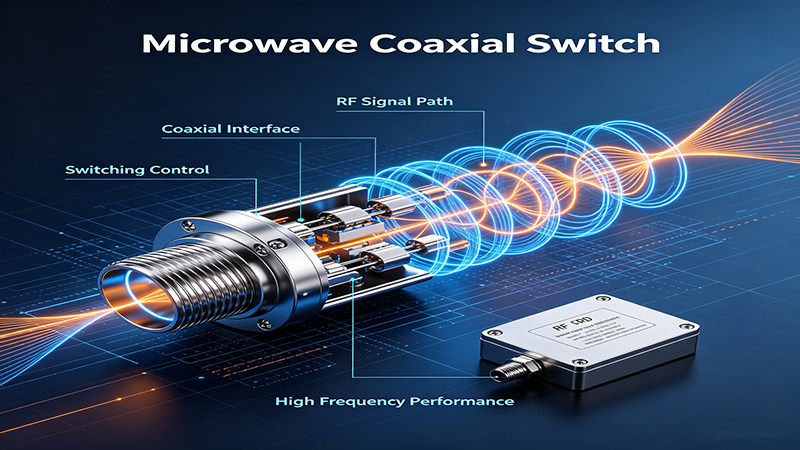
Unlike traditional electrical switches, coaxial switches are specifically designed for microwave frequencies. They are widely used in applications requiring reliable signal switching from MHz to GHz frequency ranges.
Common Applications of Coaxial Switches
- RF and microwave test systems
- Wireless communication equipment
- Radar and electronic warfare systems
- Antenna switching networks
- Satellite communication systems
- Automatic test equipment (ATE)
Understanding Coaxial Switch Terminology
The naming method of coaxial switches describes the relationship between input and output ports. The abbreviation format usually follows the pattern:
SPxT = Single Pole x Throw
- SP: Single Pole, representing one common RF input port.
- T: Throw, representing the number of selectable output ports.
For example, an SP6T coaxial switch has one common port and six selectable output ports.
SPST Coaxial Switch
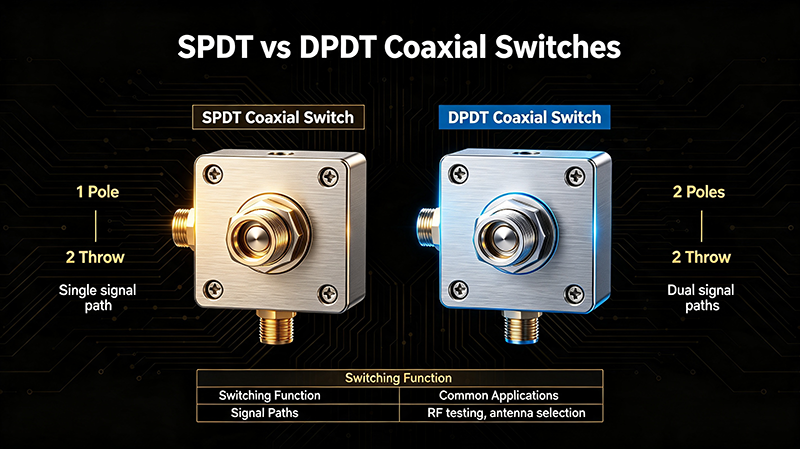
SPST stands for Single Pole Single Throw. It is the simplest coaxial switch configuration, providing a basic ON/OFF switching function.
SPST Configuration
- One input port
- One output port
- Simple signal connection or disconnection
- Suitable for RF signal enable/disable applications
SPST switches are commonly used in systems where a single RF path needs to be activated or isolated. They provide excellent isolation when the signal path is disconnected.
Typical SPST Applications
- RF signal routing control
- Transmitter protection circuits
- Laboratory testing equipment
- Power amplifier switching
SPDT Coaxial Switch
SPDT stands for Single Pole Double Throw. It contains one common port and two selectable output ports, allowing one RF signal to switch between two paths.
SPDT Configuration
- One common RF port
- Two selectable RF paths
- Fast switching capability
- Compact design
SPDT coaxial switches are among the most widely used RF switches because they provide flexible signal routing with minimal complexity.
Typical SPDT Applications
- Antenna selection systems
- RF test equipment
- Receiver/transmitter switching
- Communication systems
SP6T Coaxial Switch
SP6T stands for Single Pole Six Throw. It allows one RF input signal to connect to any one of six output channels.
This configuration is ideal for systems requiring multiple signal paths while maintaining a compact form factor.
SP6T Advantages
- Supports six RF output channels
- Reduces system complexity
- Provides reliable automated switching
- Suitable for multi-channel testing
Typical SP6T Applications
- RF measurement systems
- Multi-band communication equipment
- Radar testing platforms
- Antenna array systems
SP12T Coaxial Switch
SP12T coaxial switches provide one input port and twelve selectable output ports. They are designed for complex RF systems requiring multiple signal routing options.
SP12T Features
- One input with twelve output channels
- High-density RF switching capability
- Excellent isolation between channels
- Ideal for automated measurement systems
Typical SP12T Applications
- Large-scale RF test systems
- Satellite communication testing
- Wireless device validation
- Advanced laboratory instrumentation
Comparison of SPST, SPDT, SP6T, and SP12T Coaxial Switches
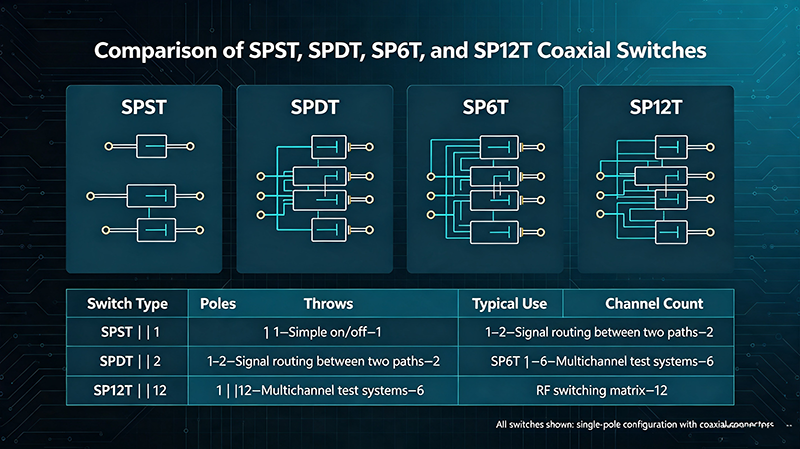
| Configuration | Ports | Main Function | Common Applications |
|---|---|---|---|
| SPST | 1 Input / 1 Output | ON/OFF switching | Signal isolation, protection circuits |
| SPDT | 1 Input / 2 Outputs | Select between two RF paths | Communication and antenna switching |
| SP6T | 1 Input / 6 Outputs | Multi-channel routing | RF testing and measurement systems |
| SP12T | 1 Input / 12 Outputs | High-density switching | Complex RF systems and automation |
How to Choose the Right Coaxial Switch Configuration?
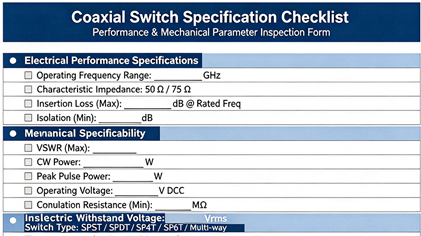
Selecting the correct coaxial switch depends on several technical requirements:
- Number of signal paths: Choose the configuration based on how many channels need to be switched.
- Frequency range: Ensure the switch supports the required RF or microwave frequency.
- Insertion loss: Lower insertion loss improves overall system performance.
- Isolation: High isolation prevents unwanted signal leakage between channels.
- Switching speed: Fast switching is important for automated test systems.
- Power handling: The switch must support the required RF power level.