

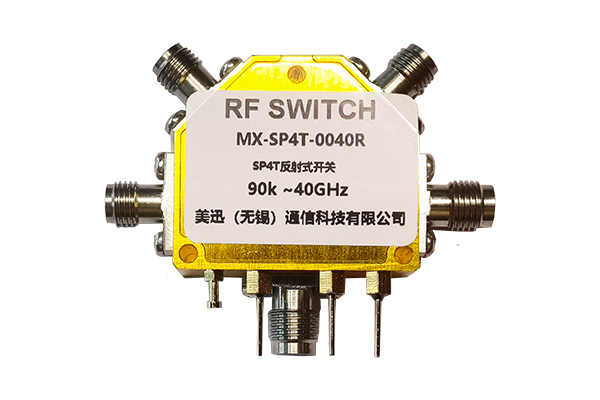




Selecting the optimal radio frequency (RF) switch architecture is a pivotal design decision in modern RF systems. Whether engineering electronic warfare (EW) suites, phased-array radar, 5G/6G wireless test equipment, or satellite communication payloads, engineers often find themselves choosing between two primary technologies: PIN Diode Switches and Coaxial (Electromechanical) Switches.
When switching speed is your top priority, making the wrong choice can lead to signal latency, rapid component failure, or thermal inefficiency. This guide provides a detailed head-to-head comparison to help you determine which switch architecture best fits your high-speed RF application.
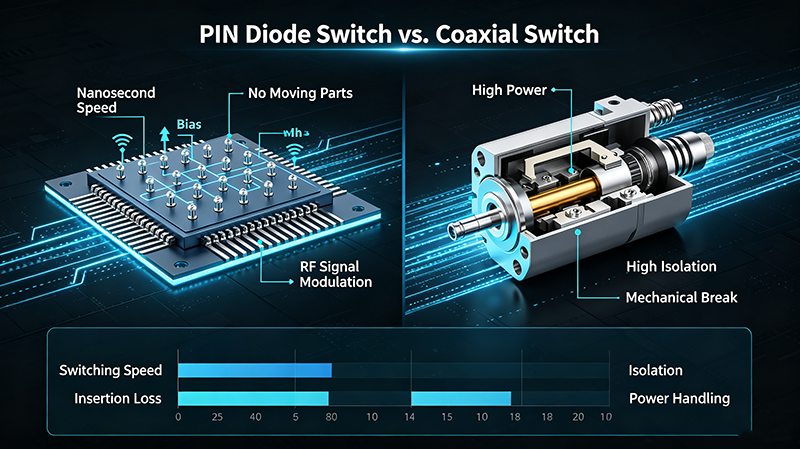
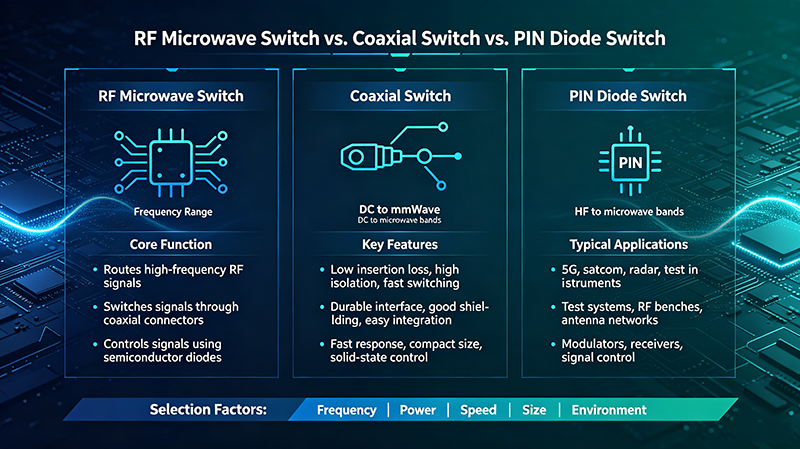
Key Takeaway: PIN switches deliver ultra-fast switching times measured in nanoseconds with unlimited cold-switching lifetime, whereas Coaxial switches excel in power handling, DC-to-gigahertz broadband coverage, and low insertion loss at the expense of millisecond-range switching speeds.
Understanding PIN Diode Switches
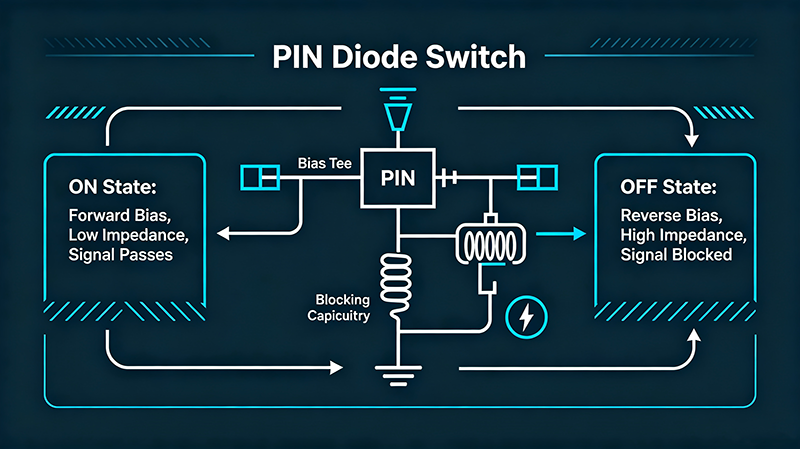
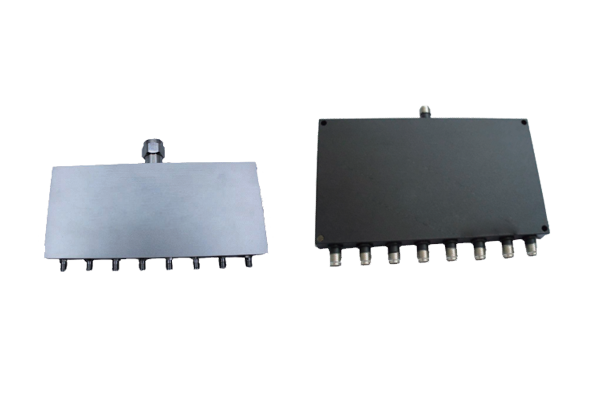
PIN diode switches are solid-state devices that utilize the unique characteristics of PIN (Positive-Intrinsic-Negative) diodes. When forward-biased, the intrinsic region floods with charge carriers, dropping the RF resistance to a fraction of an ohm. When reverse-biased, the diode acts as a low-capacitance open circuit, blocking the RF signal.
Advantages of PIN Switches
- Blazing Switching Speeds: Speed typically ranges from 10 nanoseconds to 500 nanoseconds.
- Unlimited Mechanical Life: Zero moving parts ensure billions of switching cycles without physical degradation.
- Compact Footprint: Ideal for highly integrated surface-mount (SMT) and MMIC modules.
- Vibration Resistance: Solid-state construction resists extreme mechanical shock and vibration.
Limitations of PIN Switches
- Frequency Constraints: Performance degrades at low frequencies (below ~10 MHz) due to charge carrier lifetime limits.
- Power Handling: Lower continuous wave (CW) power capacity compared to mechanical contacts.
- Non-Linearity: Potential for intermodulation distortion (P1dB and IP3 limitations) at high power levels.
Understanding Coaxial Switches
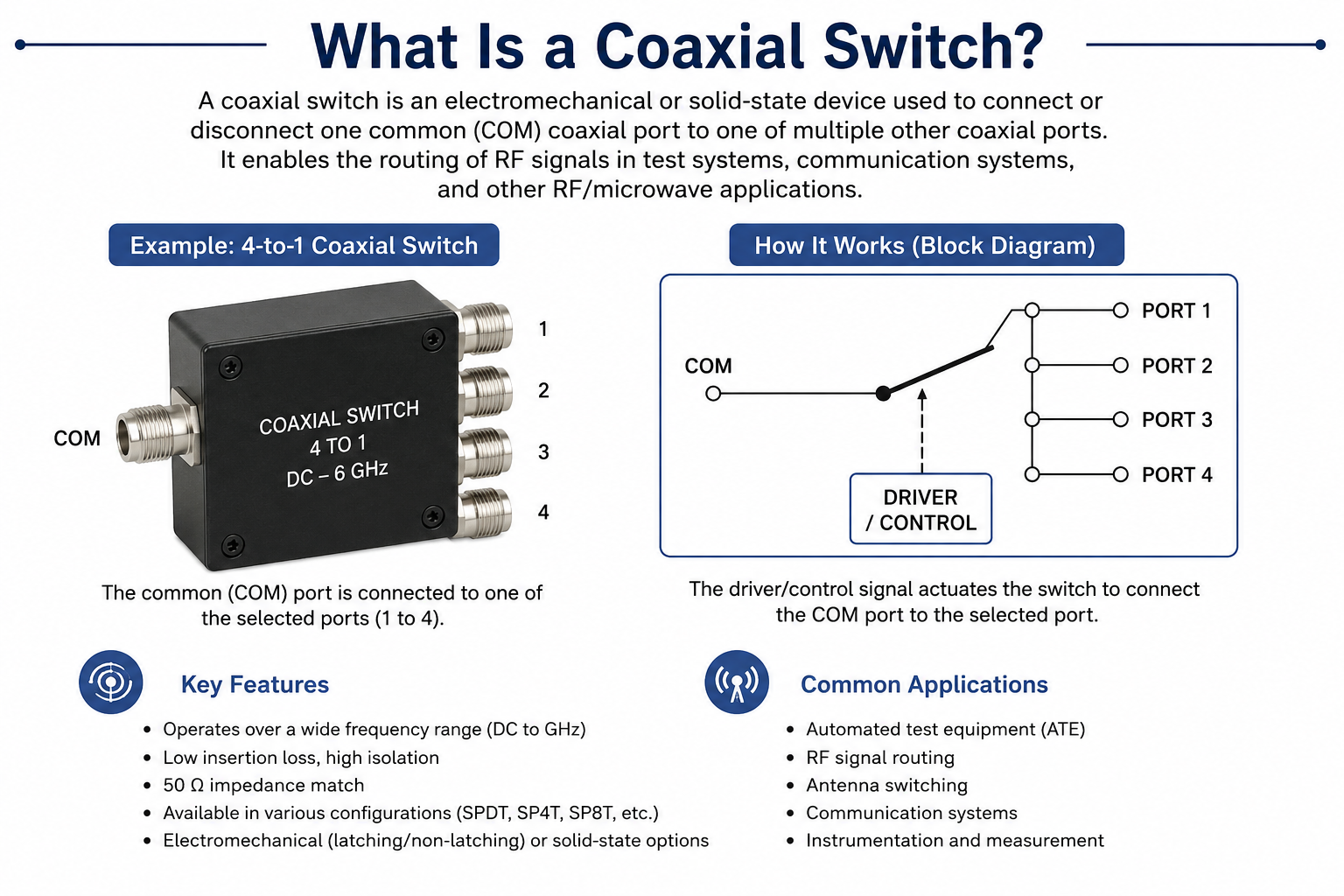
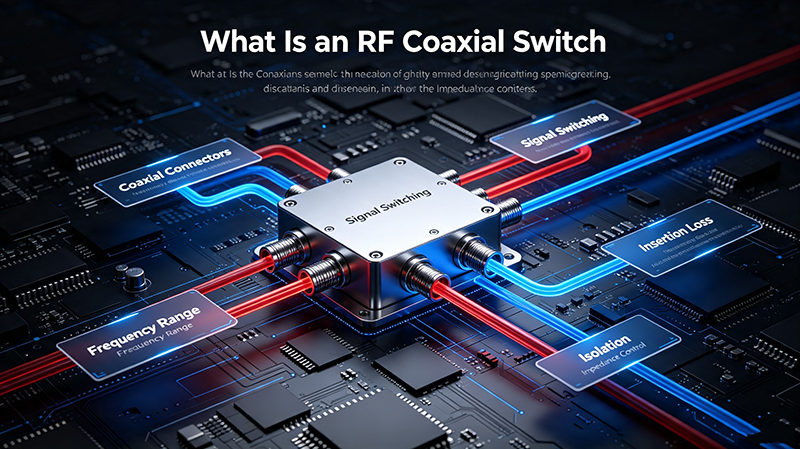
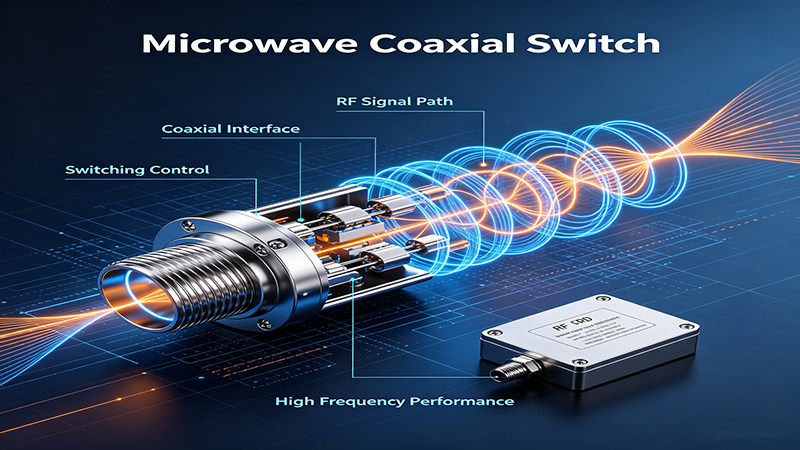
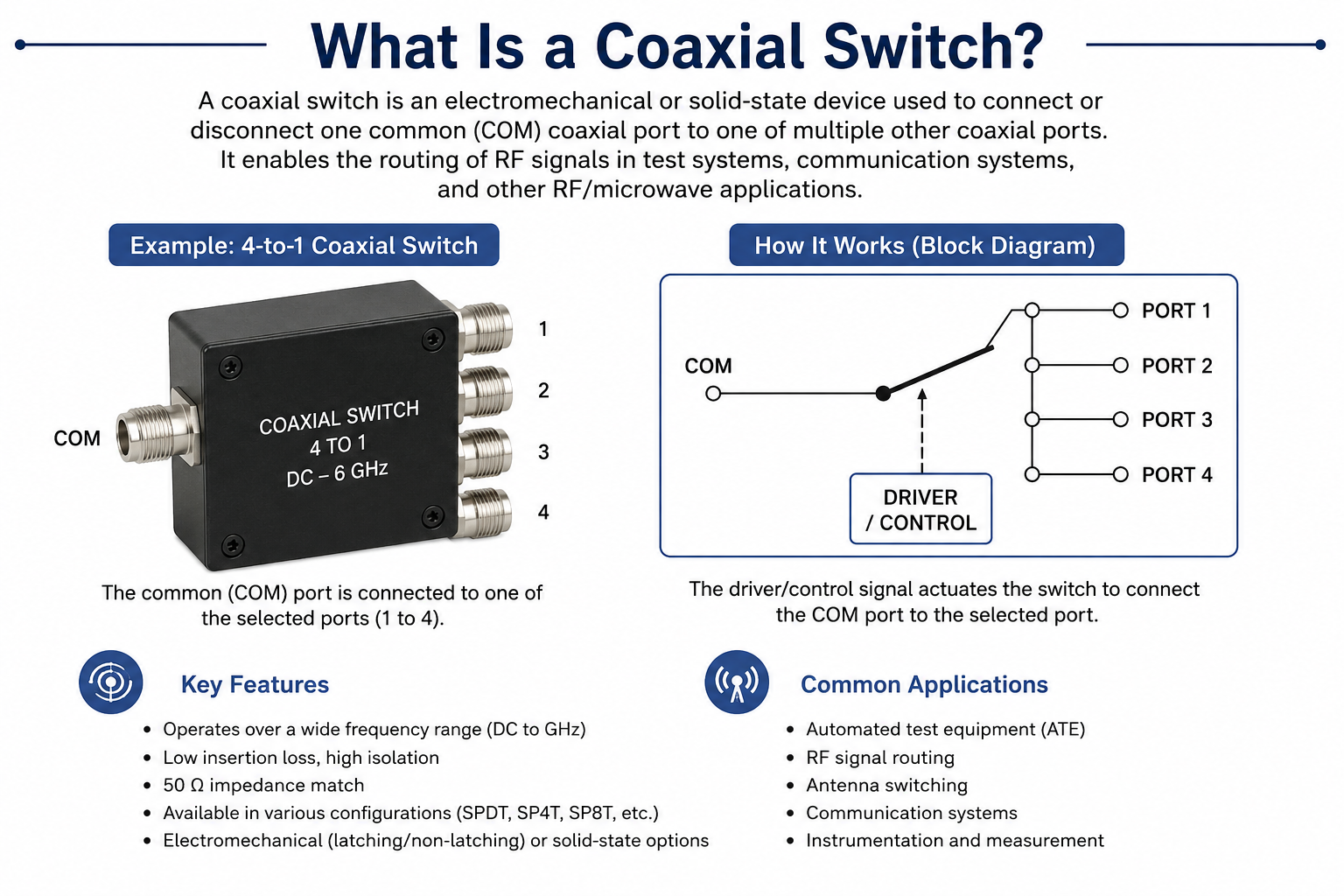
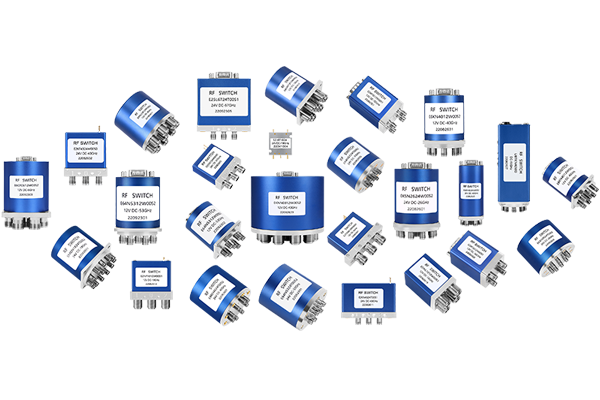
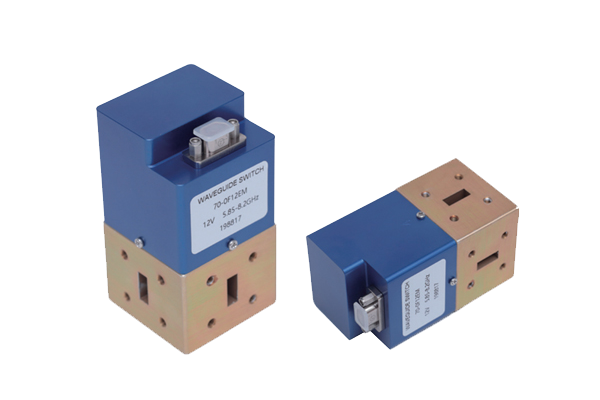
Coaxial switches are electromechanical devices that physically actuate internal mechanical conductors via magnetic solenoids to re-route RF energy across transmission paths. They provide unmatched signal continuity across an extremely wide frequency spectrum.
Advantages of Coaxial Switches
- Superior Signal Integrity: Exceptionally low insertion loss (<0.2 dB) and high isolation (>80 dB).
- High Power Handling: Capable of handling hundreds or thousands of watts CW.
- DC to Millimeter-Wave Coverage: Seamless broadband performance from DC up to 67 GHz and beyond.
- High Linearity: Passive mechanical contacts produce virtually zero intermodulation distortion.
Limitations of Coaxial Switches
- Slow Switching Speed: Actuation relies on physical movement, taking 10 to 50 milliseconds.
- Finite Mechanical Lifetime: Rated typically for 1 million to 10 million cycles.
- Larger Size & Weight: Solenoids and coaxial cavities require substantial physical volume.
Head-to-Head Technical Comparison
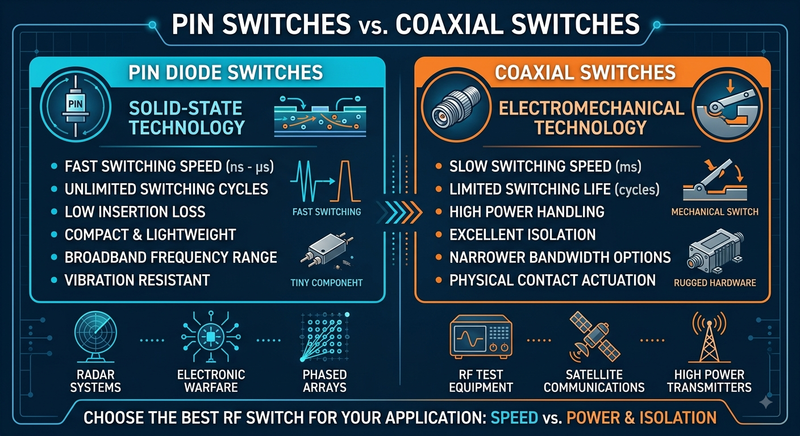
The matrix below summarizes the operational trade-offs between PIN diode and electromechanical coaxial switches:
| Parameter | PIN Diode Switch (Solid-State) | Coaxial Switch (Electromechanical) |
|---|---|---|
| Switching Speed | 10 ns – 500 ns | 10 ms – 50 ms |
| Operating Bandwidth | Narrowband / Band-limited (e.g., 0.5–40 GHz) | Ultra-Broadband (DC to 67+ GHz) |
| Insertion Loss | Moderate (1.0 dB – 3.0 dB) | Very Low (0.1 dB – 0.5 dB) |
| RF Power Handling | Low to Moderate (<10W CW typical) | High to Very High (100W – kW) |
| Isolation | Moderate to High (30 dB – 60 dB) | Very High (60 dB – 90+ dB) |
| Operational Lifetime | Virtually Infinite | 1 Million to 10 Million Cycles |
| Linearity / Distortion | Non-linear at higher power levels | Extremely High Linearity |
Selecting the Best Switch for Fast-Switching RF Applications
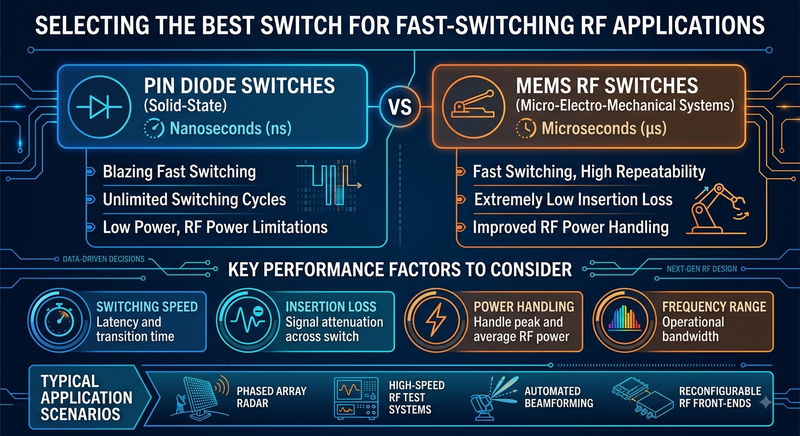
1. When Switching Speed is Absolute: Choose PIN Switches
If your system requires switching states millions of times per second, PIN diode switches are the clear choice. In applications such as active electronically scanned array (AESA) radar beamforming, high-speed automated test equipment (ATE), and rapid signal frequency hopping, the millisecond latency of a coaxial switch is completely non-viable. PIN switches execute state transitions in nanoseconds, seamlessly keeping pace with ultra-fast digital logic control lines.
2. When Duty Cycle and Longevity Matter: Choose PIN Switches
An application switching at 1 kHz would wear out a 10-million-cycle coaxial switch in under three hours. For continuous high-repetition switching, solid-state PIN technology provides uncompromised reliability and zero mechanical wear, reducing long-term system maintenance costs in mission-critical hardware.
3. When Power, Linearity, and DC-Coupling Are Essential: Choose Coaxial Switches
If your fast-switching scenario still allows a few milliseconds of transition time, but demands transmitting high-power signals (e.g., 100W RF transmitters), low noise amplification paths, or broadband signals starting at DC, coaxial switches remain unmatched. Their physical contact architecture guarantees minimal insertion loss and zero signal distortion.
Final Verdict
Choose PIN Diode Switches when your application demands nanosecond transition times, high repetition rates, compact SMT integration, or shock-resistant solid-state longevity.
Choose Coaxial Switches when your application prioritize ultra-low insertion loss, high RF power transmission, DC signal continuity, and extreme isolation where millisecond response times are acceptable.