





5G communication systems operate at higher frequencies, wider bandwidths, and more demanding performance levels than previous generations of wireless technology. As a result, the accuracy and stability of RF testing systems have become increasingly important. Two specifications that play a critical role in 5G test equipment are VSWR and isolation.
Low VSWR helps minimize signal reflections and impedance mismatch, while high isolation prevents unwanted RF energy from leaking between signal paths. Together, these characteristics have a direct impact on measurement accuracy, repeatability, signal integrity, and the overall performance of automated 5G test systems.
This guide explains the importance of low VSWR and high isolation in 5G communication testing, how they affect RF measurements, and what engineers should consider when selecting RF microwave switches, coaxial switches, cables, connectors, and other components for high-frequency test systems.
What Is VSWR in RF Testing?
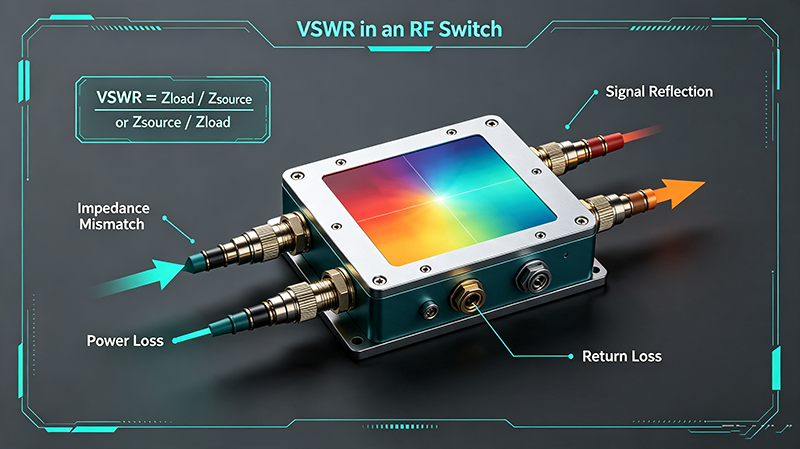
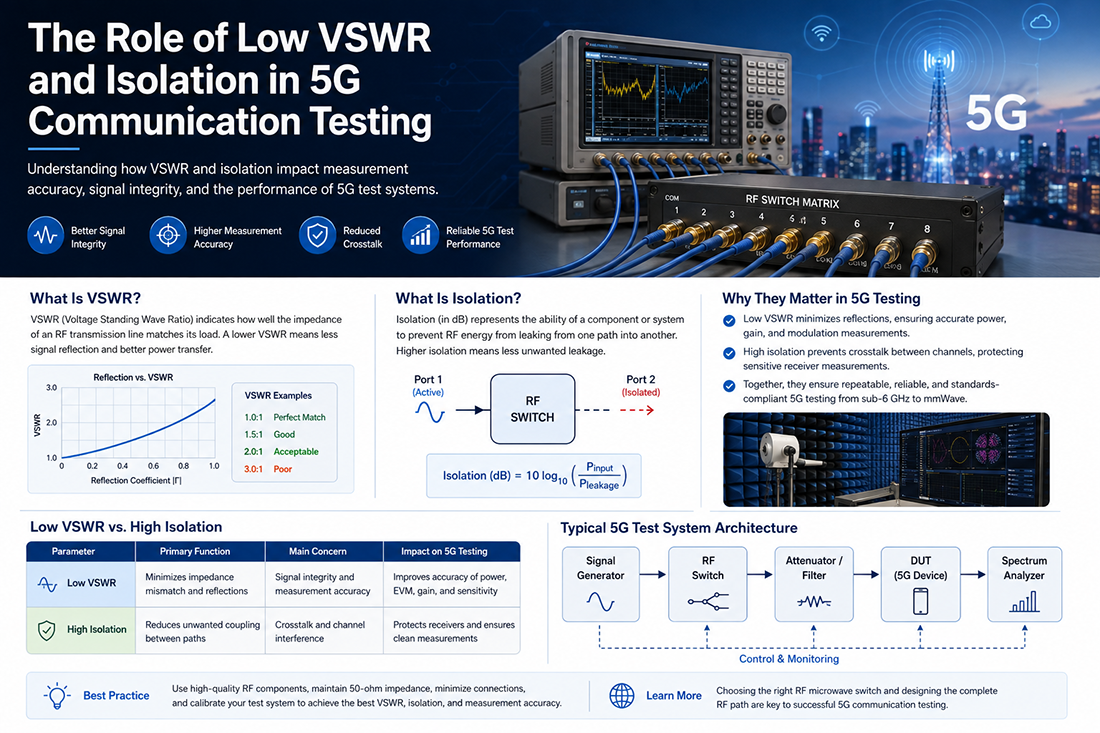
VSWR (Voltage Standing Wave Ratio) is a measurement of the impedance matching between an RF transmission line and its connected load. It indicates how much of an RF signal is reflected toward the source instead of being delivered to the load.
An ideal RF system has a VSWR of 1:1, which means that the characteristic impedance of the transmission system is perfectly matched and there are no reflections. In practical applications, however, some degree of mismatch is unavoidable.
The basic relationship between reflection coefficient and VSWR is:
VSWR = (1 + |Γ|) / (1 − |Γ|)
where Γ represents the magnitude of the reflection coefficient.
A lower VSWR indicates better impedance matching. For example, a component with a VSWR of 1.2:1 generally provides better matching than one with a VSWR of 2.0:1.
Why Low VSWR Matters in 5G Communication Testing
5G testing introduces several challenges that make low VSWR particularly important. Many 5G systems operate across sub-6 GHz frequencies as well as millimeter-wave bands, where even small impedance mismatches can significantly affect measurements.
1. Reducing Signal Reflections
When an RF component has poor impedance matching, part of the transmitted signal is reflected. These reflections can create standing waves and alter the signal observed by the device under test (DUT).
In a 5G test environment, reflections can influence measurements such as output power, gain, modulation quality, and receiver sensitivity. Using RF components with low VSWR helps maintain a cleaner and more predictable signal path.
2. Improving Measurement Accuracy
Accurate RF measurements depend on maintaining a controlled impedance environment. A component with high VSWR can introduce additional measurement uncertainty, particularly when several RF components are connected together.
Low-VSWR switches, connectors, adapters, cables, and test fixtures help reduce the accumulated effects of mismatch throughout the test chain.
3. Supporting Wideband 5G Signals
5G technologies use wide channel bandwidths and advanced modulation techniques. The RF test path therefore needs consistent performance across the required frequency range.
A component may exhibit acceptable VSWR at one frequency but significantly worse performance at another. For this reason, engineers should evaluate VSWR across the complete operating bandwidth rather than relying on a single nominal frequency.
What Is RF Isolation?
RF isolation describes the ability of a component or switching system to prevent unwanted RF energy from coupling from one signal path into another.
Isolation is particularly important in multi-channel test systems. When one RF path is active, unwanted leakage into another path can interfere with the measurement or even expose the DUT to an unintended signal.
Typical RF isolation is expressed in decibels:
Isolation (dB) = 10 log₁₀(Pinput / Pleakage)
Higher isolation means less unwanted power reaches the inactive signal path.
For example, a switch with 80 dB of isolation suppresses the unwanted signal much more effectively than a switch with 40 dB of isolation. The required isolation depends on the application, signal levels, receiver sensitivity, and test architecture.
Why High Isolation Is Critical for 5G Testing
1. Preventing Crosstalk Between RF Channels
Modern 5G test systems can contain multiple transmit and receive paths. If isolation is insufficient, RF energy from an active channel may leak into an adjacent channel.
This crosstalk can distort measurement results and make it difficult to determine whether observed signals originate from the DUT or from the test system itself.
2. Protecting Receiver Measurements
5G receivers can be highly sensitive, particularly during measurements of low-level signals. A relatively small leakage signal can become significant when the desired signal is close to the receiver noise floor.
High-isolation RF switches and signal-routing components help prevent unwanted signals from entering sensitive receiver paths.
3. Improving Test Repeatability
Automated test equipment frequently switches between different RF paths. If the isolation characteristics of the switching network are inconsistent, test results can vary between configurations.
High and stable isolation helps ensure that each measurement is determined primarily by the intended signal path rather than by leakage from inactive channels.
Low VSWR vs. High Isolation: What Is More Important?
Low VSWR and high isolation solve different RF problems, so it is generally incorrect to treat one as universally more important than the other.
| Parameter | Primary Function | Main Concern |
|---|---|---|
| Low VSWR | Minimizes impedance mismatch and reflections | Signal integrity and measurement accuracy |
| High Isolation | Reduces unwanted coupling between paths | Crosstalk and channel interference |
For a single-path RF measurement, VSWR may have a particularly strong influence on accuracy. For a complex multi-channel switching network, isolation can become equally critical or even dominant.
The Role of RF Microwave Switches in 5G Testing
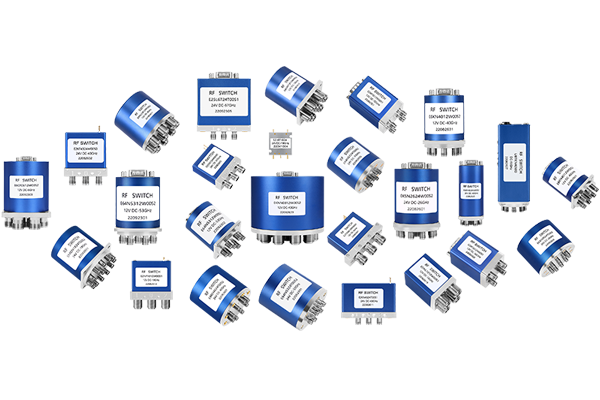
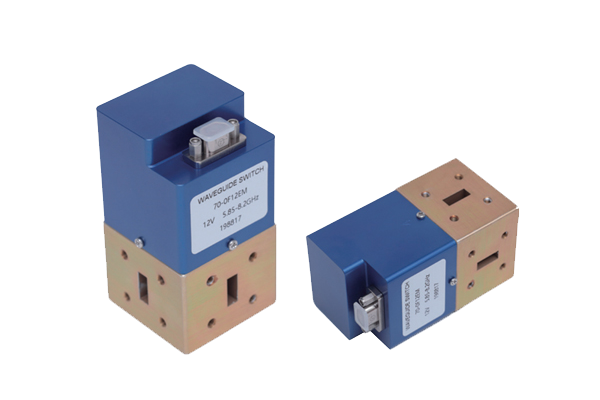
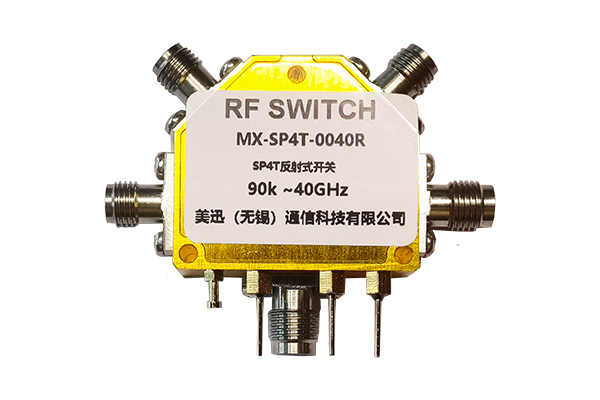
RF microwave switches are essential components in automated 5G test systems because they allow test equipment to route signals between instruments, antennas, filters, attenuators, and multiple DUT ports.
Common configurations include SPST, SPDT, SP3T, SP4T, SP6T, SP8T, and SP12T. Depending on the test architecture, switches may be used to select different frequency bands, antenna paths, test instruments, or device ports.
For these applications, engineers typically evaluate several RF switch specifications together:
- VSWR: Determines the quality of impedance matching.
- Isolation: Determines how effectively inactive ports are isolated.
- Insertion loss: Indicates how much signal power is lost through the switch.
- Frequency range: Defines the usable RF bandwidth.
- Power handling: Determines the maximum RF power the switch can safely handle.
- Switching speed: Important for automated high-throughput testing.
- Repeatability: Determines how consistently the switch performs over repeated switching cycles.
How VSWR and Isolation Affect 5G Test Accuracy
Consider a test system consisting of a signal generator, RF switch, cable assembly, attenuator, and DUT. Each component contributes its own RF characteristics to the complete signal path.
If the RF switch has a relatively high VSWR, reflections can travel through the system and interact with reflections from other components. This can produce frequency-dependent variations in amplitude and phase.
At the same time, insufficient isolation may allow signals from another switch port to enter the measurement path. The resulting measurement may therefore contain both mismatch-related errors and unwanted leakage.
This is why RF engineers should evaluate the complete test path rather than selecting components based solely on one specification.
Key Specifications to Consider When Selecting a 5G RF Switch
Frequency Range
Select a switch that covers the entire operating frequency range with adequate margin.
VSWR
Look for stable low VSWR across the complete bandwidth, not just at a single test frequency.
Isolation
Higher isolation is especially important for multi-channel and sensitive receiver measurements.
Insertion Loss
Low insertion loss preserves signal power and improves the available test-system dynamic range.
5G Sub-6 GHz vs. mmWave Testing
The importance of RF performance becomes even more pronounced at millimeter-wave frequencies. As frequency increases, transmission-line dimensions become electrically larger, and small discontinuities in connectors, PCB transitions, adapters, and switches can have a greater impact.
For sub-6 GHz testing, engineers still need good impedance matching and isolation, but component selection may have more tolerance depending on the application. In mmWave testing, however, every transition in the RF path should be carefully evaluated.
When testing 5G FR2 systems, engineers should pay particular attention to:
- Frequency-dependent VSWR performance
- Isolation between adjacent and inactive ports
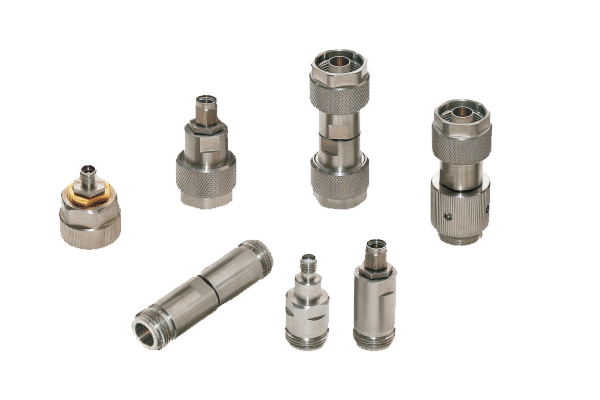
- Connector and adapter quality
- Cable bending and mechanical stability
- Calibration quality and reference-plane location
- Temperature-dependent RF performance
Best Practices for Improving 5G RF Test Performance
Use High-Quality RF Components
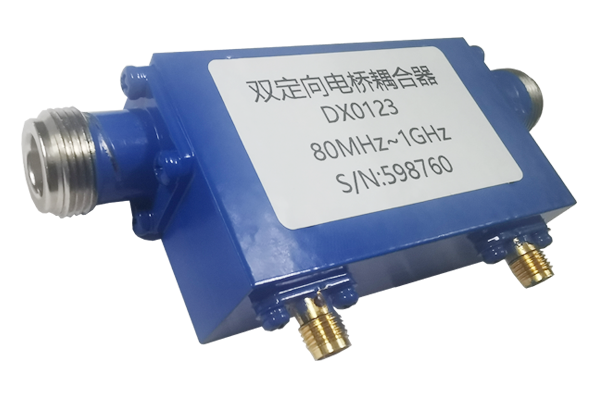
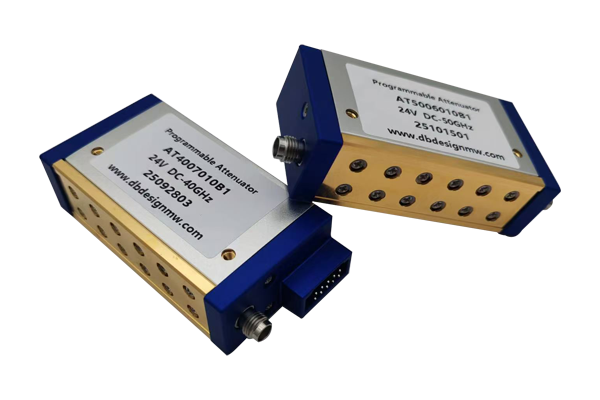
Choose RF switches, connectors, adapters, cables, attenuators, and couplers that are designed for the target frequency range. Using components with specifications beyond the minimum requirement can provide additional system margin.
Maintain Proper 50-Ohm Impedance
Most RF and microwave test systems use a 50-ohm characteristic impedance. Maintaining this impedance throughout the signal chain helps minimize reflections and improve measurement consistency.
Calibrate the Measurement System
Vector network analyzers and other RF measurement equipment should be properly calibrated. Calibration can compensate for systematic errors associated with cables, connectors, and other components within the calibrated reference plane.
Minimize Unnecessary RF Connections
Every connector, adapter, cable interface, and transition can introduce additional loss and mismatch. A simpler RF path can therefore improve overall measurement stability.
Common Mistakes in 5G RF Test System Design
- Evaluating VSWR at only one frequency. RF performance changes with frequency, so broadband measurements are essential.
- Ignoring isolation in multi-port systems. A switch may have acceptable insertion loss while still allowing excessive leakage between ports.
- Focusing only on insertion loss. Low insertion loss alone does not guarantee accurate RF routing.
- Using inappropriate connectors or adapters. Poor-quality transitions can become major sources of mismatch at high frequencies.
- Ignoring the complete RF chain. System performance depends on the combined characteristics of all components.
Frequently Asked Questions
What is a good VSWR for a 5G RF switch?
The appropriate value depends on the frequency range and test requirements. In general, lower VSWR is desirable, but engineers should evaluate the complete VSWR specification across the intended operating bandwidth.
Why is isolation important in RF switching?
High isolation minimizes unwanted RF leakage between signal paths. This is particularly important in multi-channel 5G test systems where leakage can cause crosstalk and measurement errors.
Is low VSWR more important than low insertion loss?
Neither parameter is universally more important. VSWR controls impedance matching and reflections, while insertion loss determines how much signal power is lost. Both should be evaluated according to the application's measurement requirements.
Does VSWR become more important at higher frequencies?
Yes. At higher frequencies, small physical discontinuities can have a larger electrical impact. Therefore, impedance matching and connector quality become increasingly important in mmWave 5G testing.
Conclusion
Low VSWR and high isolation are fundamental performance requirements for reliable 5G communication testing. Low VSWR minimizes reflections and impedance mismatch, helping preserve signal integrity and measurement accuracy. High isolation reduces unwanted coupling between RF paths, which is essential for multi-channel test systems and sensitive receiver measurements.
As 5G networks continue to expand into wider bandwidths and higher-frequency bands, RF test systems must provide stable and predictable performance across the entire signal chain. When selecting an RF microwave switch or coaxial switch for 5G testing, engineers should consider VSWR, isolation, insertion loss, frequency range, power handling, switching speed, and repeatability as a complete set of specifications.
A carefully designed RF test path with high-quality components, proper impedance control, and appropriate calibration can significantly improve measurement accuracy and repeatability. Ultimately, the right balance of low VSWR, high isolation, and low insertion loss provides a strong foundation for dependable 5G communication testing.
Explore RF & Microwave Testing Solutions
For demanding 5G, RF, and microwave test applications, selecting the right RF switching and signal-routing components is essential. Evaluate frequency range, VSWR, isolation, insertion loss, power handling, and mechanical or electrical switching requirements before choosing a solution.