






1. Introduction to Attenuators
In the world of radio frequency (RF) and microwave engineering, controlling signal strength is essential. Signals that are too strong can saturate receivers, damage sensitive components, or cause measurement errors. Signals that are too weak can be lost in noise. This is where the attenuator comes in.
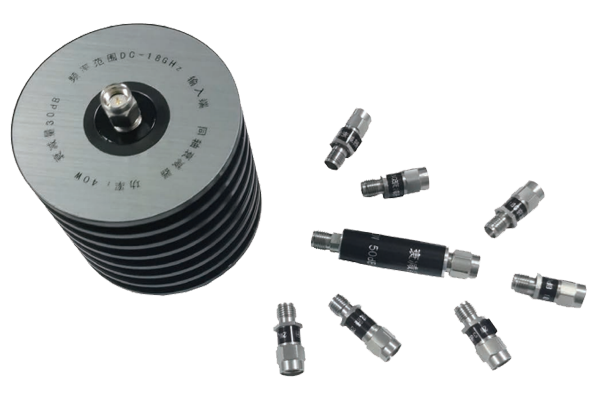
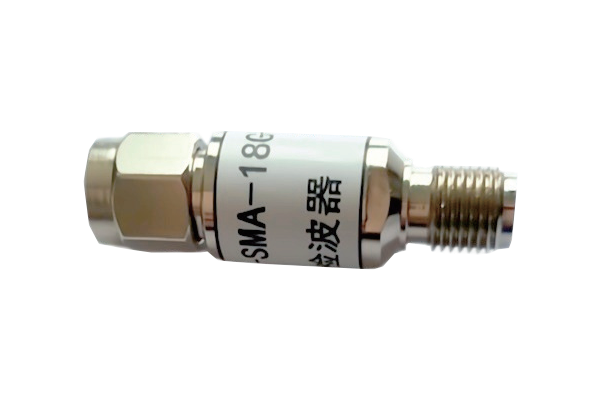
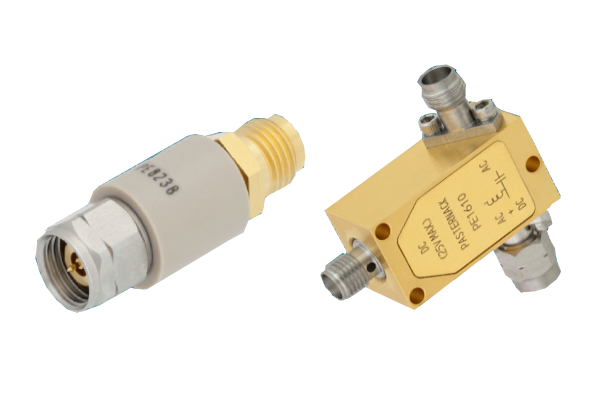
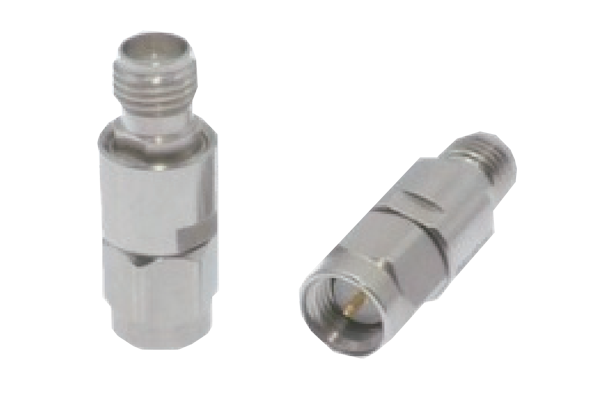
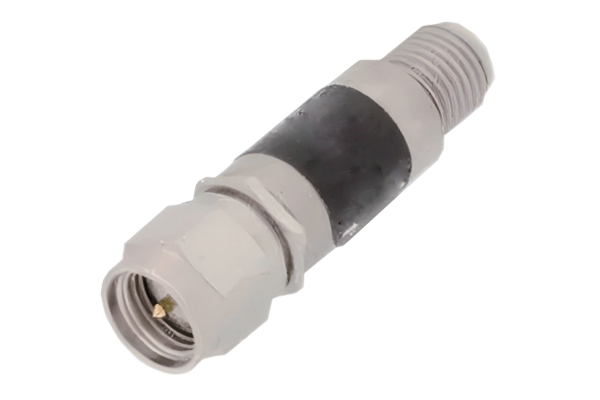
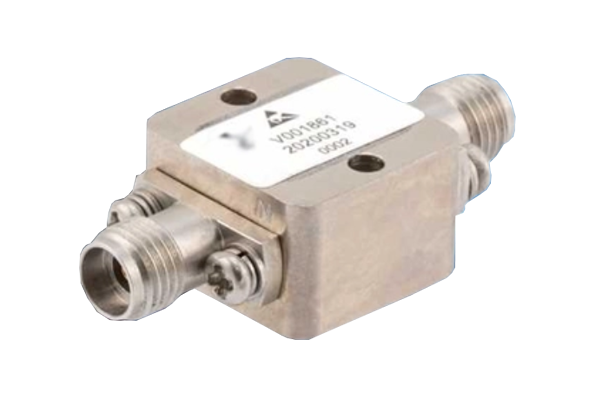
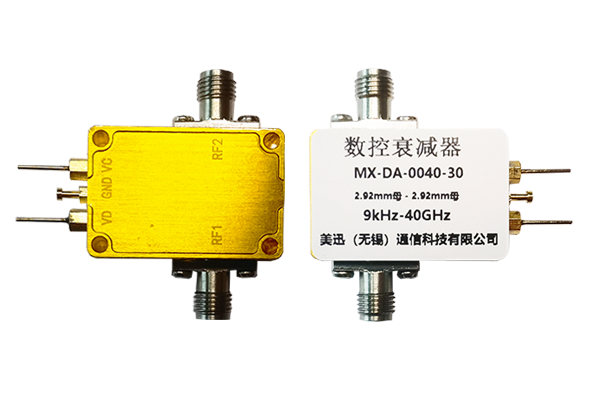
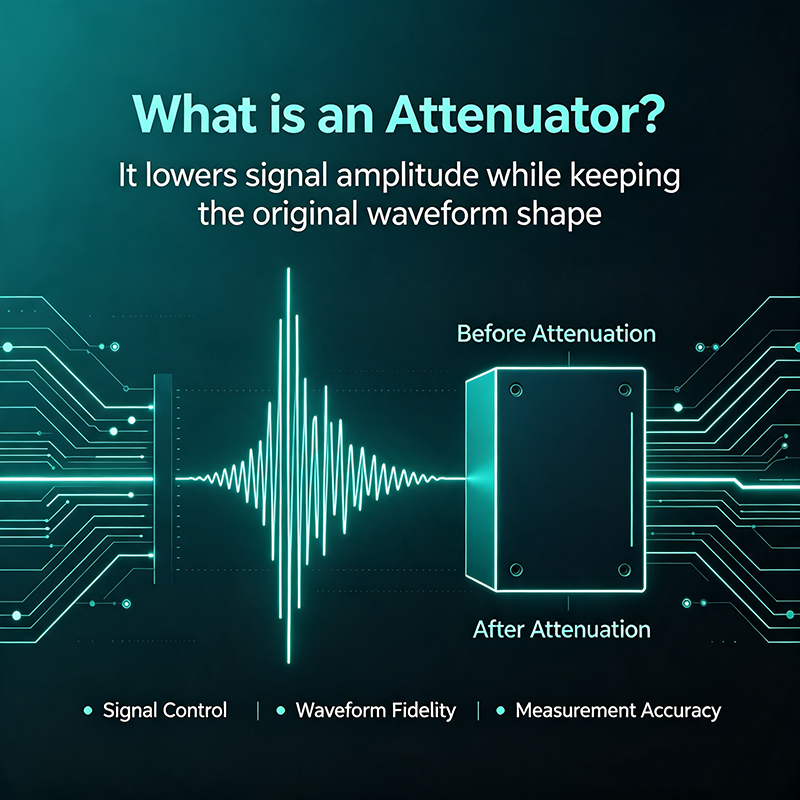
An attenuator is a two-port passive device that reduces the amplitude of an electrical signal while preserving its other characteristics such as frequency, phase, and waveform shape. The amount of reduction is measured in decibels (dB), a logarithmic unit that expresses the ratio between input and output power.
2. How Does an Attenuator Work?
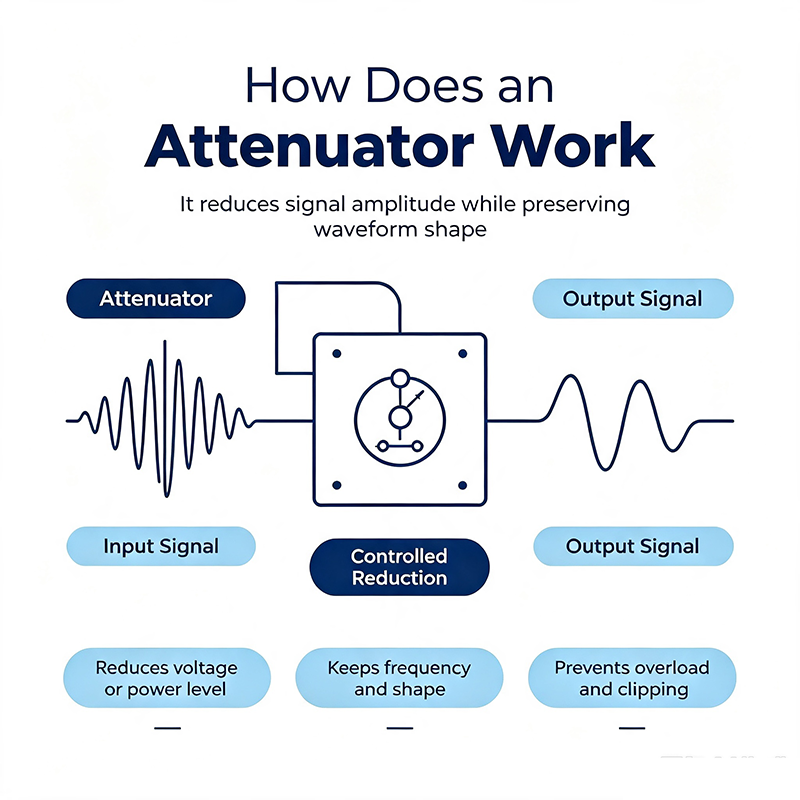
Attenuators work by dissipating the unwanted signal energy as heat through resistive elements. The most common internal configurations include:
- Pi-type (π) attenuator – Uses three resistors arranged in a shape resembling the Greek letter pi. Ideal for low-impedance matching.
- T-type attenuator – Uses three resistors arranged in a T-shape. Commonly used for balanced circuits.
- L-type attenuator – Uses two resistors. Simple, cost-effective, but provides only approximate impedance matching.
- Bridge-type attenuator – Provides excellent impedance matching across a wide frequency range.
Regardless of the configuration, the underlying principle remains the same: absorb the excess energy and deliver a controlled, lower-power signal to the next stage of the system.
3. Key Purpose and Importance
The primary purpose of an attenuator issignal level control. More specifically, attenuators serve several important functions:
- Protecting sensitive equipment from high-power signals that could damage receivers or test instruments.
- Improving measurement accuracy by bringing signals within the optimal range of test equipment.
- Matching impedance between components to minimize signal reflection and standing waves.
- Adjusting signal levels in transmitter and receiver chains to optimize system performance.
- Isolating stages in a circuit to prevent unwanted interaction between components.
4. Common Types of Attenuators
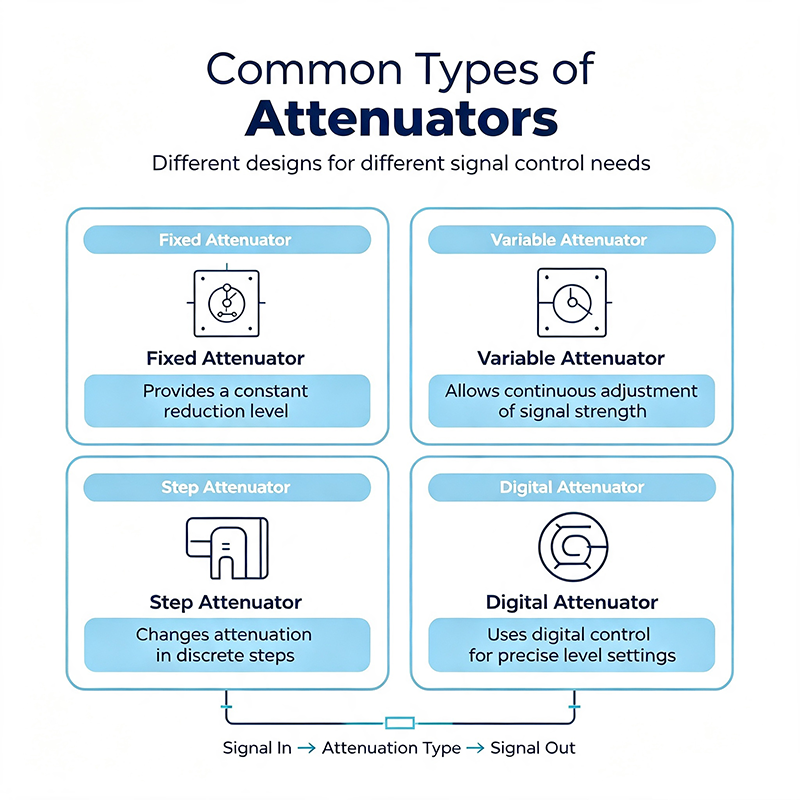
Attenuators are available in several designs, each suited to specific applications.
Fixed Attenuators
Provide a constant, unchangeable attenuation value. Simple, reliable, and ideal for permanent installations where a known signal reduction is required.
Variable Attenuators
Allow the attenuation level to be manually adjusted. Useful for tuning and calibration tasks where flexibility is required.
Step Attenuators
Offer attenuation in discrete increments (typically 1 dB, 5 dB, or 10 dB steps). Provide precise, repeatable adjustments.
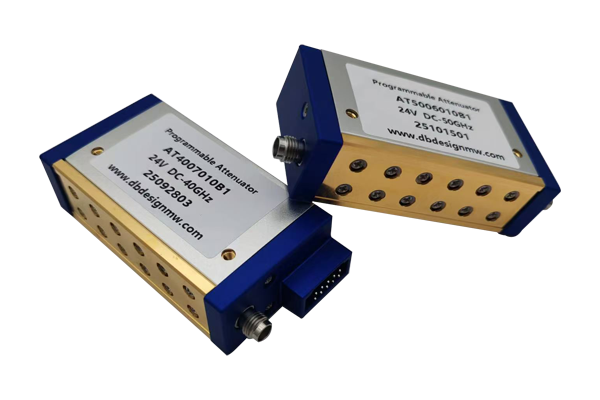
Programmable Attenuators
Electronically controlled via digital or analog signals. Used in automated test systems and remote applications.
5. Main Applications
Attenuators are widely used across many industries and technologies, including:
- Telecommunications: Managing signal levels in cellular base stations and satellite communication systems.
- Test & Measurement: Calibrating signal generators, spectrum analyzers, and network analyzers.
- Broadcasting: Balancing audio and RF levels in TV and radio transmission systems.
- Military & Aerospace: Radar systems, electronic warfare, and secure communications.
- Medical Equipment: MRI machines and other imaging systems that rely on precise RF control.
- Wi-Fi & Wireless Networks: Optimizing signal strength in routers, access points, and antennas.
6. Key Specifications to Consider
When selecting an attenuator, the following specifications are critical:
| Specification | Description | Typical Range |
|---|---|---|
| Attenuation Value | The amount of signal reduction | 1 dB – 60 dB |
| Frequency Range | The operating frequency band | DC – 110 GHz |
| Power Handling | Maximum input power without damage | 0.5 W – 1000 W |
| VSWR | Voltage Standing Wave Ratio (impedance match) | 1.1:1 – 1.5:1 |
| Impedance | Standard system impedance | 50 Ω or 75 Ω |
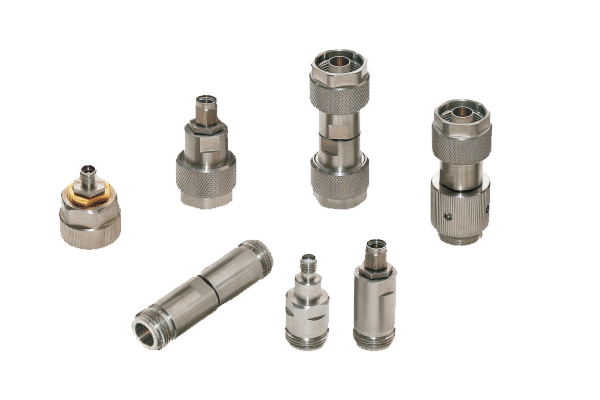
| Connector Type | Physical connection interface | SMA, N-type, BNC, TNC |
7. How to Choose the Right Attenuator
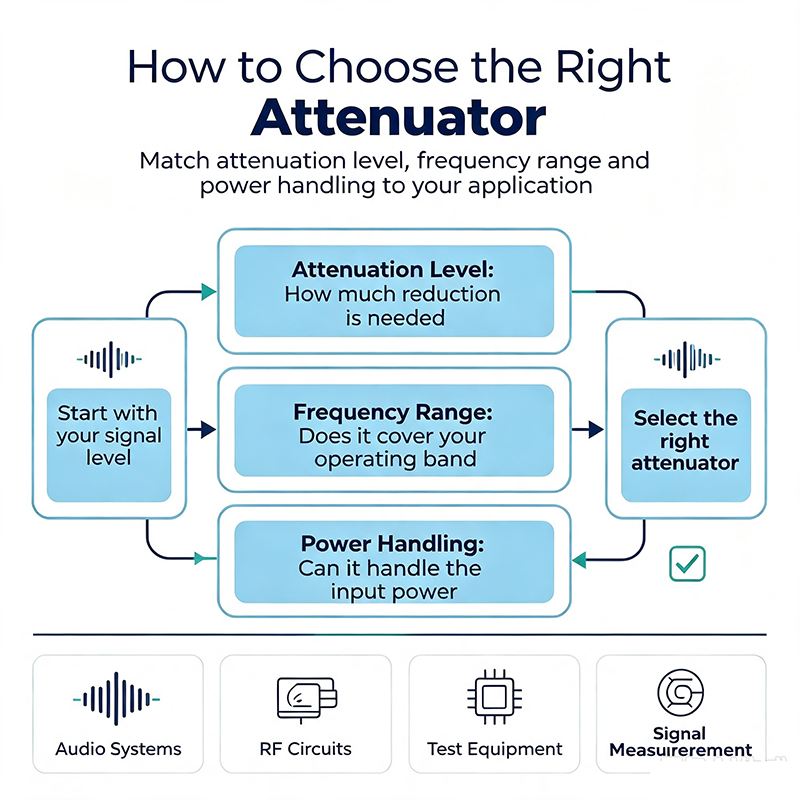
Choosing the correct attenuator involves balancing several factors:
- Determine the required attenuation – Calculate the dB value needed to bring the signal into the desired range.
- Check the frequency range – Make sure the attenuator supports the operating frequencies of your system.
- Consider power handling – Select an attenuator rated above your maximum expected input power.
- Verify connector compatibility – Ensure the connectors are compatible with your cables and equipment.
- Evaluate impedance matching – Match the impedance (typically 50 Ω) of your system to minimize reflections.
8. Frequently Asked Questions
Q1: What is the difference between an attenuator and a terminator?
An attenuator reduces signal strength while passing the signal through, whereas a terminator absorbs the signal completely and prevents reflection at the end of a transmission line.
Q2: Can attenuators be used in both directions?
Yes, most attenuators are bidirectional, meaning they can attenuate signals traveling in either direction with the same specified attenuation value.
Q3: What is a typical dB value for an attenuator?
Common attenuation values include 3 dB, 6 dB, 10 dB, 20 dB, and 30 dB. The right value depends entirely on your specific application and signal requirements.
Q4: Do attenuators introduce noise?
Passive attenuators do not generate noise themselves, but they reduce the signal-to-noise ratio because the signal is attenuated while the inherent noise floor of the system remains unchanged.
Q5: Are attenuators used in 5G networks?
Yes, attenuators are essential in 5G infrastructure for managing signal levels in massive MIMO antenna systems, beamforming networks, and small cell deployments.
9. Conclusion
An attenuator is far more than a simple "signal reducer" — it is a precision-engineered component that protects equipment, improves measurement accuracy, and optimizes system performance across virtually every modern RF and microwave application.
By understanding its working principle, the various types available, and the key specifications that matter, you can confidently select the right attenuator for your project. Whether you are building a 5G base station, calibrating a spectrum analyzer, or designing a satellite link, the proper attenuator ensures your system operates reliably and efficiently.
Need Help Choosing the Right Attenuator?
Contact our RF experts today for personalized recommendations and competitive pricing.
Get a Free Quote