






Why an RF Power Divider is Needed
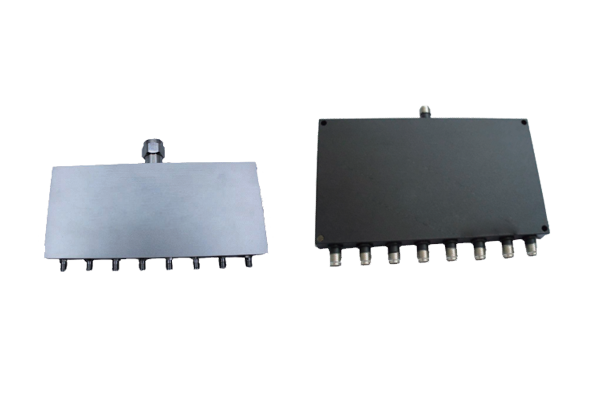
RF power dividers play a critical role in modern communication and radar systems, enabling efficient signal distribution across multiple devices while maintaining signal integrity and system performance.
These versatile components address key challenges in RF system design, from multi-device signal distribution to maintaining transmission quality across diverse application scenarios.
- In RF systems, splitting a single input signal into multiple outputs is essential for simultaneous signal reception by multiple devices.
- RF power dividers maintain balanced energy distribution during signal splitting, ensuring each output receives stable and compliant signal strength.
- They efficiently achieve multi-channel signal distribution without additional complex splitting devices, providing the foundation for multi-device collaborative operation.
- RF power dividers optimize internal structure and transmission paths to reduce energy loss during signal splitting, ensuring efficient signal transmission.
- Their stable signal distribution prevents malfunctions due to signal imbalance, ensuring coordinated operation of all system components.
- Without frequent adjustments to signal parameters or equipment replacement, systems maintain continuous stable operation, reducing debugging and maintenance costs.
- RF power dividers possess excellent isolation and anti-interference capabilities, effectively blocking crosstalk between output ports.
- High-quality transmission medium and precise structural design reduce attenuation and distortion during signal splitting.
- They ensure the purity and stability of output signals, providing high-quality signal assurance for normal operation of subsequent equipment.
- RF power dividers meet varying requirements for RF signal distribution across different industries and scenarios with flexible adaptability.
- They perform stabilization roles in communication systems, multi-channel detection in radar systems, and signal distribution in test and measurement equipment.
- Compatibility with different frequency ranges and power levels allows adaptation to various scenario requirements without separately designed splitting schemes.
Technical Insight: Modern RF power dividers incorporate advanced impedance matching techniques and low-loss materials to minimize insertion loss and maximize power transfer efficiency across all output ports. Their design considerations include temperature stability, phase balance, and amplitude consistency to ensure reliable performance in demanding environments.
System Integration Advantages
By incorporating RF power dividers into system designs, engineers can achieve reliable multi-signal distribution with minimal performance degradation. These components provide essential solutions for contemporary RF challenges, supporting the development of robust communication networks, radar systems, and test infrastructure across multiple industries.