


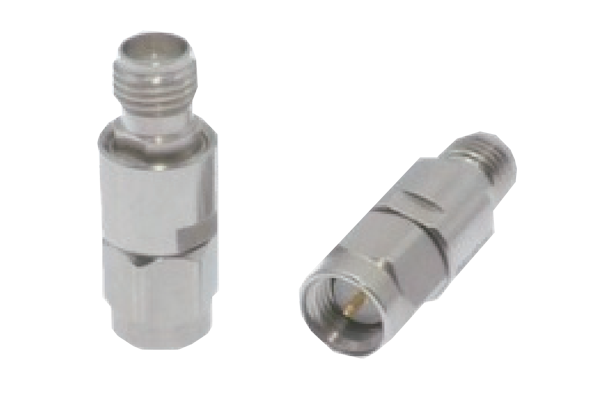
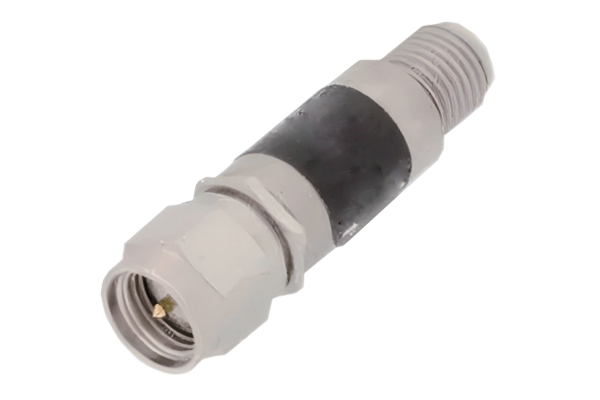
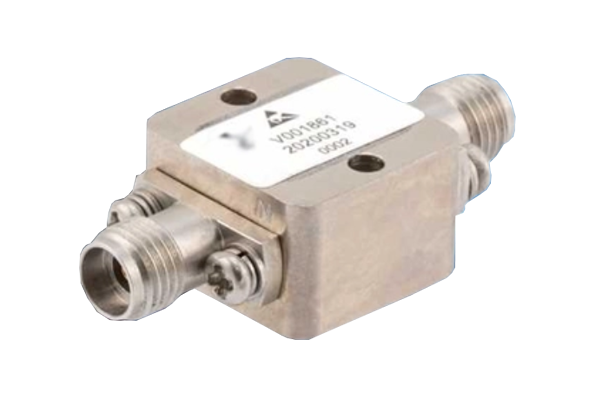
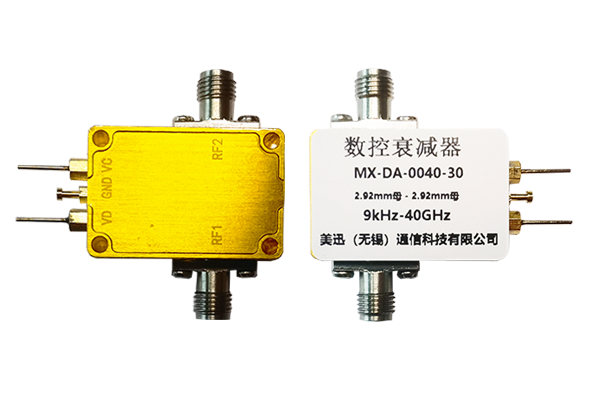




When is an RF Attenuator Needed
RF Attenuator Applications
Critical roles in signal management and system protection across various RF scenarios
Adjustment When Signal Strength Exceeds Capacity
When the RF signal strength exceeds the tolerance range of the receiving equipment or subsequent circuitry, an RF attenuator is needed for adjustment. Excessively strong signals can cause saturation at the device input, leading to signal distortion, waveform distortion, and other problems, affecting normal system operation.
- Appropriately reducing the signal amplitude using an attenuator controls it within a reasonable range suitable for the equipment
- Ensures the stability and integrity of signal transmission
- Prevents equipment failure or data transmission errors due to signal overload
- Maintains optimal signal levels for downstream processing
Signal Management
Attenuators prevent input saturation that can cause nonlinear distortion and degrade system performance in high-power scenarios.
Use for System Component Protection
In RF systems, some precision components, such as receivers and sensors, have strict limitations on input signal strength; excessively strong signals may damage these components. When the output power of the front-end signal source is too high, or when the signal gain is abnormal during transmission, an RF attenuator is needed to attenuate excess energy.
- Reduces the impact of strong signals on sensitive components
- Acts as a buffer between high-power stages and delicate circuitry
- Extends the lifespan of precision components
- Ensures the safe operation of the entire system
- Protects against unexpected signal spikes and transients
Test, Measurement, and Calibration Scenarios
In RF equipment testing and laboratory calibration scenarios, the RF attenuator is an indispensable auxiliary tool. During testing, to simulate signal environments of different intensities, the signal amplitude needs to be precisely adjusted to verify the equipment's performance under different operating conditions.
- Enables precise control of signal attenuation for testing purposes
- Allows calibration and testing of equipment sensitivity and dynamic range
- Simulates various signal environments and intensity levels
- Ensures the accuracy and reliability of test data
- Supports performance verification under controlled conditions
Testing Precision
Attenuators enable controlled signal reduction for accurate measurement of receiver sensitivity and system linearity in laboratory environments.
Adaptation during Communication Link Optimization
In RF communication systems, when link gain is too high or interference occurs during signal transmission, leading to a degraded signal quality, an RF attenuator is needed for adaptation and optimization. For example, in scenarios such as base station communication and satellite communication, signal strength may be mismatched between different devices.
- Balances link gain by adjusting signal amplitude
- Reduces signal reflection and interference in communication links
- Improves the stability and transmission efficiency of communication systems
- Ensures communication quality meets required standards
- Optimizes performance in base station and satellite communication scenarios
System Benefits of RF Attenuators
Signal Integrity
Maintains optimal signal levels and prevents distortion caused by excessive power.
Equipment Protection
Safeguards sensitive components from damage due to signal overload and transients.
Measurement Accuracy
Enables precise signal control for reliable testing and calibration procedures.
System Optimization
Enhances communication link performance and overall system efficiency.