


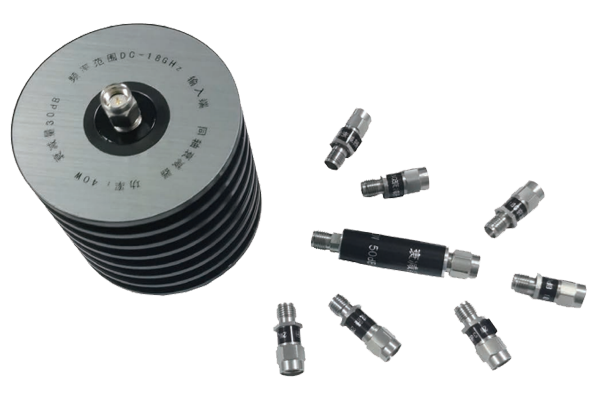




Symptoms of a Damaged RF Attenuator
1. Uncontrolled Signal Amplitude
- A damaged attenuator loses stable control over signal strength, causing the output level to deviate significantly from the set value.
- The signal strength cannot be adjusted as needed. During adjustment, the level fluctuates erratically, failing to maintain a stable output.
- This can lead to overload of front‑end equipment or abnormal reception in back‑end equipment, directly affecting link power distribution and test accuracy, ultimately rendering the entire RF system unusable.
2. Impedance Mismatch
- Damaged components can cause impedance mismatch in the transmission link, resulting in significant signal reflections and power backflow.
- This anomaly reduces signal transmission efficiency, increases the system VSWR, and causes link instability and self‑oscillation risks.
- Long‑term operation can also damage front‑end active components, exacerbating equipment failure and shortening the RF module's lifespan.
3. Frequency Response Distortion
- A damaged attenuator cannot maintain consistent attenuation characteristics across the entire frequency band.
- Significant differences in attenuation effects appear at different frequency points, with an imbalance between high and low frequency attenuation.
- After passing through the device, the signal waveform becomes distorted, harmonics and spurious signals increase, the noise floor rises, and the signal‑to‑noise ratio decreases.
- This leads to demodulation difficulties at the receiver, distorted measurement data, and failure to meet the frequency flatness requirements for communication and testing.
4. Abnormal Operating Status
- The device may experience abnormal overheating during operation, with the casing temperature significantly higher than normal.
- This may be accompanied by poor interface contact, intermittent signal connection, and other issues.
- Frequent self‑test errors occur during startup, self‑calibration fails, and adjustments are slow or unresponsive.
- In some scenarios, internal breakdown odors and physical damage may be observed, directly indicating irreversible damage to the attenuator.