






Installation Precautions for Directional Couplers
Adapting to Transmission Line Characteristics
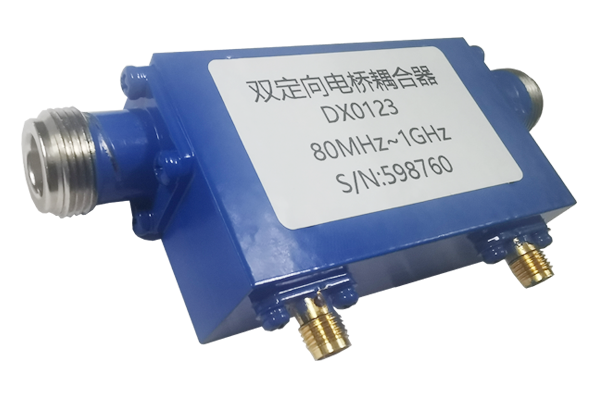
When installing Directional Couplers, the primary focus should be on compatibility with the characteristics of the transmission line. Ensure the coupler's impedance is strictly matched to the transmission line to avoid signal reflection caused by impedance mismatch, which would affect the overall system's signal transmission efficiency. Simultaneously, select Directional Couplers corresponding to the frequency range of the transmitted signal to ensure stable coupling performance within the target frequency band, preventing signal attenuation, distortion, and other problems.
- Strict impedance matching to avoid signal reflection
- Frequency range alignment for stable coupling
- Prevents signal attenuation & distortion
- Preserves overall system transmission efficiency
Controlling Physical Installation Accuracy
The accuracy of the physical installation directly affects the working state of the Directional Couplers. During installation, ensure the coupler is tightly and securely connected to the transmission line to prevent loosening that could lead to signal leakage. Strictly adhere to the installation specifications regarding the coupler's installation angle and position to prevent installation deviations from altering the signal coupling path and interfering with coupling accuracy. Furthermore, pay attention to the impact of the surrounding environment on the installation; keep it away from high temperatures, strong magnetic fields, and other harsh environments to avoid adverse effects on the coupler's material properties and signal transmission.
- Tight & secure connection prevents signal leakage
- Adhere to angle & position specifications
- Avoid high temperature & strong magnetic fields
- Protects material integrity & coupling accuracy
Proper Signal Isolation & Protection
Focusing on signal isolation and protection is a key point in installing Directional Couplers. The connection lines of each port of the coupler need to be planned reasonably to avoid mutual interference between signal lines of different ports, especially to prevent crosstalk between the coupled signal and the main transmission signal. Shielded cables, shielding covers, and other protective facilities can be used to enhance signal isolation, ensuring that the Directional Couplers can accurately couple the required signal without causing additional interference to the main signal transmission.
- Reasonable port routing to avoid inter-port crosstalk
- Prevent interference between coupled & main signal
- Use shielded cables & protective covers
- Accurate coupling without main signal degradation
Post-Installation Testing & Debugging
After installation, comprehensive testing and debugging must be carried out. Using professional testing equipment, key indicators such as coupling degree, insertion loss, and directivity of the Directional Couplers should be tested to determine if they meet design requirements. If abnormal indicators are found, potential problems in the installation process should be investigated promptly, such as loose connections or positional deviations, and targeted adjustments should be made. Repeated debugging is necessary until all indicators are stable and meet the standards, ensuring that the Directional Couplers function as intended in the system.
- Measure coupling degree, insertion loss & directivity
- Identify loose connections or positional deviations
- Targeted adjustments & iterative debugging
- Ensure stable performance & system compliance