


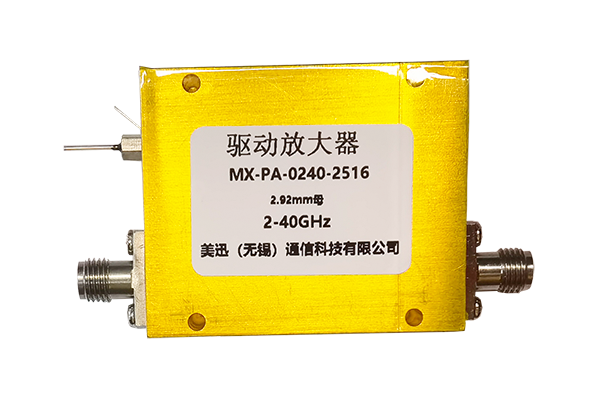




How to Test the Shielding Performance of Directional Couplers
Basic Shielding Effectiveness Test
The first step in testing the shielding performance of Directional Couplers is to conduct a basic shielding effectiveness test. Using a vector network analyzer with a coaxial fixture, the attenuation capability of the couplers to electromagnetic waves is measured within a typical RF frequency band. By comparing the signal strength in the unshielded state with the signal strength after installing Directional Couplers, the basic shielding effectiveness value is calculated to determine whether it meets the basic shielding requirements of the RF system.
- Vector network analyzer & coaxial fixture measurement
- Compares unshielded vs. shielded signal attenuation
- Quantifies basic shielding effectiveness value
- Verifies compliance with RF system requirements
Port Isolation Test
The focus is on testing the port isolation performance of Directional Couplers, a key indicator of their shielding effectiveness. A signal of a specific power is injected into the main input port using a signal source, and the strength of the leakage signal is measured at the isolated port using a receiver. By calculating the difference between the input signal and the leakage signal, the degree of isolation between the ports is evaluated, ensuring that reverse signals and spurious signals do not interfere with the main signal transmission through the coupling path.
- Signal injection into main input port
- Leakage measurement at isolated port via receiver
- Evaluates port-to-port isolation degree
- Prevents reverse & spurious interference
Environmental Reliability Verification
Environmental reliability testing of Directional Couplers is conducted, simulating the complex environment of real-world applications. The directional couplers were pre-treated in environments with high temperature and humidity, as well as thermal shock, and then the rate of change in shielding effectiveness and port isolation was measured again. By comparing the performance data before and after environmental testing, the shielding stability of the directional couplers in harsh environments was evaluated, providing data support for applications in real-world scenarios.
- High temperature, humidity & thermal shock pre-treatment
- Measures change in shielding effectiveness & isolation
- Evaluates stability under harsh conditions
- Data support for real-world application scenarios
Multi-band Shielding Characteristic Analysis
The test frequency range was expanded to comprehensively analyze the multi-band shielding characteristics of the directional couplers. Shielding effectiveness was measured point-by-point across a wide frequency band from low frequency to microwave, and frequency-shielding effectiveness curves were plotted. The trend of the curves clarified the shielding performance of the directional couplers in different frequency bands, determining whether they can meet the shielding requirements of multi-band RF systems, providing a basis for accurate selection.
- Wideband measurement: low frequency to microwave
- Point-by-point shielding effectiveness characterization
- Frequency-shielding effectiveness curves
- Guidance for multi-band RF system selection