






How Bridge Couplers Achieve Power Distribution
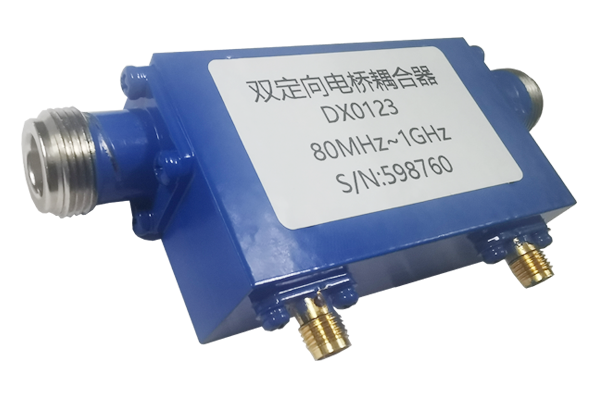
Bridge Coupler (Directional Coupler) — electromagnetic induction and wave interference enable precise power distribution, phase superposition, and directional energy flow. Essential for RF sampling, balanced transmission, and impedance-matched systems.
Signal Input & Energy Transfer
- RF signal enters main port; electromagnetic wave propagates forward along main transmission path
- Input energy radiates into surrounding space via electromagnetic field (not fully confined)
- Energy flow establishes foundation for power distribution
- Signal guided effectively to coupling region → prepares for subsequent energy transfer
Electromagnetic Induction & Energy Transfer
- Main line and secondary line closely adjacent in coupling region
- Changing electric/magnetic fields on main line pass through secondary line
- Electromagnetic induction excites induced current on secondary line
- Distance & coupling length precisely control energy transfer amount → predetermined power distribution ratio
Phase Superposition & Directional Output
- Wave interference principle guides energy flow
- Induced energy contains electric & magnetic field components with distinct phase characteristics
- Toward coupling port: components in‑phase → constructive interference → energy superposition & output
- Toward isolation port: components out‑of‑phase → destructive interference → energy cancellation
- Power distributed only to specific ports with high directivity
Impedance Matching & Power Balancing
- All ports must exhibit good impedance matching to system characteristic impedance
- Minimizes signal reflection when port impedance matches system Z₀
- Input power precisely distributed to through & coupled ports according to design ratio
- Ensures power distribution requirements while preserving signal transmission integrity
High directivity & wideband stability
- Exceptional isolation between input and coupled ports (directivity > 25 dB typical)
- Minimizes reflected power & VSWR degradation in sensitive RF chains
- Robust coupling factor flatness across frequency bands (e.g., 0.5–18 GHz)
- Ideal for power monitoring, signal injection, and balanced receiver designs
⚡ Precision coupling, directional clarity. By combining electromagnetic induction with constructive/destructive interference, the bridge coupler achieves accurate power division and phase-controlled output. Impedance-matched ports ensure minimal reflections, preserving signal integrity in telecommunications, radar, and test instrumentation.