


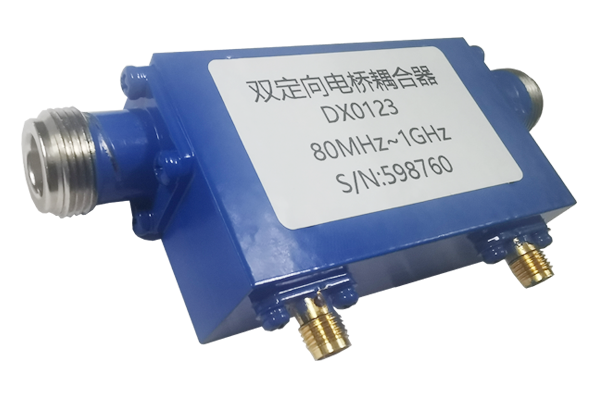




Common Faults of Bridge Couplers
1. Internal Resistor Burnout
- Precision thin‑film resistors/absorption loads vulnerable to RF overload or electrostatic discharge.
- Excessive power burns out resistive elements, destroying circuit balance.
- Isolation degrades sharply or is completely lost; signal synthesis/distribution fails.
- Results in permanent, irreversible device damage.
2. Poor Port Contact & Losses
- Repeated mating cycles or corrosion cause wear, oxidation, and loosening of connectors.
- Introduces additional contact resistance, increasing signal reflection and insertion loss.
- Reduces transmission efficiency and may generate standing waves from impedance mismatch.
- Degrades overall RF link stability and communication quality.
3. Structural Deformation & Imbalance
- Microstrip/stripline geometry extremely sensitive to physical dimensions.
- Impact, compression, or prolonged high‑temperature exposure deforms substrate or misaligns lines.
- Disrupts balanced E‑field/H‑field coupling; output amplitude/phase orthogonality drifts.
- Fails to meet precision signal processing requirements.
4. Cold Solder Joints & Intermittent Signal
- Poor soldering in manufacturing may pass initial testing but cracks over time or with temperature cycling.
- Leads to broken electrical connections, signal path interruption, or intermittent abnormal transmission.
- Prevents stable and reliable bridge coupler operation.
- Increases system maintenance complexity and downtime.