


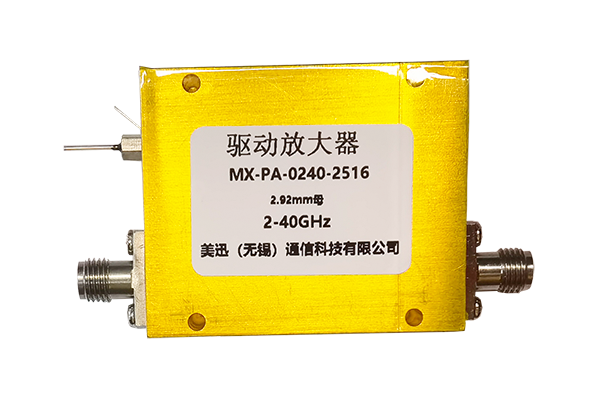




Are there requirements for the operating environment of an RF power amplifier
RF power amplifiers have clear requirements for their operating environment, as surrounding conditions directly affect their performance, stability and service life. These devices are sensitive to factors such as temperature, humidity, interference and ventilation. An improper environment may lead to reduced efficiency, signal distortion, equipment overheating or even permanent damage.
Temperature Requirements
- RF power amplifiers generate significant heat during operation and require an environment with appropriate temperature for effective heat dissipation.
- Excessively high ambient temperature hinders heat dissipation, leading to component overheating, reduced power output, or failure.
- Extremely low temperatures can affect electronic component performance, causing unstable amplification and slower response.
- A dry, well-ventilated environment is essential to maintain stable operating temperature.
Humidity & Environmental Conditions
- High humidity can allow moisture ingress into the amplifier, causing short circuits, component corrosion, or PCB damage.
- This not only disrupts operation but significantly shortens the service life of RF power amplifiers.
- Operating environments must be kept dry, avoiding damp locations like basements or condensation-prone areas.
Electromagnetic Interference & Contaminants
- RF power amplifiers are sensitive to electromagnetic interference (EMI) from nearby equipment.
- Strong EMI can disrupt the signal amplification process, causing signal clutter and degraded quality.
- Excessive dust accumulation blocks heat dissipation paths and can damage internal components.
- Amplifiers should be placed away from strong EMI sources and kept in a clean environment to prevent dust buildup.
Adhering to these environmental requirements is crucial for maximizing the performance, reliability, and lifespan of RF power amplifiers.